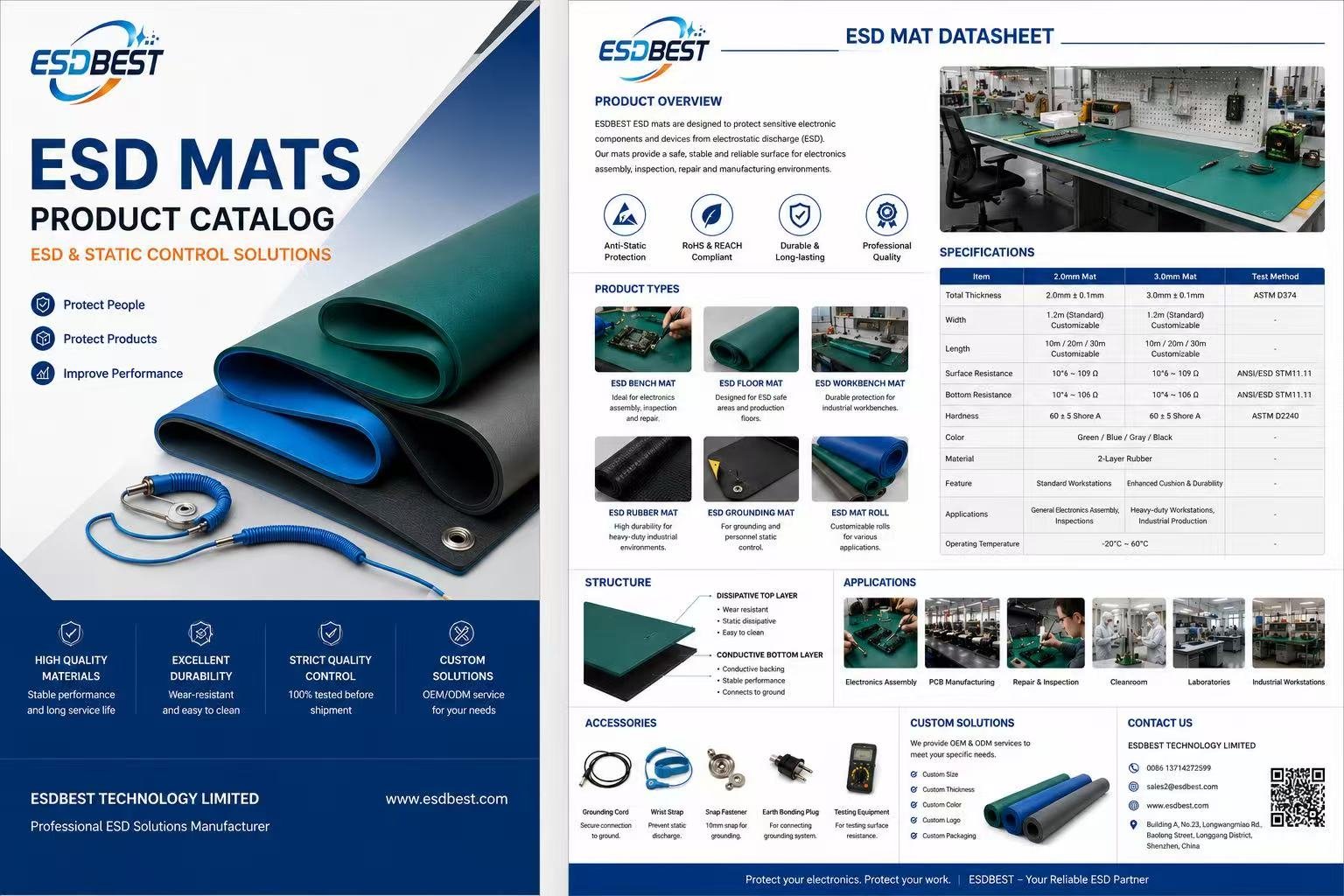
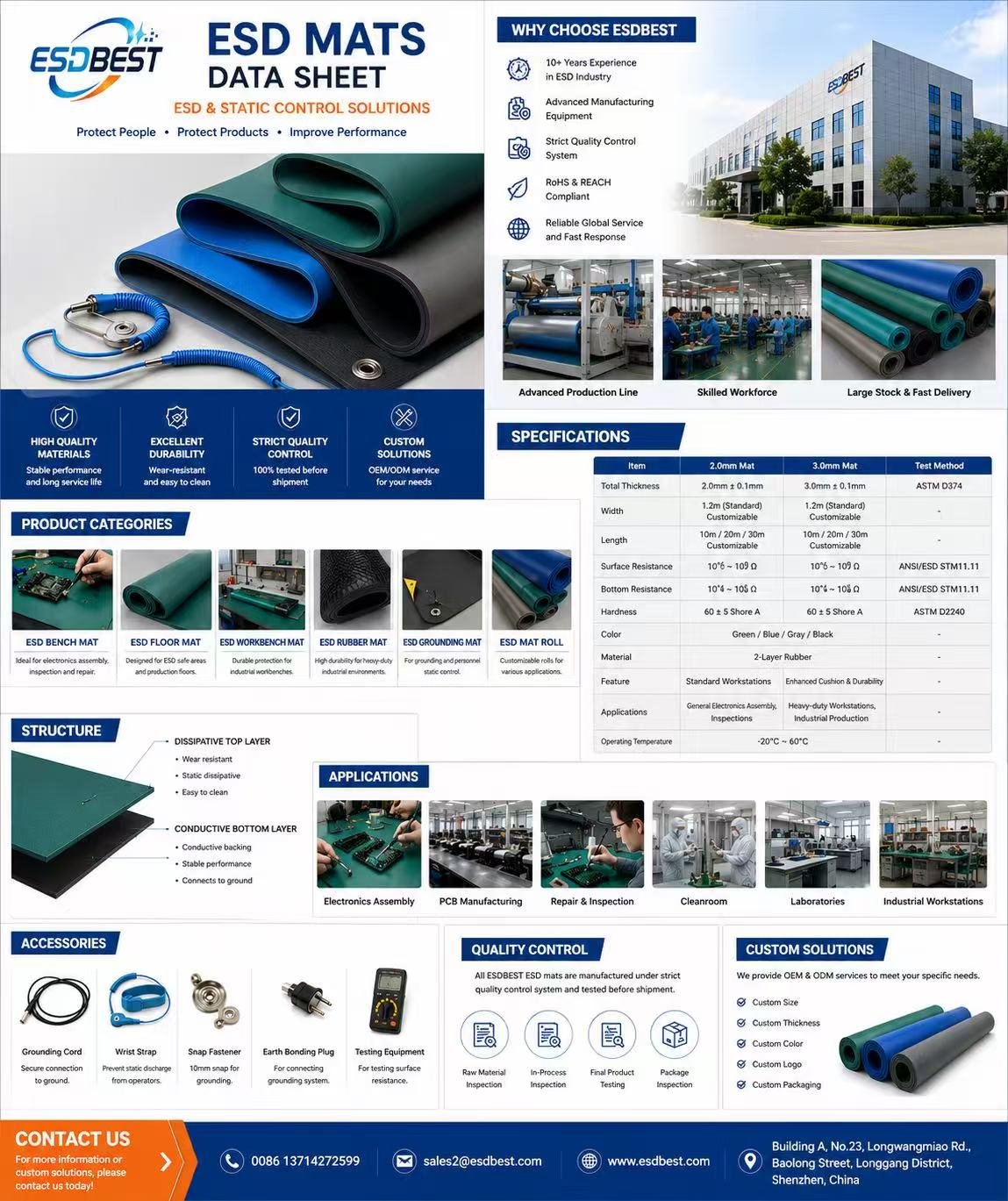
2 mm ESD Mats
A practical choice for electronics assembly, PCB handling, inspection and standard workbench installations where flexibility and efficient surface coverage are important.
ESDBEST manufactures and supplies ESD mats for electronics assembly, PCB handling, testing, repair workstations and factory floors. Available options include rubber and PVC materials, standard sheets, full rolls and custom-cut sizes for different static-control applications.
ESDBEST manufactures static-dissipative ESD mats for electronics assembly, PCB handling, repair workbenches and factory floors. Choose rubber or PVC materials, 2 mm thicknesses, standard rolls or custom-cut sizes, with grounding accessories and resistance-test support available.
</p >
Select an ESD mat according to the installation area, material, electrical requirements, dimensions and grounding method. Final specifications should be confirmed against the customer’s ESD control plan and applicable test method.
| Specification | Available Options |
|---|---|
| Applications | Electronics workbenches, PCB assembly, inspection, repair and factory floors |
| Mat Types | ESD bench mats and ESD floor mats |
| Materials | Rubber and PVC options |
| Supply Formats | Standard sheets, full rolls and custom-cut sizes |
| Thickness | 2 mm bench mat options; other constructions subject to product confirmation |
| Colors | Subject to material and order requirements |
| Resistance | Confirm according to the mat layer, application and test method |
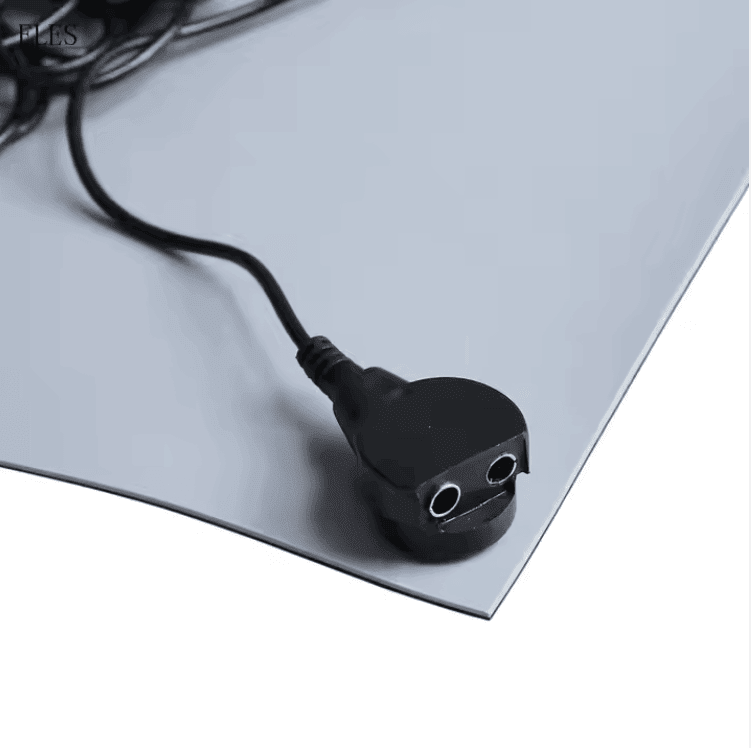
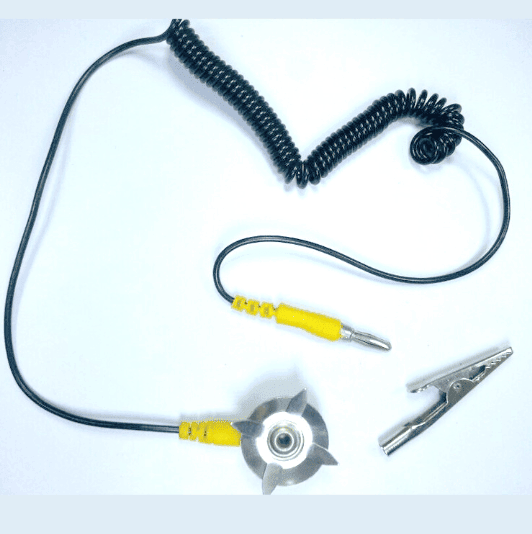
| Grounding | Grounding snaps, cords and compatible accessories |
| Customization | Dimensions, color, snap position, logo, labeling and packaging |
| Purchasing | Samples, standard quantities, OEM and bulk orders |
Start with the installation location and working process. Each mat type below serves a different primary requirement.
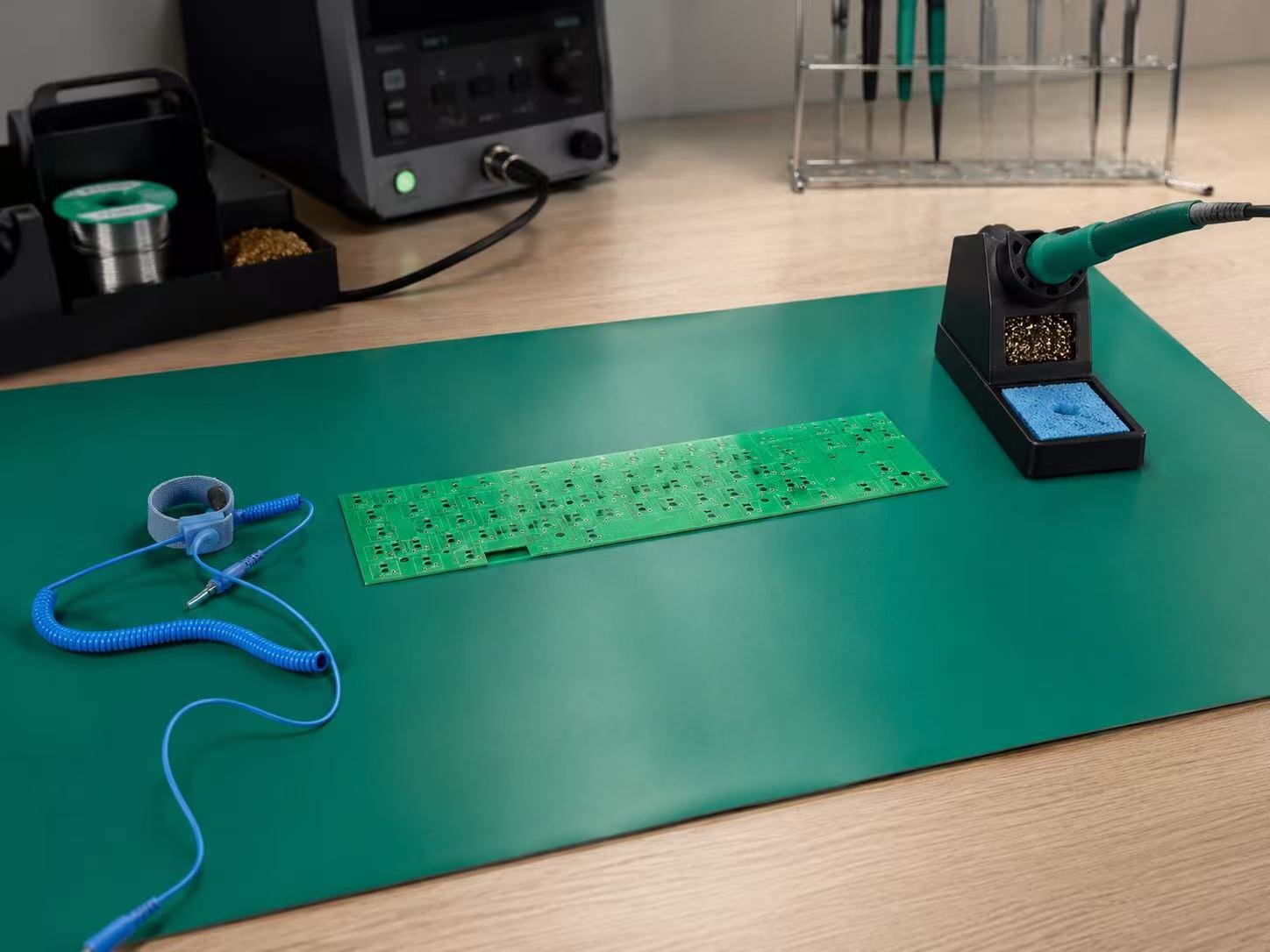
Static-dissipative work surfaces for electronics assembly, PCB handling, inspection, testing and repair benches. Available in standard sizes, rolls and custom-cut formats.
Explore ESD Bench Mats →
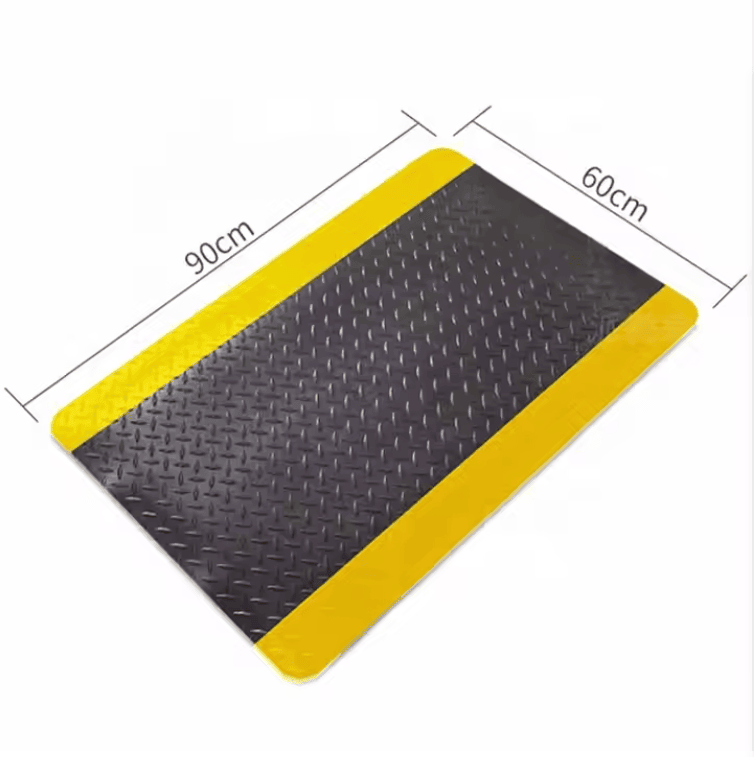
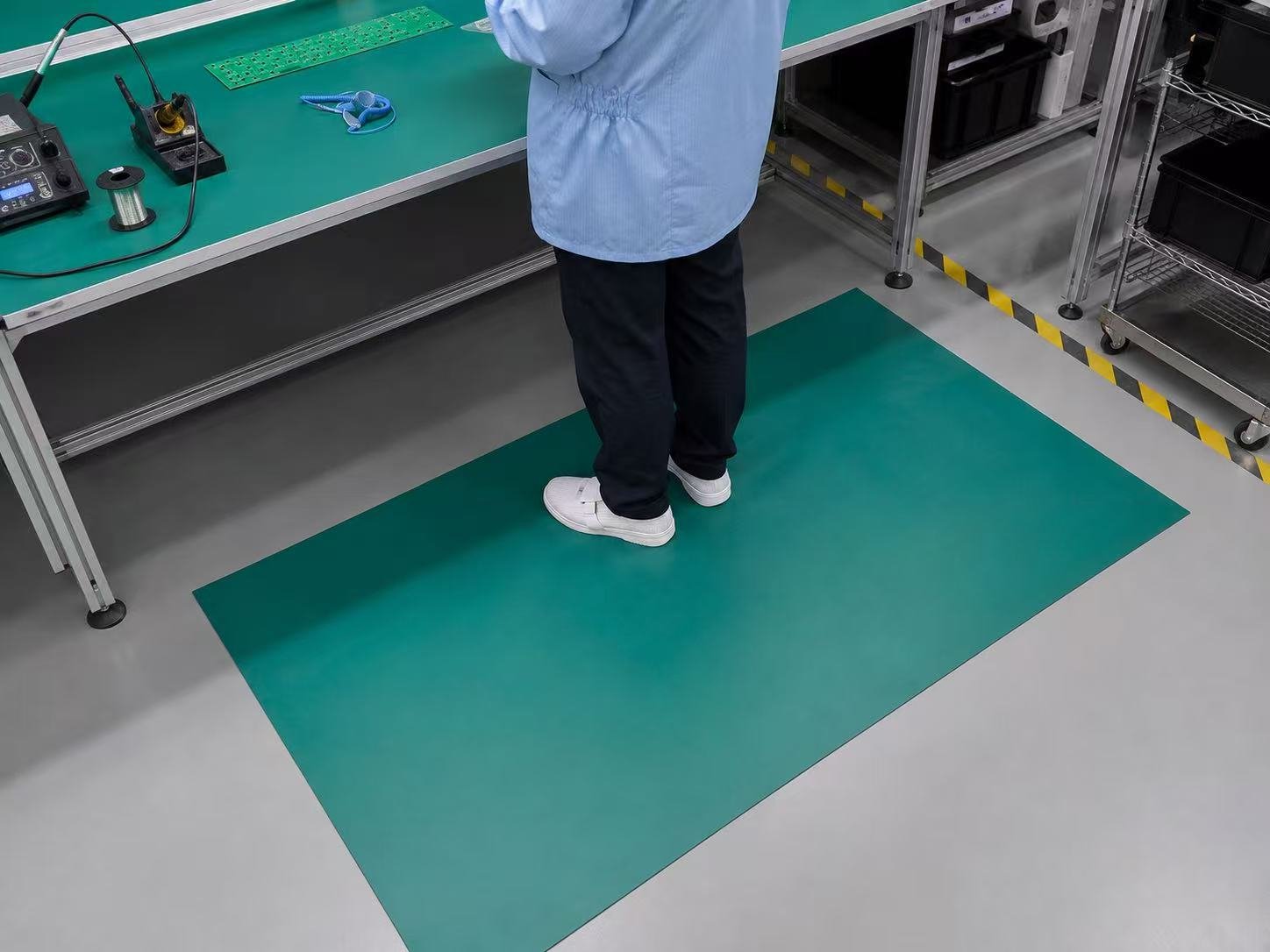
Static-control floor mats for electronics factories, production areas, standing workstations and controlled access zones.
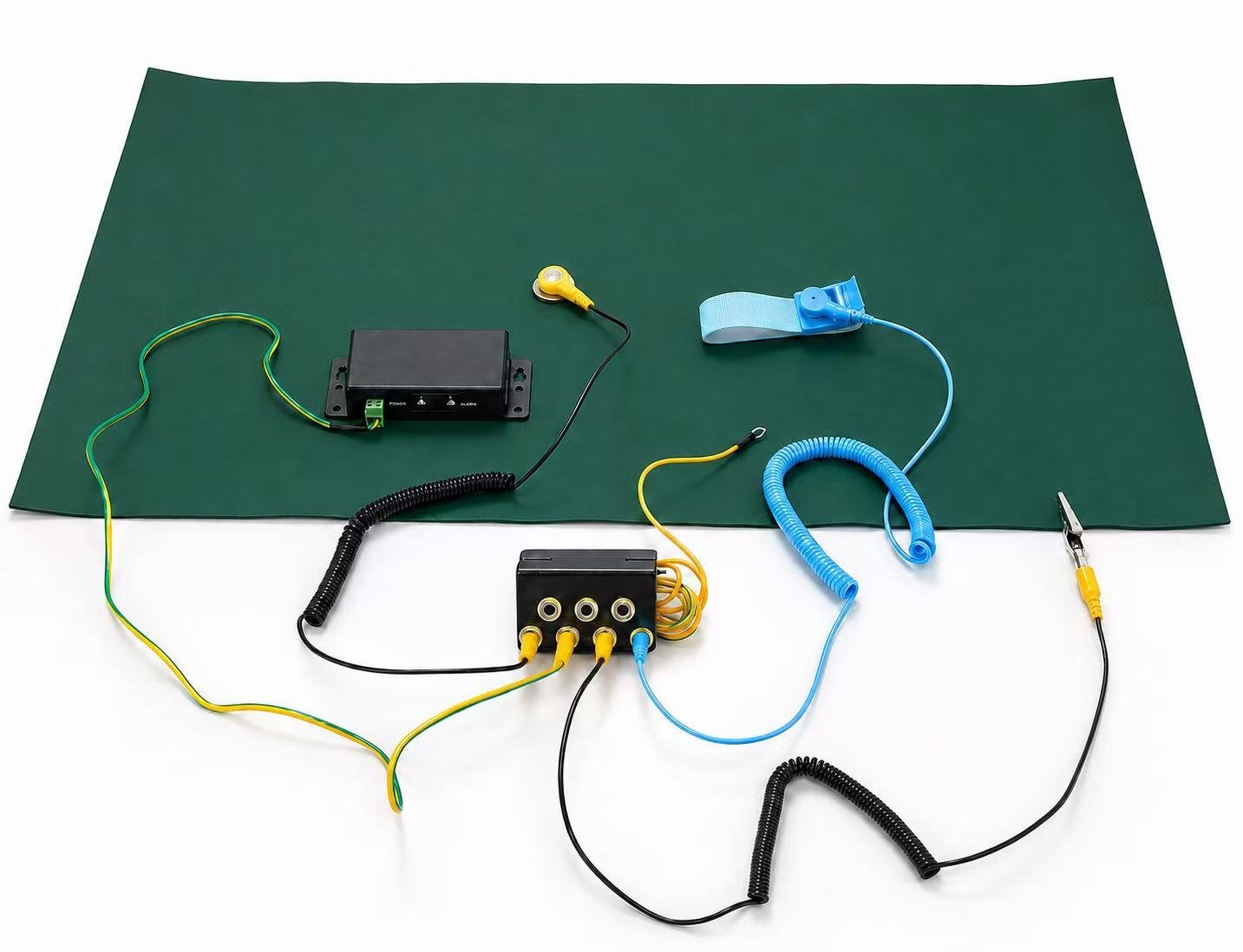
Explore ESD Floor Mats →
Complete workstation packages combining an ESD mat with compatible grounding accessories such as a ground cord, wrist strap or common-point connection.
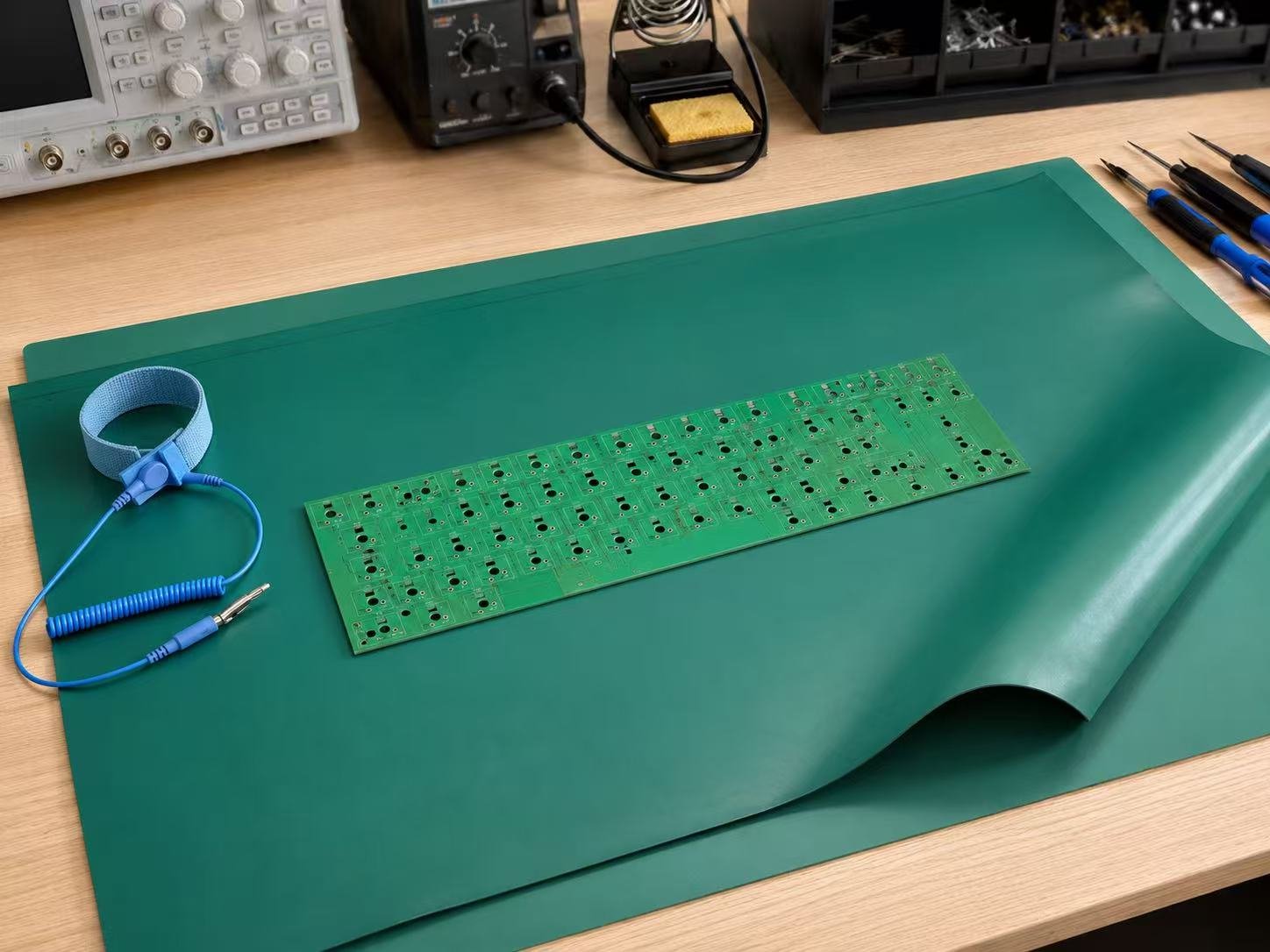
View ESD Mat Kits →
Heat- and solder-resistant ESD work surfaces for electronics assembly, soldering, rework and repair applications.

Explore ESD Soldering Mats →Choose a standard 2 mm mat, full roll or custom-cut solution according to your workstation layout, production volume and installation requirements.
A practical choice for electronics assembly, PCB handling, inspection and standard workbench installations where flexibility and efficient surface coverage are important.
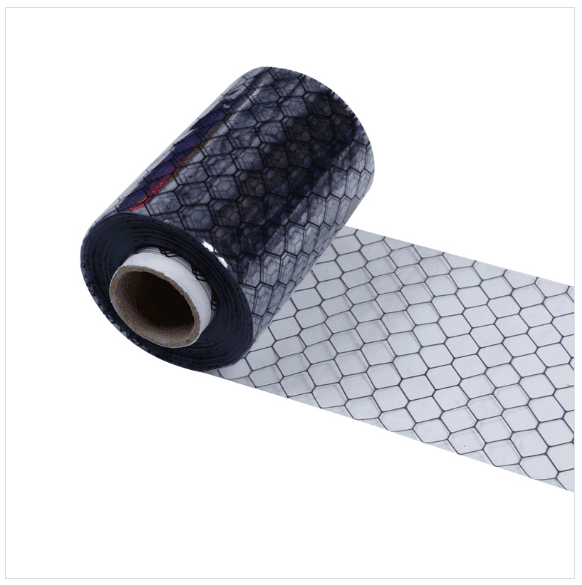
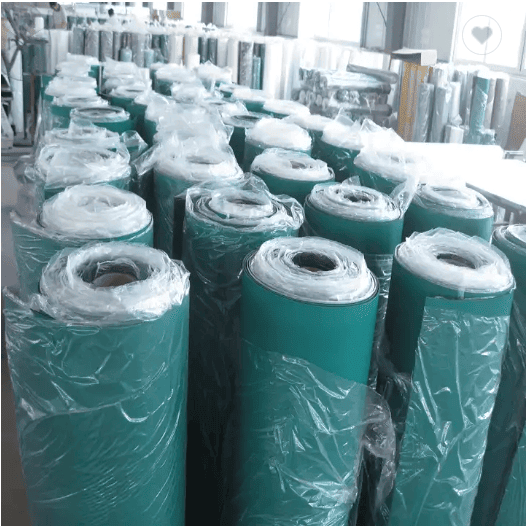
Full rolls support production lines, multiple workbenches and distributors that require flexible cutting, efficient installation and bulk supply.
Specify the required length, width, thickness, color, grounding snap position, logo and packaging for OEM, distributor or project-based orders.
ESD mats are used as part of a controlled workstation or factory ESD program. The appropriate mat depends on the work process, equipment, grounding arrangement, traffic level and required verification method.
Controlled work surfaces for assembling and handling static-sensitive electronic components.
Workbench protection for PCB inspection, testing, rework and repair processes.
Sheet, roll and custom-cut formats for multiple workstations and assembly areas.
Static-control surfaces for measurement, inspection and quality-control workstations.
ESD bench mat solutions for electronics service, maintenance and rework environments.
Floor mat options for selected standing work areas and controlled production zones.
See how ESD mats are selected and used for PCB assembly, handling, testing and rework workstations.
Rubber ESD mats are commonly selected for electronics workbenches that require durability, heat resistance and a stable working surface. PVC options may be suitable for cost-sensitive applications, visual work areas and selected factory installations.
Material selection should not be based on color or price alone. Buyers should also consider the working environment, required resistance, heat exposure, cleaning process, grounding method and expected service conditions.
| Factor | Rubber ESD Mat | PVC ESD Mat |
|---|---|---|
| Typical Use | Electronics workbenches and production areas | Selected workbench and floor applications |
| Surface | Durable working surface | Flexible and economical options |
| Heat Exposure | Generally better suited to higher-temperature work | Confirm before soldering or heat exposure |
| Supply | Sheets, rolls and custom cuts | Sheets, rolls or custom formats |
| Selection Basis | Application and electrical requirement | Application, environment and budget |
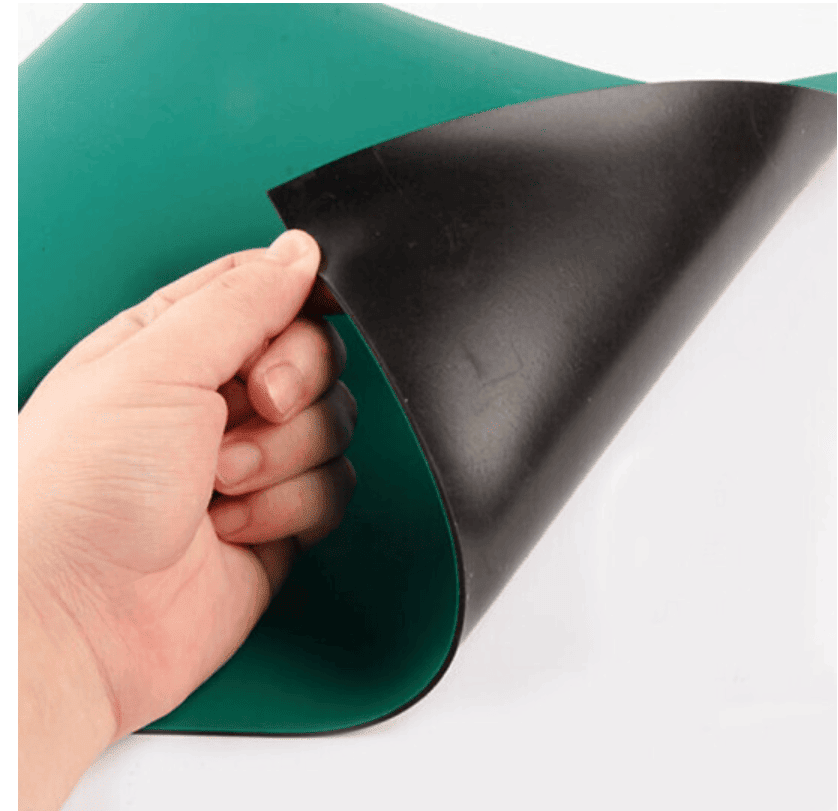
A two-layer ESD mat may use a static-dissipative working surface together with a lower-resistance conductive backing. These layers perform different functions and should not be represented by one universal resistance range.
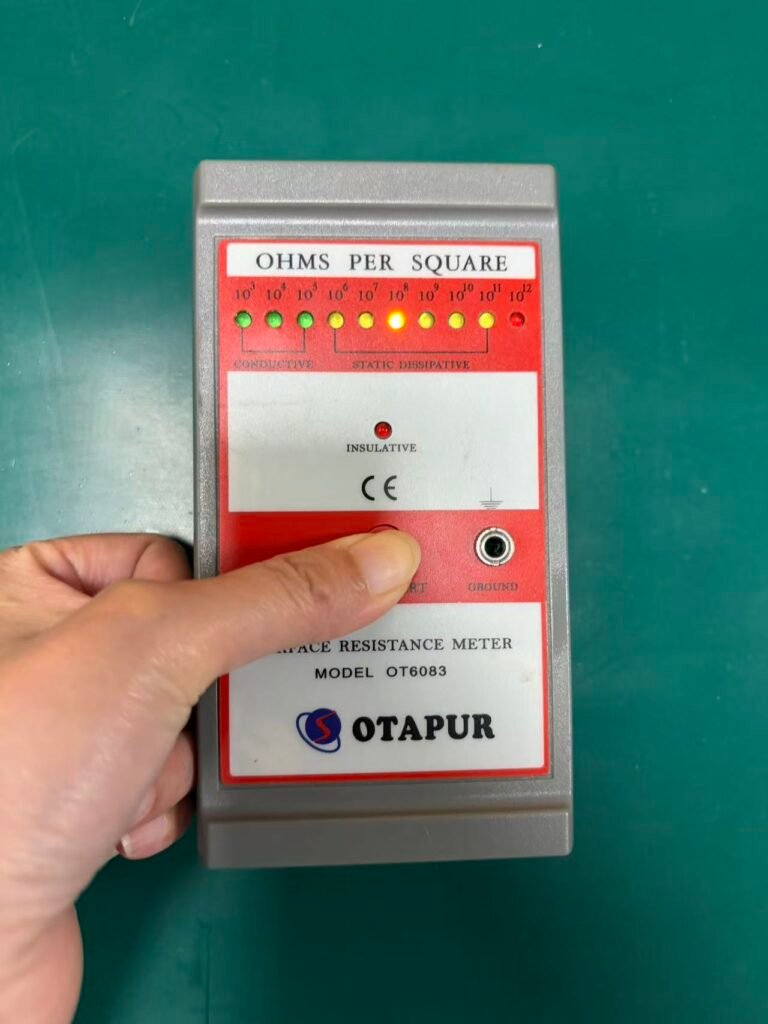
Compare Conductive and Static-Dissipative Mats →Resistance data helps buyers verify whether an ESD mat is suitable for the intended work surface and grounding system. ESDBEST uses an ACL Model 800 resistance meter to record resistance-to-ground and point-to-point measurements under documented test conditions.
RTG evaluates the resistance path from the mat to the grounding reference. PTP evaluates resistance between two locations on the tested surface. The tested face must always be identified because the top static-dissipative working surface and bottom conductive layer can have different resistance ranges.
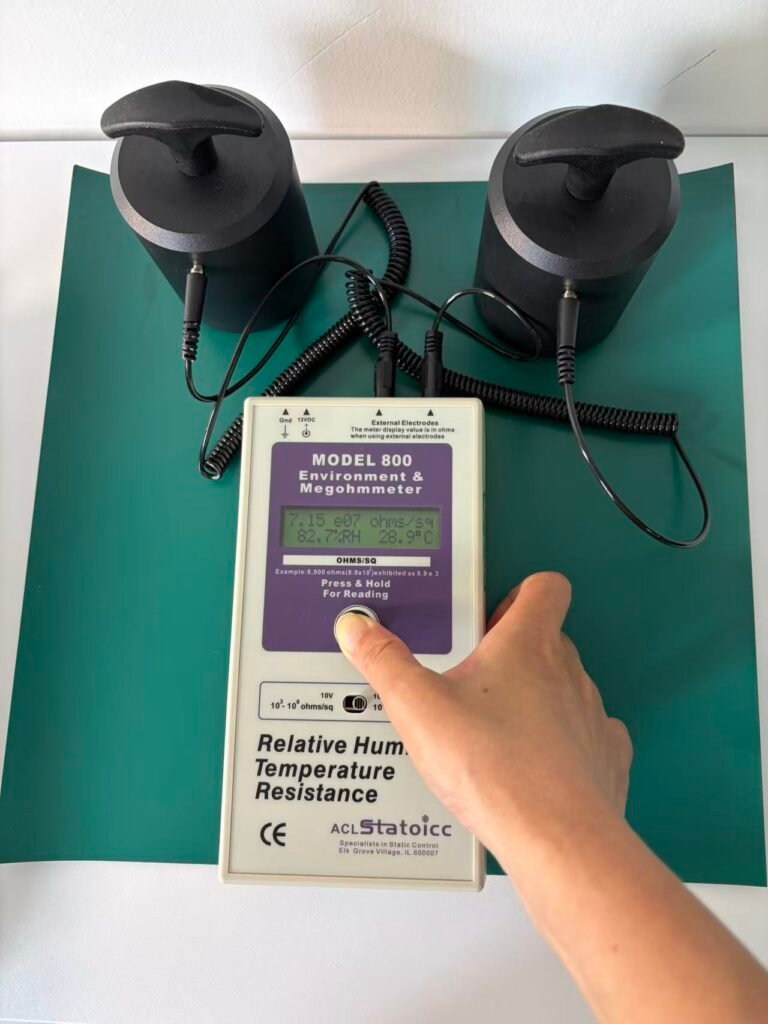
REAL TEST EVIDENCE
Resistance values are more meaningful when the test record also identifies how, where and under what conditions the measurement was made.
RTG evaluates the resistance path between the mat or work surface and the defined grounding reference.
PTP evaluates resistance between two selected locations on the tested surface and can help evaluate consistency across the work area.
Do not interpret resistance values without identifying the tested face. In a two-layer ESD mat, the static-dissipative working surface and the conductive backing may be designed for different electrical functions and resistance ranges.

An ESD mat does not provide complete protection by itself. The mat must be connected through the appropriate grounding hardware to a verified grounding reference defined by the facility’s ESD control program.
A typical workstation may include an ESD work surface, grounding snap, mat grounding cord, common-point ground and wrist strap. The final configuration should be verified according to the facility’s requirements and applicable test procedures.
Grounding hardware should be selected and verified as part of the complete workstation or facility ESD control system rather than treating the mat as an isolated protective device.
Conductive and static-dissipative mats are not interchangeable descriptions. A static-dissipative work surface is designed to reduce charge in a controlled manner, while conductive materials provide a lower-resistance path. The correct selection depends on the complete ESD control system, grounding method, product specification and applicable test requirements.
Commonly selected for electronics work surfaces where controlled charge dissipation is required.
Used in specific layers or applications where a lower-resistance path forms part of the grounding system.
Compare resistance behavior, typical applications, grounding considerations and selection factors in the dedicated guide.
Choose from standard ESD mat sheets, ESD mat rolls and custom-cut ESD mats according to the workstation layout, installation method and purchasing quantity. ESDBEST also supports custom ESD mat and bulk ESD mat requirements for electronics workbenches, production lines and project installations.
These supply formats are suitable for buyers looking for an ESD bench mat, ESD workbench mat, anti static mat for electronics, electronics workbench mat or ESD mat for electronics assembly, testing, inspection and repair environments.
Standard ESD mat sheets for electronics assembly, PCB handling, inspection, testing, repair benches and other controlled workstations. Suitable for buyers looking for an ESD bench mat or ESD workbench mat in ready-to-use sheet formats.
View ESD Bench Mats → 02 ROLLS & BULK SUPPLYESD mat rolls are suitable for production facilities, long workbenches, multiple workstation installations and bulk ESD mat projects. Full rolls can be cut according to different bench layouts and purchasing requirements.
Explore ESD Mat Roll Options → 03 CUSTOM SIZERequest a custom ESD mat with project-specific dimensions, color, grounding snap position, logo, labeling or packaging. Custom-cut ESD mats can be prepared for electronics workbenches, OEM programs and bulk projects.
Request a Custom ESD Mat →ESDBEST supplies ESD mat sheets, ESD mat rolls, custom ESD mats and bulk ESD mats for electronics manufacturers, distributors, repair facilities and workstation projects. OEM ESD mat requirements may include custom dimensions, logo, labeling, packaging and compatible grounding accessories.
Select the supply format based on application, workstation size, required quantity, grounding arrangement and installation method. A standard ESD mat sheet may suit an individual bench, while ESD mat rolls and custom-cut ESD mats may be more suitable for larger production and bulk installation projects.
An ESD mat is one component of a complete static-control system. Selection, grounding, testing and maintenance should be evaluated together with the requirements of the facility’s ESD control program.
Relevant references may include ANSI/ESD S20.20, IEC 61340-5-1 and applicable work-surface resistance test methods. A mat should not be described as making an entire workstation or facility compliant by itself.
Compliance applies to the implemented ESD control program and verified system. Always confirm the applicable edition, customer requirements and documented test conditions.
The following documents are provided as product, material and test evidence. Document applicability should always be confirmed for the specific mat material, order and customer requirement.
Product information for the rubber ESD table mat, including applicable construction, dimensions, thickness and product specifications.
Download Product Datasheet →SGS test report for an ESD mat sample covering restricted substances under RoHS Directive (EU) 2015/863.
ESDBEST point-to-point resistance test record for an ESD bench mat, documenting measured resistance data and test conditions.
Download PTP Test Record →Current REACH documentation can be supplied where applicable to the requested ESD mat material and customer requirement.
Available on requestAdditional product or resistance test records may be prepared for customer-specific samples, specifications or project requirements where agreed.
Available for applicable projectsPractical technical guidance covering ESD mat grounding, resistance measurement and work-surface verification.
Test reports and compliance documents apply to the samples, materials and test scope identified in each document. Confirm applicability before using a report for a different product, production batch or customer specification.
Tell us the product, application and required documentation. ESDBEST can confirm the relevant current files for your project before bulk ordering.
Tell us the intended application, material, dimensions, thickness, color, quantity, required resistance, grounding accessories and customization requirements. ESDBEST can help review the available mat format and supply options for your project.
Send your application, dimensions, quantity and grounding requirements for a direct quotation.
Request an available material sample for initial evaluation before bulk purchasing.
For other ESD mat questions, technical document requests or project discussions, use the main ESDBEST contact page.
An ESD mat provides a controlled surface for handling static-sensitive electronics. It is commonly used on assembly benches, inspection stations, repair workstations and selected factory floors.
A bench mat protects the work surface where electronic components are handled. A floor mat is used in selected standing or production areas and must be considered together with the facility’s footwear and grounding system.
Yes. An ESD mat must be connected to an appropriate verified grounding reference to provide a controlled path for charge dissipation.
ESDBEST offers 2 mm bench mat options together with sheets, rolls and custom-cut formats. Confirm the final construction according to the selected product and application.
Yes. Custom dimensions, grounding snap positions, colors, logos, labeling and packaging can be discussed according to the order requirements.
Resistance-to-ground and point-to-point measurements can be recorded using a suitable resistance meter under documented test conditions. The tested surface and applicable acceptance criteria must be clearly identified.
No. The mat is one component of an ESD control program and must be used with the appropriate grounding, personnel grounding, verification and maintenance procedures.
Yes. Contact ESDBEST with the intended application, material, dimensions, quantity and electrical requirements to ask about available samples.
We control production from raw materials to finished products, ensuring stable quality, competitive pricing, and reliable delivery.
Every ESD mat is manufactured with controlled electrical resistance to provide consistent static dissipation and long-term reliability.
Choose custom sizes, colors, thicknesses, logos, grounding configurations, and private-label packaging for your brand or industrial project.
Our engineers help customers select the right ESD solution for PCB assembly, SMT production, semiconductor manufacturing, cleanrooms, and industrial electronics.
Static electricity is invisible, but it can damage electronic components before anyone notices a problem.
Many operators cannot feel an electrostatic discharge unless the voltage is very high. However, sensitive electronic components may be damaged by much lower voltage levels. This is why relying on human feeling is not enough for ESD control.
In electronics manufacturing, ESD damage can cause:
Immediate component failure
Latent defects
Reduced product reliability
Higher return rates
Unstable PCB performance
Quality control problems
Increased production cost
An ESD mat helps create a controlled work surface where static charge can dissipate through a properly designed grounding path. However, the mat must be connected correctly and used as part of a complete ESD workstation.
Learn how to ground an ESD mat, compare ESD bench mats and ESD floor mats, or understand the difference between conductive and static-dissipative materials.
Expand your knowledge of electrostatic discharge (ESD) protection with our expert guides. Learn how to choose the right ESD products, understand international standards, compare different materials, and build a complete static-safe workstation for electronics manufacturing.
Learn how ESD mats protect sensitive electronic components from electrostatic discharge.
Compare conductive and static dissipative materials for different ESD applications.
Step-by-step grounding guide following ANSI/ESD and IEC recommendations.
Measure surface resistance correctly using professional ESD test equipment.
Discover anti-static flooring solutions for electronics factories and cleanrooms.
Choose the right bench mat for SMT, PCB assembly and repair workstations.
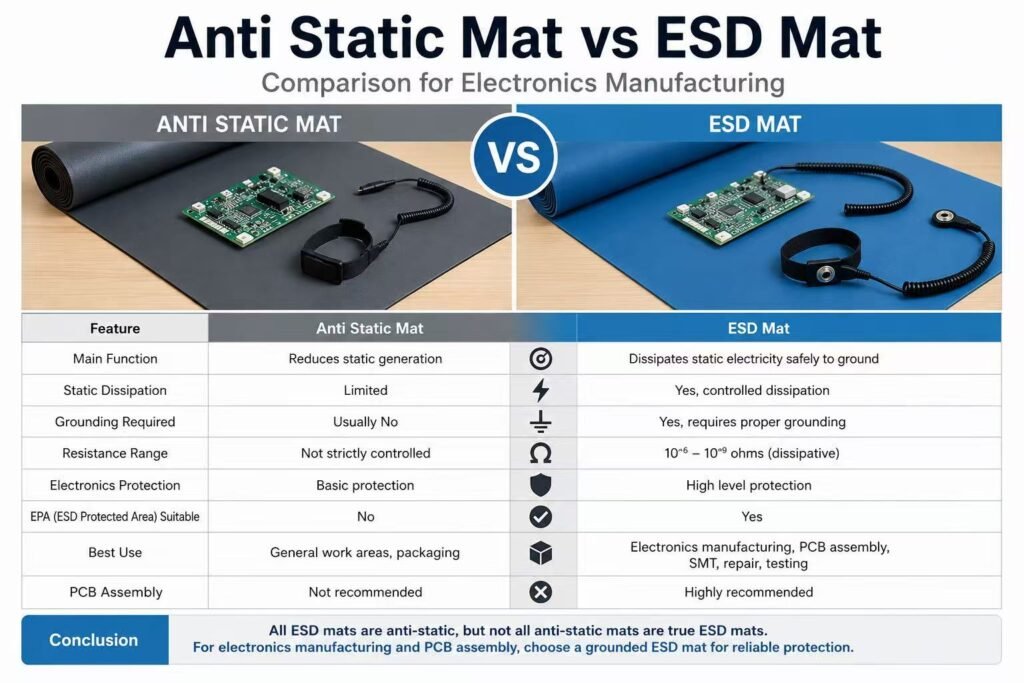
Understand the differences between anti-static mats and professional ESD mats.
Why dissipative materials are preferred for protecting electronic assemblies.
Build a compliant ESD workstation with grounding, storage and accessories.
Learn how wrist straps work and how to verify grounding performance.
Protect operators from electrostatic charge while walking inside an EPA.
Compare PU, nitrile and carbon fiber gloves for electronics manufacturing.
Protect electronic components during storage, transport and shipping.
Neutralize static charges on insulators that cannot be grounded.
Everything you need to build and maintain a compliant ESD Protected Area.
Understand the world's most widely adopted ESD control standard.
Learn the international requirements for ESD control programs.
Best practices for protecting printed circuit boards from electrostatic damage.