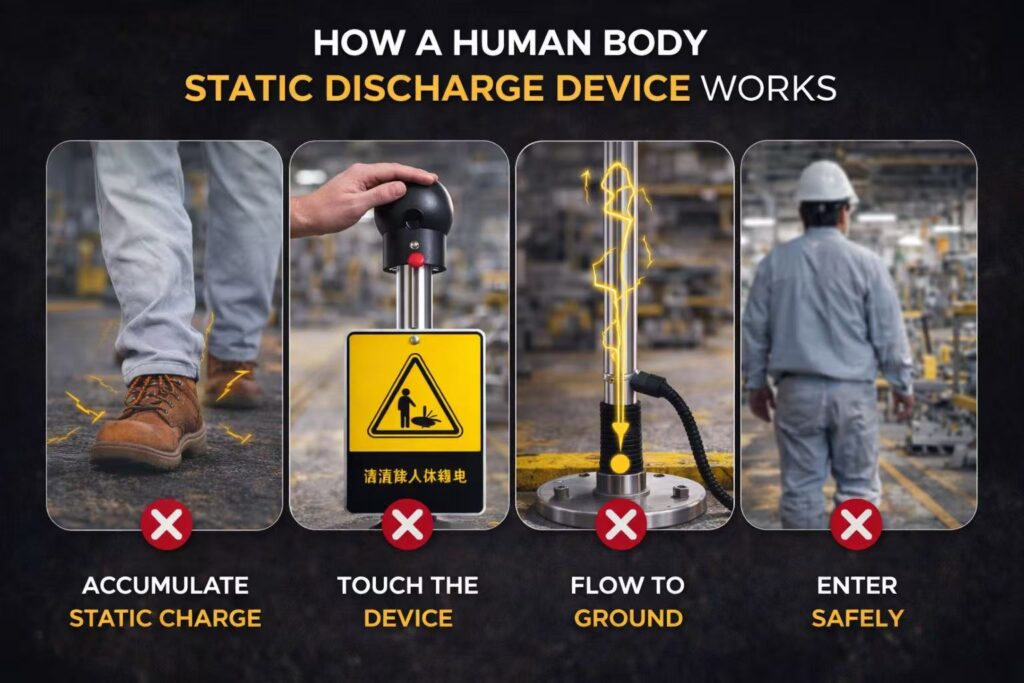
Human Body Static Discharge Device
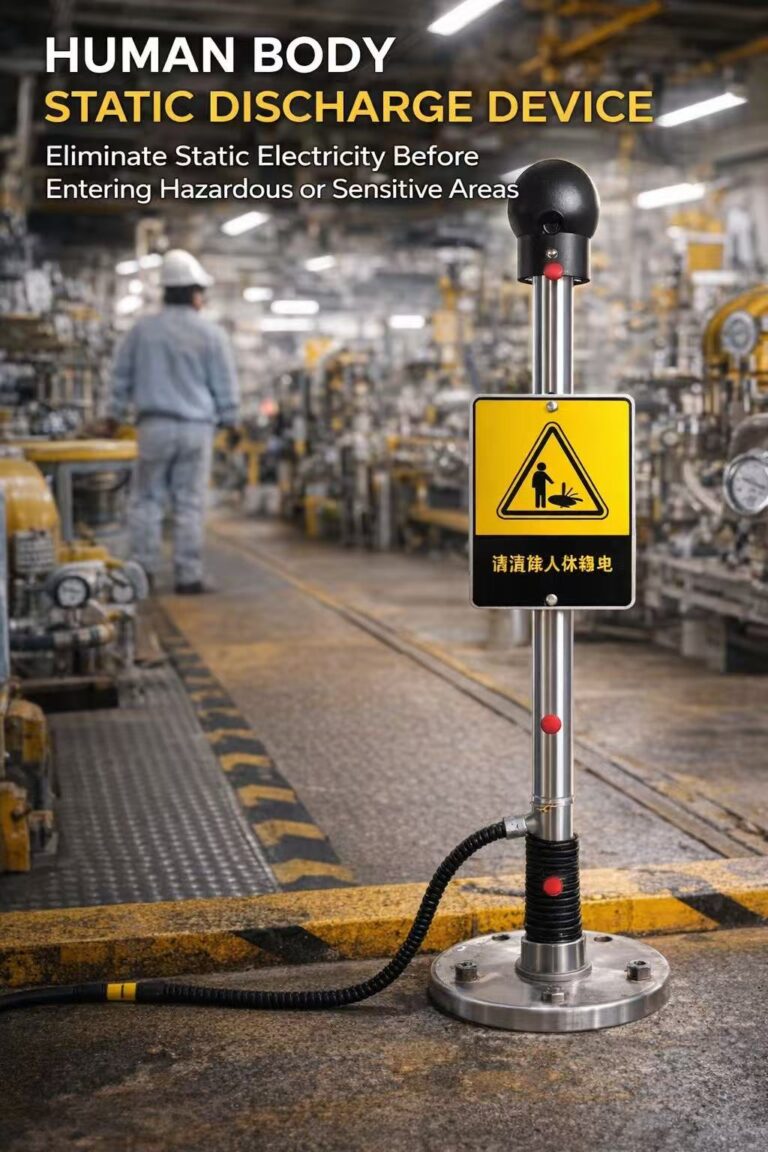
| Parameter | Specification |
|---|---|
| Type | Static Discharge Device |
| Material | 304 Stainless Steel |
| Height | 1 m |
| Weight | 3 kg |
| Touch Ball Diameter | 90 mm |
| Pole Diameter | 38 mm |
| Ground Cable Length | 3 m |
| Operating Current | < 5 mA |
| Quiescent Current | < 1 mA |
| Withstand Static Voltage | ±20 kV |
| Grounding Resistance | < 60 Ω |
| Operating Temperature | -40°C to 60°C |
Anti-Static Human Body Discharge Device (Explosion-Proof) | 304 Stainless Steel ESD Grounding Station
Professional ESD Grounding Solution
This anti-static discharge device safely eliminates static electricity from the human body before entering sensitive work areas.
Why Choose This ESD Discharge Device? ✔
Explosion-Proof Design
Safe for industrial and hazardous environments ✔ 304 Stainless Steel Structure
Durable, corrosion-resistant, long service life ✔ High Voltage Resistance (±20kV)
Handles extreme static conditions ✔ Efficient Static Discharge
Protects sensitive electronic components ✔ Visual & Audio Alert System
Real-time feedback for safe operation
Applications
• Electronics manufacturing • PCB assembly lines • Semiconductor factories • Cleanrooms & laboratories • Oil & gas / hazardous areas
Package Includes
• Explosion-Proof Certificate • Inspection Report • User Manual • Certificate of Conformity • Warranty Card • Installation Expansion Bolts
About ESDBEST
ESDBEST is a professional manufacturer of ESD protection products, providing complete solutions including: • ESD gloves • ESD mats • ESD shoes • Ionizers • ESD workstations 👉 We help factories reduce defects, improve reliability, and prevent static damage
Get Factory Price Now
👉 Contact us for: • Bulk pricing
• Custom solutions • Technical support 📩 Send inquiry today and get response within 24 hours
Email: sales2@esdbest.com
Whatsapp: +86 137 1427 2599
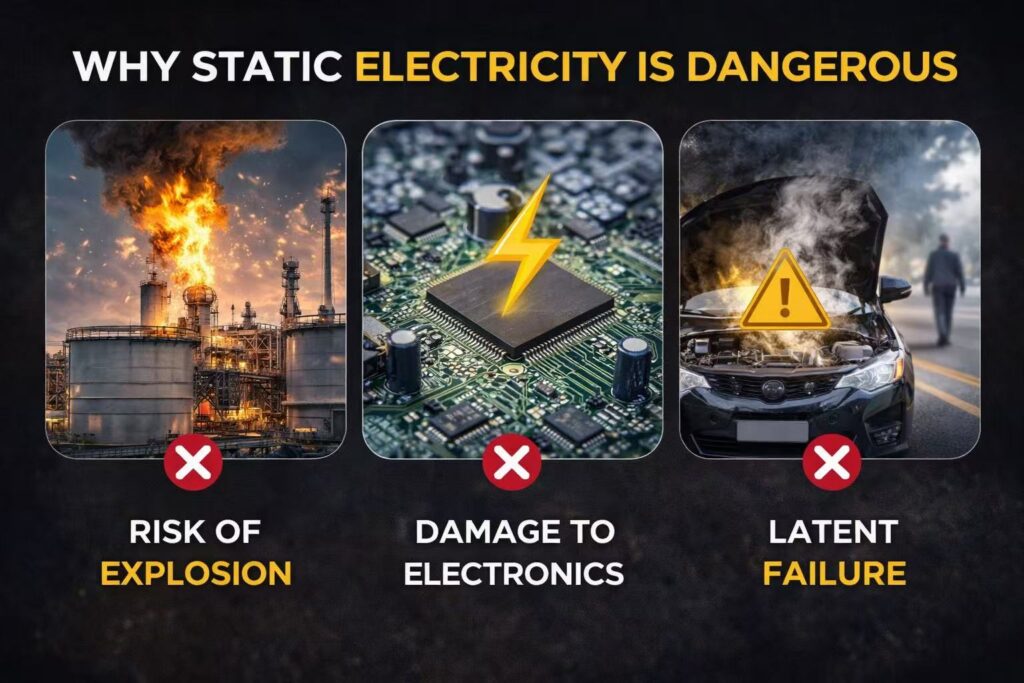
Human Body Static Discharge Device
Complete Guide (2026)
Learn how human body static discharge devices work, why they matter in hazardous environments, and how to choose the right anti-static safety solution for oil, gas, cleanroom, and industrial applications.