Adjustable ESD Work Benches Manufacturer & Supplier in China
ESD Workbenches for Electronics Assembly and PCB Production
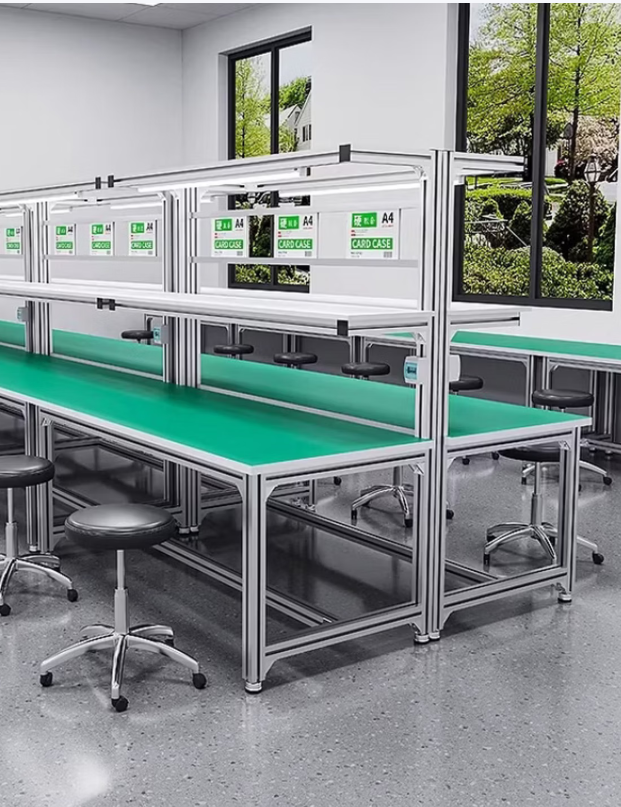
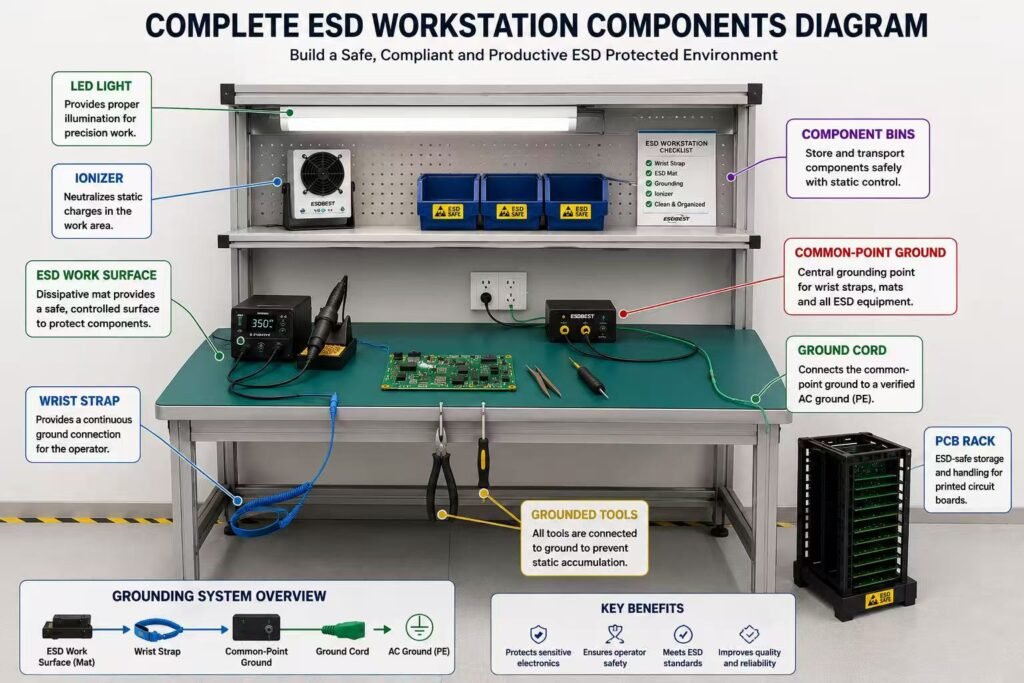
Build a complete static-controlled workstation with an ESD work surface, common-point grounding, wrist-strap connections, adjustable shelves, lighting, storage and accessories configured for your production process.
ESDBEST supplies ESD workbenches for PCB assembly, SMT inspection, electronics repair, testing laboratories, semiconductor handling, cleanrooms and industrial ESD protected areas. Standard and custom configurations are available for individual workstations, production lines and complete factory projects.
Why Buyers Choose ESDBEST
- Complete ESD workstation configurations
- Standard and custom workbench sizes
- ESD mats, grounding cords and common-point ground systems
- Adjustable shelves, lighting and electrical accessories
- OEM branding and project-based production
- Support for electronics factories, laboratories and cleanrooms
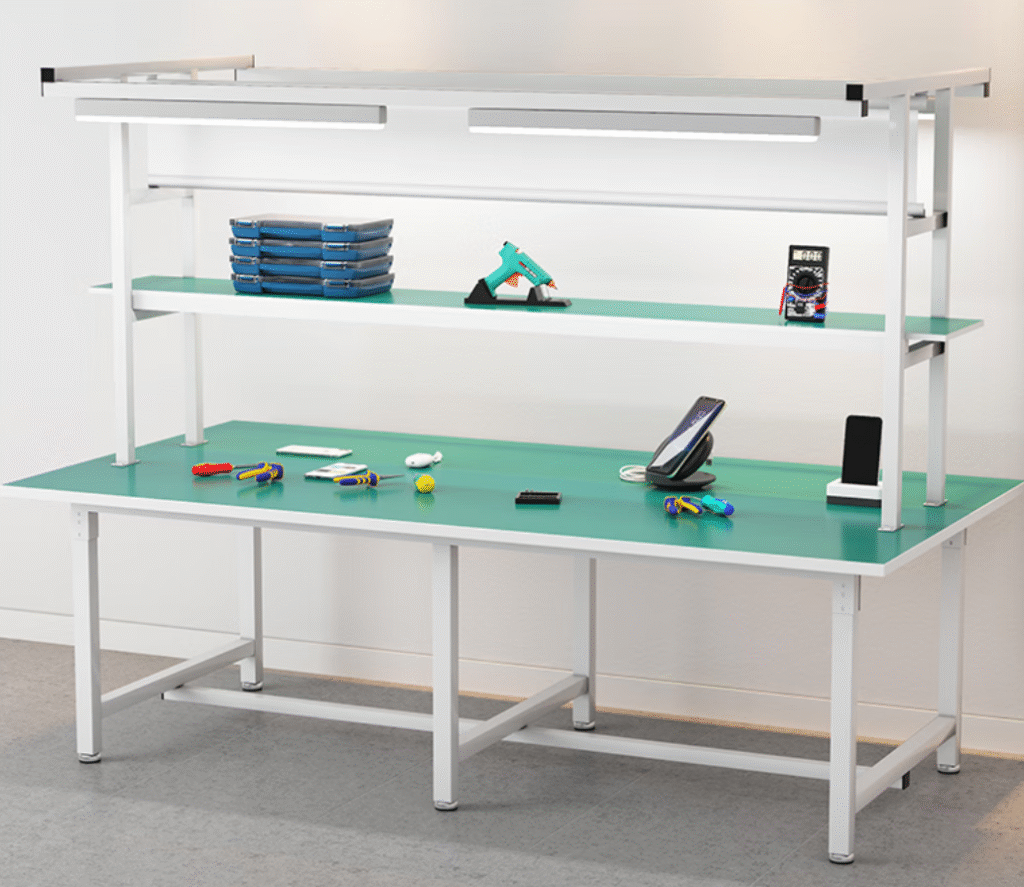
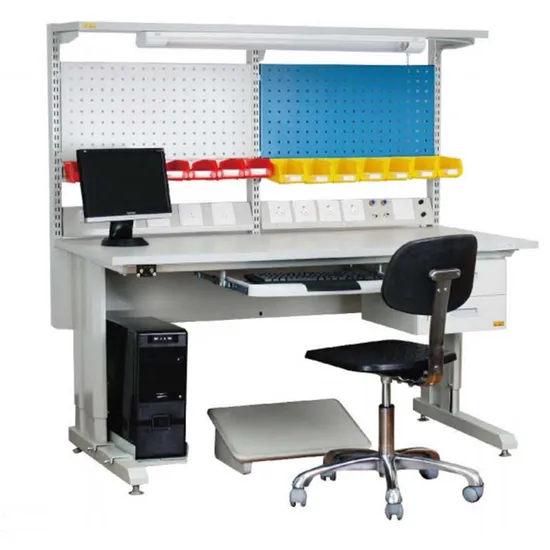
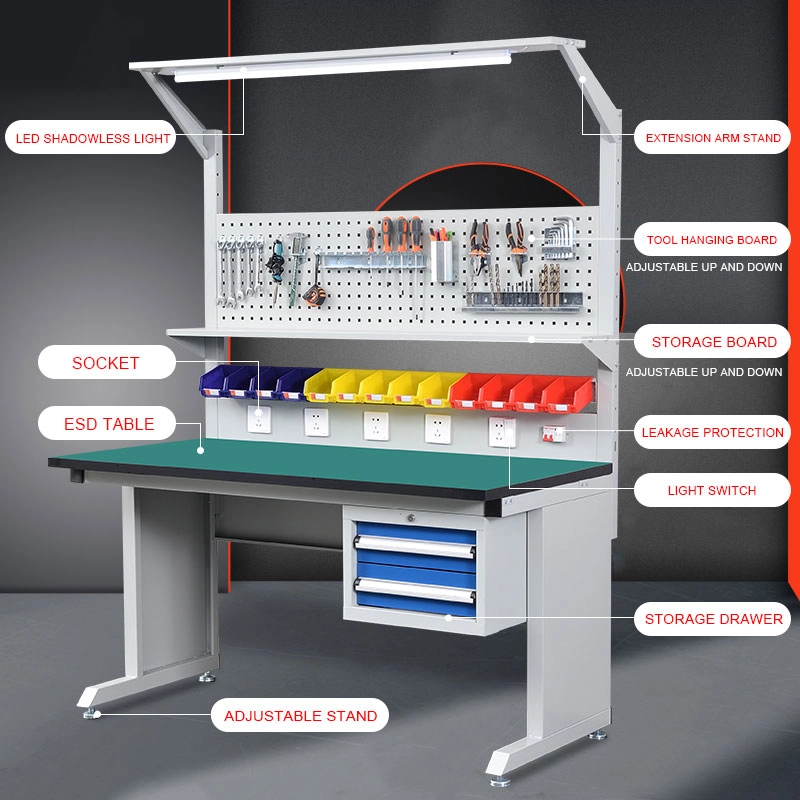
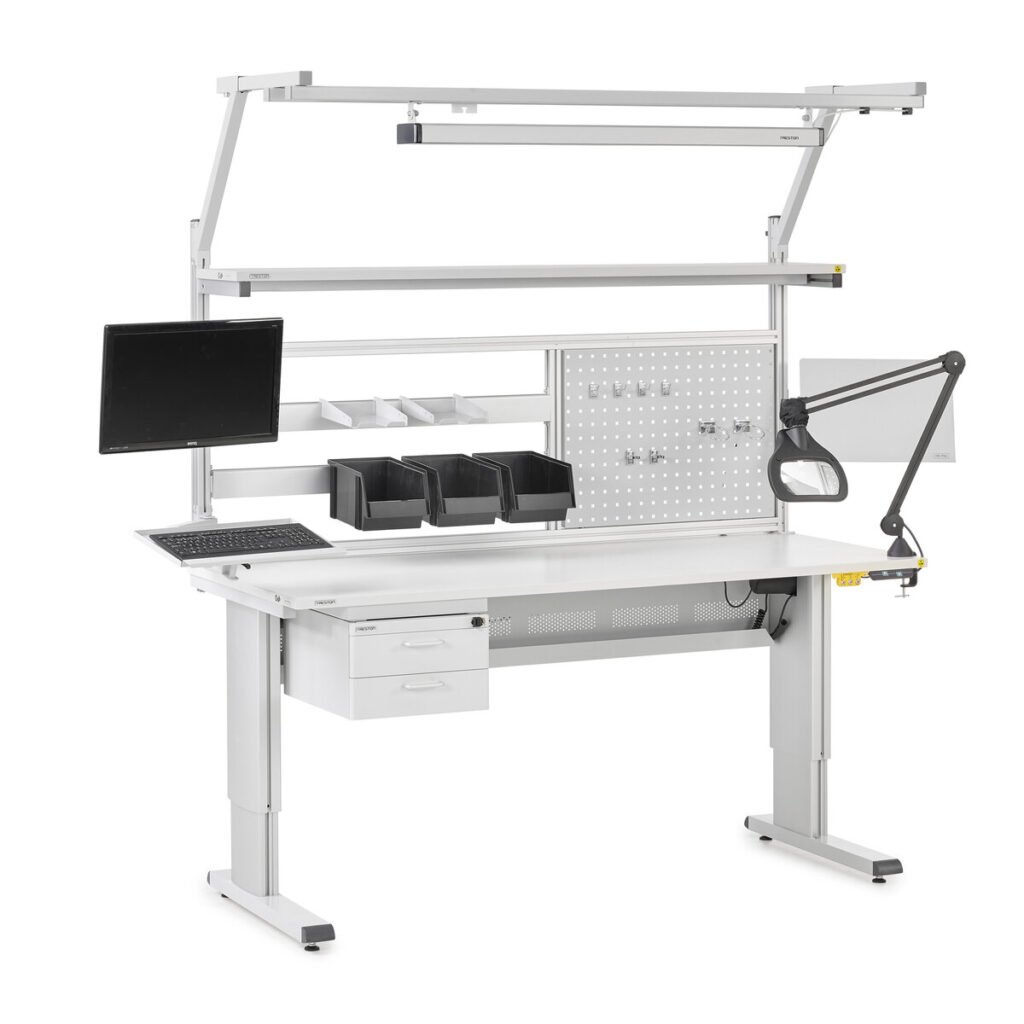
The work surface is only one part of a complete workstation. Review our complete ESD mat guide to compare bench mats, floor mats, grounding methods and resistance requirements.
For detailed installation instructions, see how to ground an ESD mat.
Find the Right ESD Workbench Configuration
Different operations require different workstation layouts. Select the application closest to your process.
PCB Assembly Workbench
Recommended for component insertion, hand assembly, cable assembly and small-batch electronics production.
Suggested configuration:
- ESD work surface
- Common-point ground
- Wrist-strap connection
- Overhead shelf
- LED task lighting
- Component bins
- Tool rail
- Power outlets
SMT Inspection Workbench
Recommended for visual inspection, AOI review, microscope inspection and quality control.
Suggested configuration:
- Low-glare ESD work surface
- Adjustable lighting
- Microscope mounting area
- Monitor support
- Grounding point
- Conductive component trays
- Height-adjustable frame
Electronics Repair and Rework Bench
Recommended for soldering, desoldering, diagnostics, calibration and PCB repair.
Suggested configuration:
- Heat-resistant ESD bench mat
- Soldering iron grounding
- Wrist-strap connection
- Fume extraction support
- Ionizer mounting position
- Tool holders
- Multiple power outlets
- Upper equipment shelf
Laboratory ESD Workstation
Recommended for research, testing, calibration, medical electronics and precision instruments.
Suggested configuration:
- Stable work surface
- Instrument shelf
- Cable management
- Grounding system
- ESD-safe seating compatibility
- Adjustable lighting
- Custom instrument cutouts
Production-Line ESD Workbench
Recommended for multi-operator assembly lines and repeatable manufacturing processes.
Suggested configuration:
- Modular workbench frames
- Connected line layout
- Standardized grounding
- Flow racks
- Material bins
- Work instructions
- Lighting and power distribution
- Adjustable workstation spacing
Need help selecting a configuration? Send ESDBEST your product dimensions, process photographs, workstation drawing, required quantity and available floor space.
What Is an ESD Workbench?
An ESD workbench is a workstation designed to control electrostatic charge while sensitive electronic devices, components or assemblies are handled.
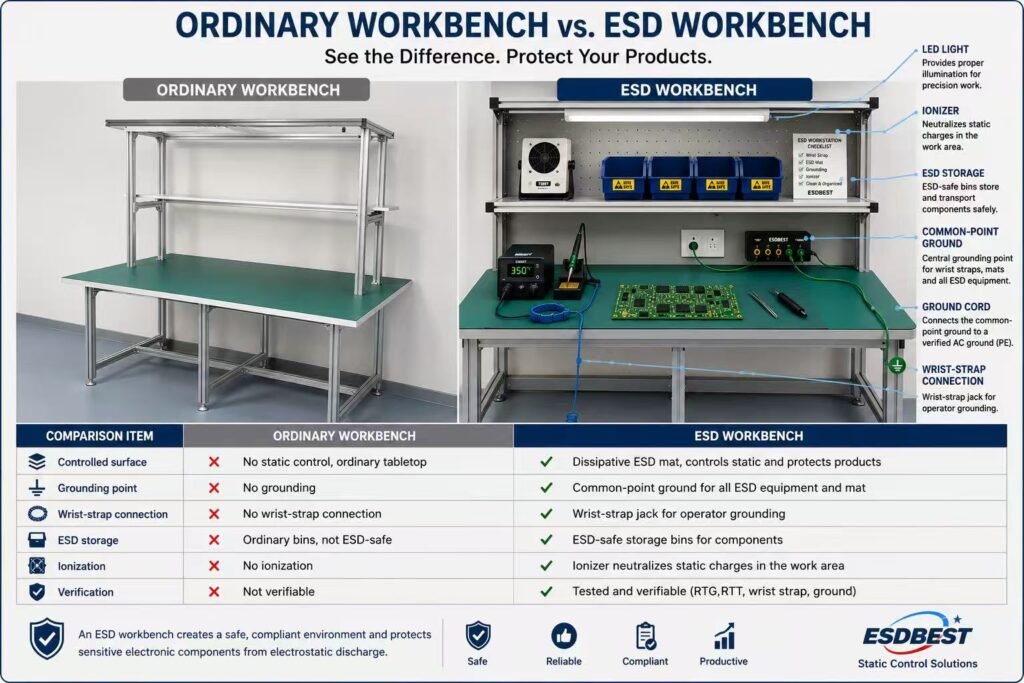
It is more than a metal table with an anti-static mat. A properly configured ESD workstation combines the work surface, grounding system, operator grounding equipment, storage, tools and nearby accessories into one controlled working area.
A complete ESD workbench may include:
- An ESD-safe work surface or grounded ESD bench mat
- A common-point ground
- A work-surface grounding cord
- Wrist straps and wrist-strap connection points
- Grounded tools and equipment
- ESD-safe trays, bins and storage
- Adjustable shelves and lighting
- An ionizer where isolated conductors or necessary insulators are present
- ESD-safe seating or a footwear-and-flooring personnel grounding system
- Test points and compliance-verification equipment
The purpose of the workstation is not to make every object “anti-static.” Its purpose is to keep conductors at an appropriate electrical potential, provide controlled dissipation paths and reduce electrostatic risks during the handling of electrostatic-discharge-sensitive devices.
ESD Workbench, ESD Workstation and Anti-Static Workbench
These terms are often used interchangeably, but they can imply different levels of control.
An anti-static workbench may simply use materials that generate less static electricity.
An ESD workbench should include an engineered work surface and a defined grounding method.
An ESD workstation normally refers to the complete controlled working area, including the bench, work surface, personnel grounding, accessories, tools and verification process.
For electronics manufacturing, buyers should evaluate the complete workstation instead of selecting a table based only on its surface color or “anti-static” label.
Why an Ordinary Workbench Is Not Enough
A standard industrial table may be strong and durable, but it is not automatically suitable for handling ESD-sensitive components.
Several risks may remain:
Insulating Work Surfaces
Plastic laminates, untreated wood, foam, adhesive tape and decorative surfaces can retain electrostatic charge. If these materials are close to exposed circuit boards or components, they may create an uncontrolled electrostatic field.
Ungrounded Metal Parts
A metal frame is conductive, but conductivity alone does not make it ESD safe. An isolated metal shelf, tool or frame component can remain at a different electrical potential until it contacts another conductor.
No Controlled Grounding Point
Connecting cords to different pipes, screws, machine frames or unverified outlets creates an inconsistent grounding system. A workstation should use a clearly identified grounding or equipotential bonding arrangement.
Unsuitable Storage
Ordinary plastic bins, trays, document sleeves and packaging materials may generate or retain charge. ESD-sensitive items should be handled and stored in materials selected for the required ESD control function.
Incomplete Personnel Grounding
A grounded work surface does not ground the operator. When personnel handle exposed ESD-sensitive items, an appropriate wrist-strap or footwear-and-flooring system may also be required.
No Verification Process
Even a properly installed workbench can become ineffective when a cord breaks, a snap loosens, a mat becomes contaminated or an operator stops following the grounding procedure. Periodic testing is therefore part of an effective workstation program.
Main Components of a Complete ESD Workbench
1. Workbench Frame
The frame provides mechanical support for the workstation, shelves, tools and production equipment.
Common frame options include:
- Powder-coated steel
- Stainless steel
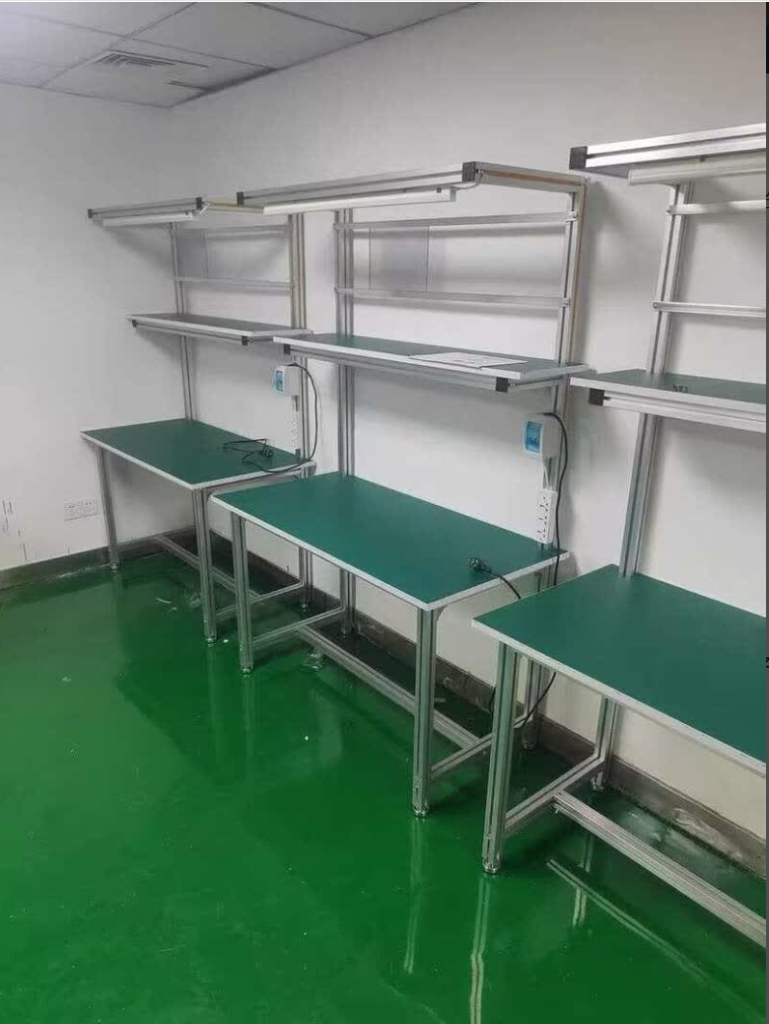
- Aluminum profile
- Modular industrial frames
- Fixed-height frames
- Manually adjustable frames
- Electrically height-adjustable frames
The frame should be stable under the expected working load. Electrical continuity and grounding requirements should be determined by the customer’s ESD control plan rather than assumed from the frame material alone.
2. ESD Work Surface
The work surface is where components, tools, trays and assemblies are placed.
Typical options include:
- Two-layer rubber ESD mat
- Static-dissipative laminate
- Conductive work surface
- Heat-resistant ESD work mat
- Custom-cut ESD mat
- Replaceable roll-stock mat
ESDBEST commonly supplies two-layer rubber ESD mats for electronics workstations. The upper layer provides a controlled working surface, while the lower conductive layer supports connection to the grounding system.
The exact resistance values must be verified against the product datasheet, test method and customer specification.
3. Common-Point Ground
The common-point ground provides a designated location for connecting the work surface and personnel grounding devices.
A typical workstation may connect:
- The ESD work surface
- One or more wrist straps
- Groundable fixtures
- Selected equipment
- Continuous monitors
The grounding layout should be documented and easy for operators and auditors to identify.
4. Wrist-Strap Connection
A wrist strap provides a direct personnel-grounding method for seated operators or processes where footwear-and-flooring grounding is not sufficient.
A workstation may include:
- Single wrist-strap socket
- Dual wrist-strap socket
- Common-point ground block
- Continuous wrist-strap monitor
- Visual or audible alarm system
The wrist strap should connect to the designated personnel-grounding point rather than being clipped to an unverified shelf, mat edge or machine cover.
5. Shelves and Flow Racks
Shelves keep equipment and material within the operator’s working zone.
Available options may include:
- Fixed upper shelves
- Adjustable shelves
- Sloped flow racks
- Component-bin rails
- Monitor shelves
- Instrument shelves
- Under-table storage
Where exposed ESD-sensitive items are placed directly on shelves, the surface material and grounding arrangement should be evaluated as part of the workstation.
6. Lighting
Good lighting supports assembly accuracy and visual inspection.
Common configurations include:
- LED task light
- Adjustable-angle light
- Magnifying lamp
- Inspection light
- Overhead production-line lighting
Lighting fixtures should be positioned to reduce shadows and glare without interfering with ionizer airflow, microscope positioning or operator movement.
7. Power and Cable Management
A practical ESD workstation may require:
- AC power outlets
- International socket configurations
- USB charging ports
- Network cable routing
- Air-line connections
- Cable trays
- Tool power connections
- Emergency power isolation
Electrical installation should be completed by qualified personnel in accordance with local electrical requirements.
8. ESD Storage and Handling Accessories
Compatible workstation accessories include:
- Conductive component bins
- Static-dissipative trays
- ESD document holders
- PCB racks
- Reel holders
- Tool holders
- ESD-safe waste bins
- Groundable carts
- ESD packaging
9. Ionization
Grounding controls charge on conductors, but necessary insulators and isolated conductors may require ionization.
An ionizer may be useful where the process includes:
- Plastic housings
- Insulating films
- Adhesive liners
- Optical materials
- Connector bodies
- Unavoidable plastic fixtures
- Isolated component leads
- High-sensitivity devices
Ionizers should be selected and positioned based on the working distance, coverage area, decay performance, balance and maintenance requirements.
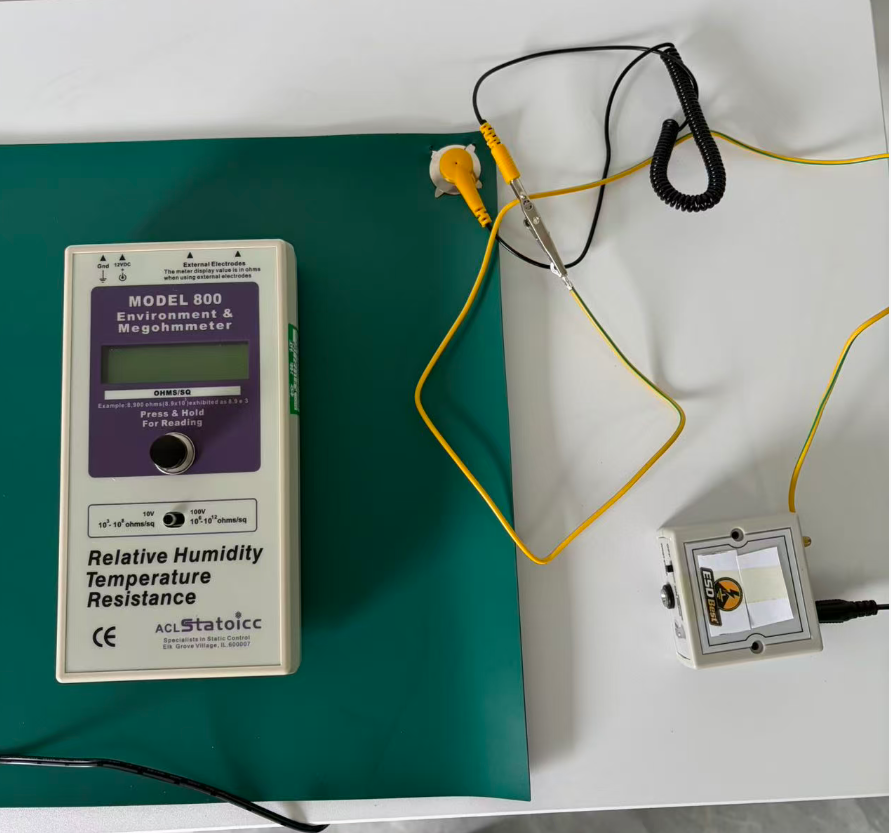
Work-surface performance should be verified using a defined procedure. Read our ESD mat resistance testing guide.

ESD Workbench Types
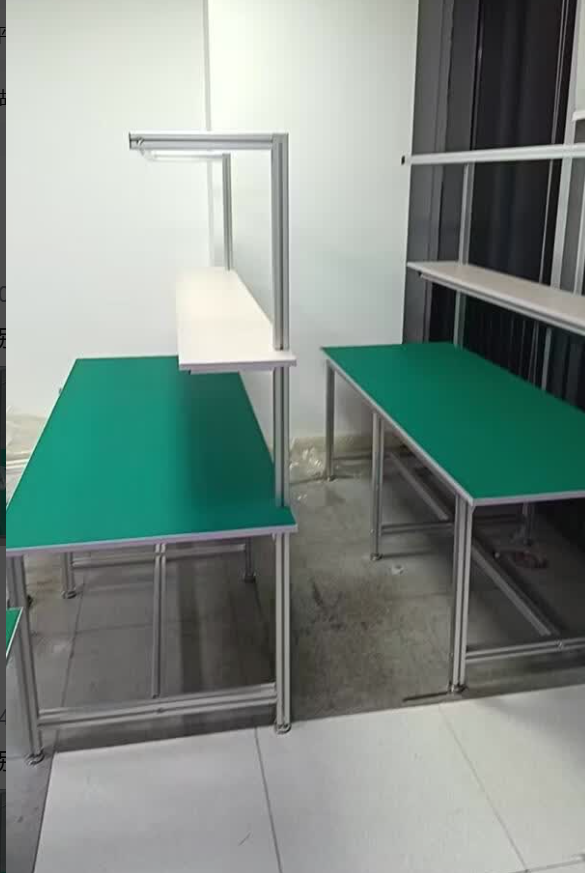
Fixed-Height ESD Workbench
A fixed-height model is suitable for standardized assembly operations where operators perform similar tasks throughout the shift.
Advantages:
- Simple construction
- Stable load support
- Lower acquisition cost
- Easy line integration
- Suitable for standardized processes
Height-Adjustable ESD Workbench
A height-adjustable workbench can accommodate different operators and seated or standing tasks.
Options include:
- Manual crank adjustment
- Pin or bolt adjustment
- Electric height adjustment
It is suitable for laboratories, repair centers and mixed-process workstations.
Modular ESD Workbench
A modular workstation can be expanded with shelves, rails, lights, drawers, monitor supports and material-flow components.
It is recommended where production layouts change frequently or several product models share one line.
Mobile ESD Workbench
A mobile workstation uses casters for movement between production areas.
The grounding method must be considered carefully. Moving a bench can interrupt a fixed ground connection, so the workstation should not be assumed to remain ESD controlled simply because its surface material is dissipative.
Heavy-Duty ESD Workbench
Heavy-duty workbenches are designed for large equipment, test instruments, batteries, industrial electronics or high working loads.
Important selection factors include:
- Frame load capacity
- Surface load distribution
- Equipment vibration
- Shelf loading
- Grounding continuity
- Access for lifting and maintenance
Cleanroom ESD Workbench
A cleanroom workstation should consider both electrostatic control and contamination control.
Possible requirements include:
- Stainless-steel or cleanroom-compatible frame
- Low-particle surface materials
- Easy-to-clean construction
- Minimal gaps and particle traps
- Cleanroom-compatible seating
- Controlled storage
- Ionization
- Customer-specified material documentation
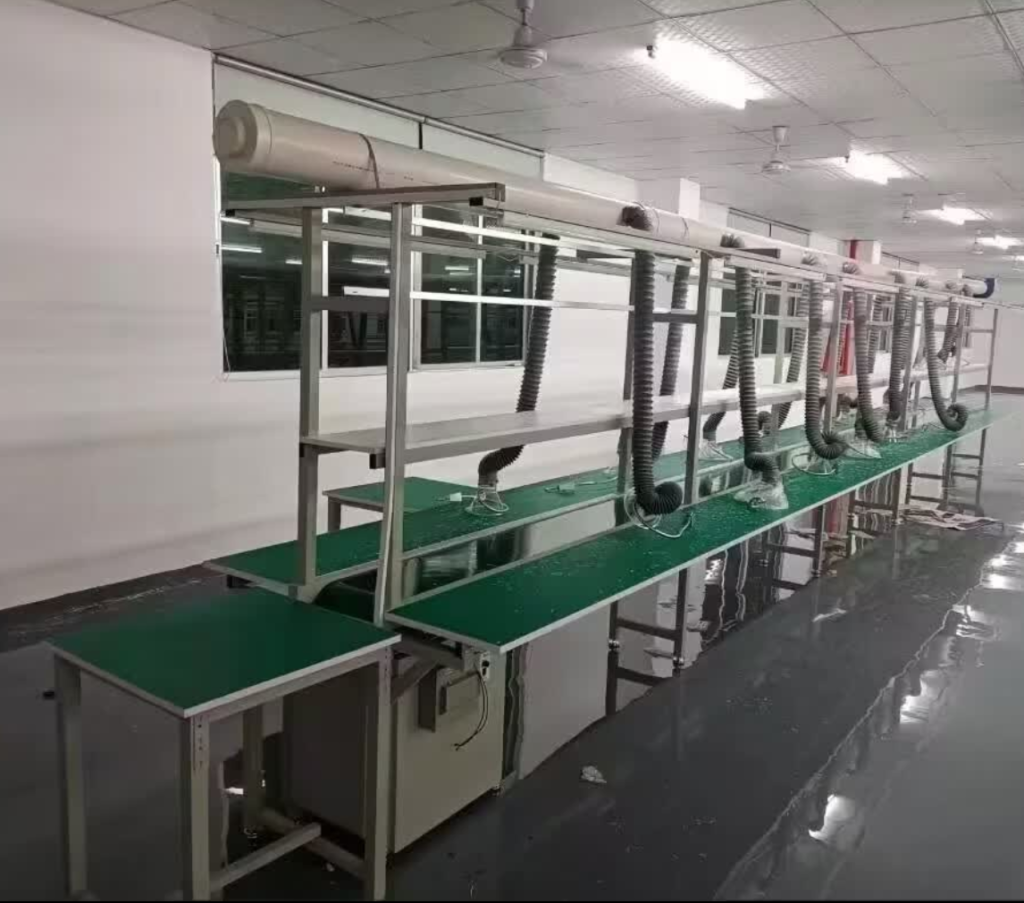
Multi-Operator Production Workbench
Multi-operator systems combine multiple stations into one line.
Possible layouts include:
- Straight line
- Back-to-back line
- U-shaped cell
- Island workstation
- Conveyor-integrated station
- Inspection and repair cell
Typical ESD Workbench Specifications
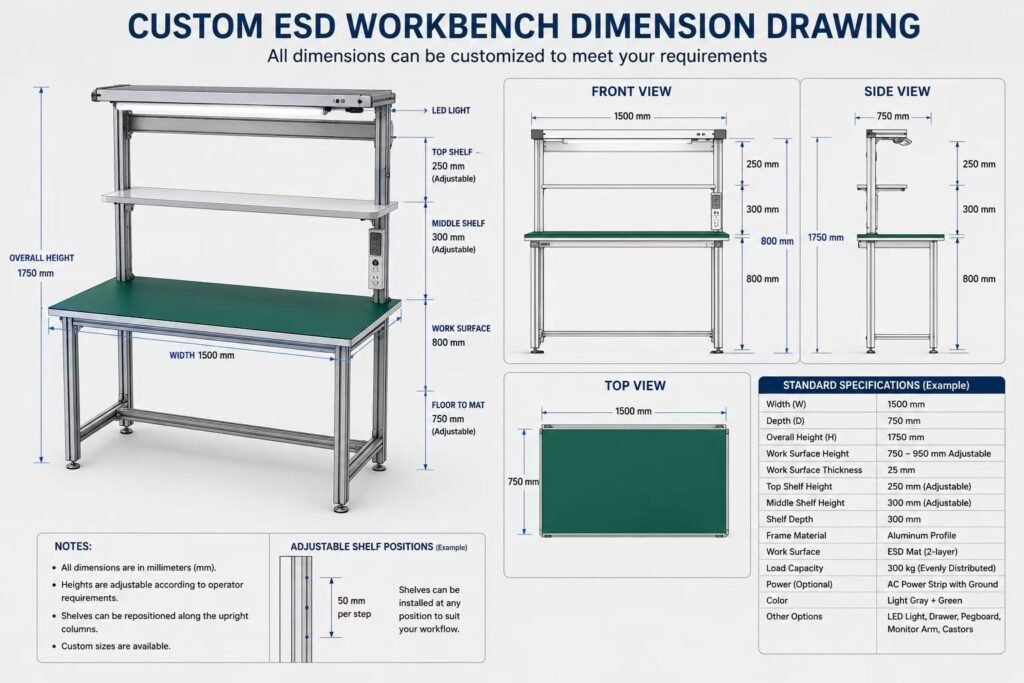
The following specifications are configuration examples. Final values should be confirmed in the approved quotation and technical drawing.
| Item | Typical Options |
|---|---|
| Workbench width | 1200 mm, 1500 mm, 1800 mm or custom |
| Workbench depth | 600 mm, 750 mm, 800 mm or custom |
| Workbench height | Fixed, manually adjustable or electrically adjustable |
| Frame material | Powder-coated steel, stainless steel or aluminum profile |
| Work surface | Two-layer rubber ESD mat or customer-specified surface |
| Mat thickness | Commonly 2 mm or 3 mm, subject to model |
| Surface color | Green, blue, gray or custom availability |
| Grounding | Work-surface cord and common-point ground |
| Wrist-strap points | Single, dual or monitored |
| Shelving | Fixed, adjustable, sloped or custom |
| Lighting | LED task light or inspection light |
| Electrical system | Customer-specified sockets and voltage |
| Storage | Drawers, bins, rails, cabinets or PCB racks |
| Load capacity | Confirmed according to frame and configuration |
| Branding | Logo, label, zone marking or OEM packaging |
| Quantity | Sample, small batch or factory project |
Do not select an ESD workbench using this table alone. Provide ESDBEST with the product weight, process, equipment layout, operator requirements and target ESD specification.
Choosing the ESD Work Surface
The work surface is one of the most important parts of the workstation.
Two-Layer Rubber ESD Mat
A two-layer rubber ESD mat is widely used for PCB assembly, electronics repair, inspection and general production benches.
Typical construction:
- Static-dissipative upper working layer
- Conductive lower layer
- Grounding snap or connection point
Advantages may include:
- Replaceable surface
- Flexible installation
- Comfortable working feel
- Multiple size options
- Custom cutting
- Compatibility with common-point grounding systems
ESD Laminate Work Surface
A static-control laminate can provide a permanently integrated worktop.
It may be suitable where:
- A rigid surface is preferred
- Frequent mat replacement is undesirable
- The workstation is produced as a complete custom unit
- The process requires a smooth, fixed top
Rubber Mat Versus ESD Laminate
Choose a rubber mat when flexibility, replacement and custom cutting are priorities.
Choose laminate when a permanent integrated worktop and rigid construction are priorities.
The final choice should consider:
- Required electrical performance
- Heat exposure
- Chemical exposure
- Cleaning method
- Mechanical wear
- Product weight
- Surface flatness
- Replacement cost
- Test method
- Customer ESD control plan
Do Not Assume Color Indicates Performance
Green, blue, gray or black surfaces may look like ESD-control materials, but color alone does not prove electrical performance.
Always request:
- Product specification
- Resistance test data
- Recommended test method
- Grounding instructions
- Cleaning instructions
- Batch or project documentation where required
ESD Workbench Grounding
An ESD workbench only functions as intended when its grounding system is correctly designed, installed and verified.
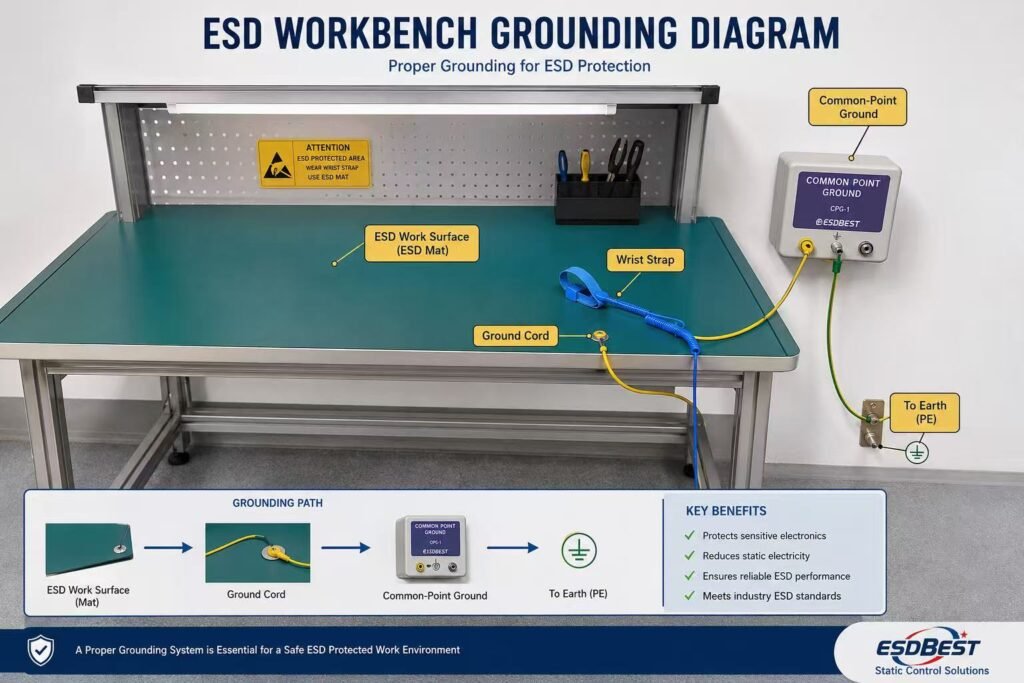
Typical Grounding Path
A typical arrangement is:
ESD work surface → grounding cord → common-point ground → verified facility grounding or equipotential bonding system
The operator’s wrist strap may connect to the same designated common-point grounding system.
Why Use a Common-Point Ground?
A common-point ground creates an identifiable connection location for the workstation.
It helps prevent operators from making improvised connections to:
- Painted table legs
- Shelves
- Water pipes
- Machine covers
- Random outlet screws
- Unverified metal structures
Should the Mat and Wrist Strap Share One Connection?
They may be connected through a properly designed common-point ground, provided the configuration follows the site’s ESD control plan and applicable requirements.
Each item should have an identifiable connection. Do not daisy-chain the wrist strap through an unsuitable clip or rely on accidental metal contact.
Is a Metal Workbench Automatically Grounded?
No.
A metal frame can remain electrically isolated because of:
- Powder coating
- Plastic feet
- Insulating casters
- Painted joints
- Loose mechanical connections
- Nonconductive floor surfaces
The grounding and bonding arrangement must be intentionally designed and tested.
Grounding Safety
ESD grounding and protective electrical grounding are related but not identical design tasks. Electrical installation should be reviewed by qualified personnel.
Do not connect an ESD workstation to an unknown conductor or improvise a grounding connection without verification.
How to Set Up an ESD Workbench
Step 1: Define the Process
Document:
- Product being handled
- ESD sensitivity
- Assembly or repair steps
- Operator position
- Required tools
- Materials entering the workstation
- Necessary insulators
- Equipment and power requirements
- Storage and material flow
- Local ESD control requirements
Step 2: Select the Workbench Size
Consider:
- Product dimensions
- Number of operators
- Reach distance
- Tool placement
- Monitor or microscope position
- Material input and output
- Required clearance
- Future process changes
Avoid oversizing the bench without considering operator reach. Frequently used items should remain inside a practical working zone.
Step 3: Install the ESD Work Surface
The surface should:
- Cover the required working area
- Remain flat
- Avoid unnecessary folds
- Avoid sharp edges
- Have an accessible grounding connection
- Remain clear of insulating decorative covers
Do not place an ordinary plastic sheet, desk protector, foam pad or non-ESD liner over the controlled work surface.
Step 4: Install the Common-Point Ground
Locate the connection where it is:
- Visible
- Accessible
- Protected from accidental impact
- Easy to inspect
- Clearly labeled
Step 5: Connect the Work Surface
Use the specified grounding cord and connection method.
Check that:
- The snap is secure
- The cord is not pinched
- The wire is protected from chair wheels
- The cord does not create a trip hazard
- The ground termination is verified
- The route is documented
Step 6: Install Personnel Grounding
For seated handling of exposed ESD-sensitive devices, a wrist-strap system is commonly used.
For standing and mobile operations, a validated footwear-and-flooring system may be selected according to the site program.
Provide:
- Clear operator instructions
- Test equipment
- Defined acceptance criteria
- Records where required
- Replacement procedures for failed items
Step 7: Control Tools and Materials
Review every item introduced into the working area:
- Hand tools
- Soldering equipment
- Trays
- Bins
- Documents
- Tape
- Packaging
- Brushes
- Cleaning cloths
- Fixtures
- Personal items
Remove unnecessary charge-generating materials. Where an insulator is essential to the process, evaluate its location, charge level and need for ionization.
Step 8: Add Ionization Where Required
Position the ionizer so airflow reaches the risk area without being blocked by shelves, microscopes or equipment.
Establish procedures for:
- Balance checks
- Decay-performance checks
- Emitter cleaning
- Filter maintenance
- Verification frequency
Step 9: Test the Completed Workstation
Do not release the workstation for ESD-sensitive production until the selected control items have been verified.
Step 10: Train Operators
Training should cover:
- Why ESD control is required
- How to connect the wrist strap
- How to check the workstation
- Which materials are prohibited
- How to handle PCBs
- What to do after a failed test
- How to report damaged cords or accessories
- Cleaning and maintenance rules
How to Test an ESD Workbench
The test method, instrument, electrode, voltage, limits and environmental conditions must be defined by the customer’s ESD control plan and applicable standards.
Work-Surface Resistance-to-Ground Test
This test evaluates the electrical path from the work surface to the workstation ground connection.
A typical verification process includes:
- Confirm the resistance meter is within calibration.
- Inspect the test electrode and lead.
- Confirm the workbench grounding cord is connected.
- Place the electrode at the defined test position.
- Connect the instrument according to its instructions.
- Apply the specified test voltage.
- Allow the reading to stabilize.
- Record the result.
- Repeat at additional locations.
- Compare results with the approved limit.
Point-to-Point Resistance Test
Point-to-point testing evaluates resistance across the work surface between two locations.
It can help identify:
- Inconsistent material
- Damaged areas
- Contamination
- Wear
- Poor layer continuity
- Localized surface changes
Ground Continuity Verification
The workstation grounding path should be checked for continuity and secure connections.
Inspect:
- Common-point ground
- Grounding cord
- Snap connection
- Frame bonds where applicable
- Equipment grounding
- Wrist-strap sockets
- Continuous monitor connections
Wrist-Strap System Test
A wrist strap should be tested as a complete operator system according to the selected verification procedure.
A visual inspection alone is not sufficient because the cord, resistor, band or connection may fail without visible damage.
Ionizer Verification
Where ionization is part of the control strategy, verification may include:
- Offset voltage or balance
- Positive decay time
- Negative decay time
- Working distance
- Airflow coverage
- Maintenance status
Environmental Conditions
Humidity and contamination can affect test results. Record relevant environmental conditions where required by the test plan.
Recommended Workstation Records
Maintain records appropriate to the facility, such as:
- Workstation identification number
- Location
- Test date
- Instrument identification
- Calibration status
- Test method
- Test voltage
- Measured values
- Environmental conditions
- Operator or inspector
- Pass/fail result
- Corrective action
- Retest result
Common ESD Workbench Mistakes
Installing an ESD Mat Without Grounding It
A dissipative surface without a defined grounding path may not provide the intended charge-control function.
Connecting the Ground Cord to an Unverified Metal Object
A table leg, shelf or machine frame should not be assumed to provide a suitable connection.
Covering the ESD Surface
Paper stacks, plastic desk covers, foam, packaging film and ordinary trays can block or undermine the controlled surface.
Using the Mat as the Wrist-Strap Connection
Do not improvise personnel grounding by attaching a wrist strap to an arbitrary part of the mat or ground cord. Use the designated connection system.
Ignoring Necessary Insulators
Plastic housings, adhesive tapes, films and other necessary insulators may remain close to sensitive devices. Grounding alone does not neutralize an insulator.
Placing the Ionizer Too Far Away
An ionizer may be present but ineffective if airflow does not reach the critical work area.
Cleaning With an Unsuitable Product
Some household cleaners, waxes and coatings leave residues that change surface performance.
Testing Only When the Bench Is Installed
Workstations require periodic verification because cords, snaps, mats and operator practices change over time.
Buying Only by Price
A low-cost table may become expensive when grounding, shelves, lights, accessories, testing and modification must be added later.
Applications
PCB Assembly
An ESD workbench provides a controlled location for:
- Through-hole assembly
- Manual component placement
- Cable assembly
- Connector installation
- Prototype production
- Final assembly
SMT Production
Typical uses include:
- SMT line preparation
- First-article inspection
- Feeder setup
- Component handling
- Post-reflow inspection
- Defect analysis
Electronics Repair and Rework
A repair workstation may combine:
- ESD mat
- Wrist strap
- Grounded soldering equipment
- Fume extraction
- Microscope
- Ionizer
- Test instruments
- PCB holders
Semiconductor Handling
Semiconductor processes may require enhanced control based on device sensitivity and process risk.
Configurations may include:
- Controlled work surface
- Continuous monitoring
- Ionization
- ESD-safe handling tools
- Restricted materials
- Defined storage
- More frequent verification
Testing and Calibration Laboratories
ESD workbenches support the handling of:
- Measurement instruments
- Sensors
- Control boards
- Medical electronics
- Communication modules
- Precision devices
Cleanrooms
Cleanroom configurations should combine ESD requirements with particle, material and cleaning requirements.
Education and Training Laboratories
Electronics training rooms can use standardized ESD workstations to teach correct PCB handling, wrist-strap use and grounding practices.
Battery and New-Energy Electronics
ESD workstations may be used for battery-management systems, inverter controls, charging modules and other electronic assemblies. Electrical and battery safety requirements must also be evaluated separately.
How to Choose an ESD Workbench
1. Define the ESD Requirement
Do not begin with table dimensions alone.
Confirm:
- Devices being handled
- ESD sensitivity
- Customer requirements
- Applicable standards
- Internal ESD control plan
- Test methods
- Acceptance limits
2. Define the Operation
Identify whether the workstation is used for:
- Assembly
- Inspection
- Repair
- Testing
- Packaging
- Training
- Laboratory work
- Cleanroom work
3. Calculate the Required Space
Include:
- Product area
- Tool area
- Material area
- Monitor or microscope
- Input and output trays
- Documentation
- Operator reach
- Maintenance access
4. Confirm Load Capacity
Provide the supplier with:
- Total equipment weight
- Maximum product weight
- Shelf loads
- Point loads
- Dynamic loading
- Vibration requirements
5. Select the Work Surface
Compare:
- Two-layer rubber mat
- Heat-resistant mat
- ESD laminate
- Stainless-steel configuration
- Custom-cut surface
6. Select Grounding and Monitoring
Choose between:
- Basic common-point ground
- Single wrist-strap connection
- Dual wrist-strap connection
- Continuous monitor
- Integrated workstation alarm
- Facility monitoring system
7. Select Accessories
Possible accessories include:
- LED light
- Power strip
- Drawer
- Tool rail
- Component bins
- PCB rack
- Monitor arm
- Microscope stand
- Footrest
- Keyboard tray
- Fume extractor
- Ionizer support
- Document holder
8. Plan for Expansion
A modular workstation may reduce future replacement costs when the production process changes.
9. Review Documentation
Before ordering, request:
- Technical drawing
- Bill of materials
- Electrical specifications
- Surface specification
- Grounding layout
- Accessory list
- Packaging method
- Installation instructions
- Test documentation where required
Custom ESD Workbench Solutions
ESDBEST supports custom ESD workstation projects based on process requirements, available space and factory layout.
Custom Dimensions
Available customization may include:
- Width
- Depth
- Height
- Shelf position
- Leg spacing
- Drawer size
- Equipment clearance
- Work-surface cutouts
Custom Frame and Surface
Options may include:
- Powder-coated steel
- Stainless steel
- Aluminum profile
- Two-layer rubber ESD mat
- Custom mat thickness
- Customer-specified work surface
Custom Accessories
Configure:
- Shelves
- Lights
- Drawers
- Tool rails
- Power outlets
- Air lines
- Monitor supports
- PCB holders
- Bin rails
- Ionizer brackets
- Grounding points
OEM and Branding
OEM options may include:
- Customer logo
- Product labels
- Color matching
- Custom cartons
- Installation markings
- Workstation numbering
- Project documentation
Factory and Production-Line Projects
For multi-station projects, provide:
- Factory layout
- Number of operators
- Process flow
- Product size
- Required cycle time
- Equipment list
- Utility locations
- Target installation date
- Local electrical requirements
ESDBEST can prepare a configuration proposal and quotation based on the supplied information.
Information Required for a Quotation
To receive an accurate ESD workbench quotation, send:
- Required quantity
- Workbench width, depth and height
- Fixed or adjustable height
- Required load capacity
- Work-surface material
- Shelf quantity and dimensions
- Lighting requirements
- Power-socket type and voltage
- Grounding requirements
- Drawer and storage requirements
- Required accessories
- Logo or OEM requirements
- Delivery country
- Project schedule
- Drawing or reference photograph
For custom production lines, a factory layout or simple hand-drawn sketch is helpful.
Why Choose ESDBEST?
Complete ESD Product Support
ESDBEST supplies ESD mats, wrist straps, grounding cords, ionizers, gloves, shoes, packaging and workstation accessories, allowing buyers to configure a coordinated ESD working area.
Custom Manufacturing
Workbench dimensions, shelves, storage, lighting, grounding points and accessories can be adapted to the process.
Electronics Manufacturing Experience
Configurations are developed for PCB assembly, SMT production, electronics repair, inspection, laboratories and industrial ESD protected areas.
Technical Documentation
Product specifications, drawings, grounding instructions and available test documentation can be prepared according to the project.
Bulk and Project Supply
Support is available for:
- Single samples
- Small production cells
- Factory expansion
- Multi-operator lines
- OEM projects
- Distributor orders
ESD Workbench Downloads
Download practical documents for workstation planning and operation:
- ESD Workbench Technical Datasheet
- Complete ESD Workstation Checklist
- ESD Workbench Installation and Grounding Guide
- ESD Work-Surface Resistance Test Form
- ESD Workbench Maintenance Checklist
- ESD Mat Technical Datasheet
- ESD Grounding Diagram
- OEM Workbench Configuration Form
Need Reliable ESD Work Benches for Your Factory?
Whether you need a standard ESD work bench, a modular station, or an adjustable work bench ESD solution, ESDBEST can support your project with factory-direct supply, customization, and bulk quotation service.
Get a Bulk Quote
Ask for Product Recommendations
Contact Our Factory Team
📞 Contact Us Today
For bulk orders, quotes, or product guidance, get in touch with our expert team:
Email: sales2@esdbest.com
Phone: +86 137 1427 2599
Frequently Asked Questions
What is an ESD workbench?
An ESD workbench is a workstation configured to control electrostatic charge while sensitive electronic components and assemblies are handled. It normally includes an ESD work surface, grounding system, personnel-grounding connection and compatible accessories.
Is an ESD workbench the same as an anti-static table?
Not always. An anti-static table may only use low-charge-generating materials. A complete ESD workbench should include defined electrical performance, grounding and verification procedures.
Does every ESD workbench need an ESD mat?
No. Some workbenches use an integrated static-dissipative laminate or another qualified work surface. Rubber ESD mats are popular because they are replaceable, flexible and available in custom sizes.
Does an ESD mat work without grounding?
A work surface intended to dissipate charge to ground needs an appropriate ground connection to perform that function as designed.
Can I ground an ESD mat to the metal workbench frame?
Only when the frame and its grounding path have been intentionally designed, verified and approved for that purpose. Do not assume a painted metal frame is grounded.
What is a common-point ground?
A common-point ground is a designated workstation connection point used to connect ESD control items such as the work surface and personnel-grounding devices to the selected grounding or equipotential bonding system.
Should the wrist strap connect directly to the mat?
Use the designated wrist-strap or common-point ground connection. Do not improvise a wrist-strap connection through an unsuitable mat clip or random conductive part.
What size ESD workbench do I need?
The correct size depends on the product, tools, material flow, equipment and operator reach. Common widths include 1200 mm, 1500 mm and 1800 mm, but custom sizes may be more suitable.
What is the best ESD workbench for PCB assembly?
A PCB assembly workstation typically uses a grounded ESD work surface, wrist-strap connection, task lighting, component storage, tool rail and suitable power outlets.
What is the best ESD workbench for electronics repair?
A repair bench commonly requires a heat-resistant ESD mat, wrist-strap point, grounded soldering equipment, microscope area, fume extraction, test-instrument shelf and possibly an ionizer.
Can an ESD workbench be height adjustable?
Yes. Manual and electric height-adjustable configurations are available.
Can ESDBEST customize the workbench size?
Yes. ESDBEST can customize width, depth, height, shelves, drawers, grounding points, lighting and accessories according to the project.
Can an ESD workbench be mobile?
Yes, but the grounding method must account for movement. A mobile table should not be assumed to remain grounded after it is moved.
Is a stainless-steel table an ESD workbench?
Not automatically. Stainless steel is conductive, but the complete table, grounding, operator system and process still need to be evaluated.
Do I need an ionizer at an ESD workstation?
An ionizer may be needed when necessary insulators or isolated conductors are present near ESD-sensitive items and grounding cannot control their charge.
How often should an ESD workbench be tested?
The verification frequency should be defined by the facility’s ESD control plan based on risk, use, historical performance and applicable requirements.
How do I test the ESD work surface?
A resistance meter and suitable electrode are used according to the selected work-surface test procedure. Record the test voltage, environmental conditions, test locations and results.
Can I use a household cleaner on an ESD mat?
Use a cleaner approved for the mat material. Household products may leave wax, silicone or other residues that affect surface performance.
Can ordinary plastic bins be used on an ESD workbench?
Ordinary plastic containers may generate or retain charge. Use handling and storage materials selected for the ESD control requirement.
Can paper be placed on an ESD workbench?
Necessary documents may be permitted under a defined control procedure, but excessive paper and plastic folders should not cover the controlled work surface or remain close to highly sensitive devices without evaluation.
Does a grounded workbench ground the operator?
No. The operator requires a separate approved personnel-grounding method, such as a wrist strap or a validated footwear-and-flooring system.
What standards apply to ESD workstations?
Organizations commonly develop ESD control programs using requirements and guidance from standards such as ANSI/ESD S20.20 and IEC 61340-5-1. The exact standards and limits should be selected by the customer.
Does ESDBEST provide grounding accessories?
Yes. Available products may include work-surface grounding cords, common-point ground components, wrist straps and related ESD workstation accessories.
Does ESDBEST provide complete production-line workbenches?
Yes. Multi-station and production-line configurations can be developed from the customer’s factory layout and process requirements.
Can I add my company logo?
OEM branding, labels and other customization may be available depending on order quantity and configuration.
What information is needed before ordering?
Provide the quantity, dimensions, load, work surface, shelves, lighting, power outlets, grounding, accessories, destination and project schedule.
Request a Custom ESD Workbench Quote
Send ESDBEST your workstation dimensions, required quantity, application, load capacity, shelves, grounding system, electrical requirements and accessories.
Our team will review your requirements and prepare a configuration proposal for your electronics assembly, PCB production, repair, inspection or laboratory project.
Email: sales2@esdbest.com
Phone / WhatsApp: +86 137 1427 2599
Related ESD Resources
Continue building your ESD protected area with these technical guides.
What Is an ESD Mat?
Understand how ESD mats protect sensitive electronics from electrostatic discharge.
Read More →ESD Bench Mat
Learn how bench mats create a grounded work surface for PCB assembly and electronics manufacturing.
Read More →ESD Floor Mat
Discover anti-static floor protection for EPA areas and electronics production lines.
Read More →How to Ground an ESD Mat
Step-by-step guide to grounding an ESD mat correctly using a common-point ground.
Read More →How to Test an ESD Mat
Measure RTG and RTT resistance using the ACL800 digital megohmmeter.
Read More →Conductive vs. Static-Dissipative Mats
Compare electrical resistance, applications and ESD performance.
Read More →Anti-Static Mat Guide
Learn the differences between anti-static mats and professional ESD mats.
Read More →Static-Dissipative Mat Explained
Understand why static-dissipative mats are widely used in electronics assembly.
Read More →Recommended ESD Products
Complete your ESD workstation with professional static control products from ESDBEST.
Two-Layer Rubber ESD Bench Mat
Durable dual-layer rubber mat for electronics workbenches.
View Product →ESD Work-Surface Grounding Cord
Reliable grounding cord with 10 mm snap connection.
View Product →Common-Point Ground
Central grounding point for wrist straps and ESD work surfaces.
View Product →ESD Wrist Strap
Continuous grounding for operators handling sensitive electronic devices.
View Product →Wrist-Strap Tester
Quickly verify wrist strap continuity before entering the EPA.
View Product →ESD Ionizer
Neutralize static charges on insulating materials and components.
View Product →ESD Gloves
Protect sensitive PCB assemblies from static and contamination.
View Product →ESD Shoes
Ground personnel safely when used with conductive flooring.
View Product →