Complete Guide for Electronics and ESD Protection
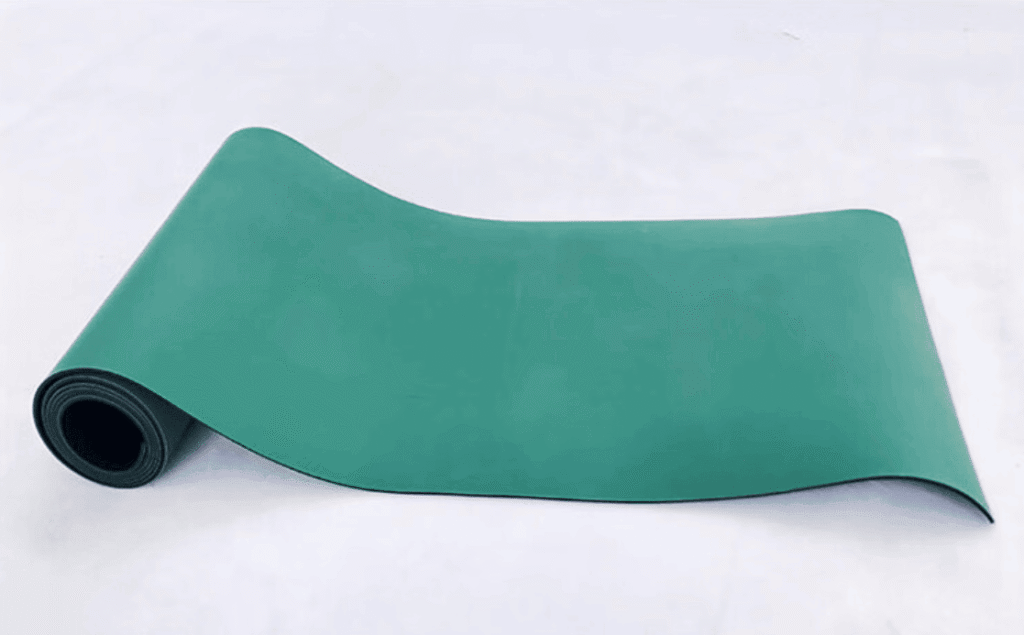
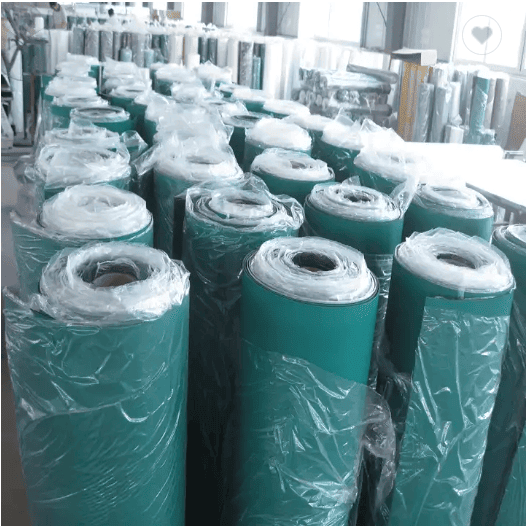
An anti static mat is a static control surface designed to reduce, control, and dissipate electrostatic charges generated by people, tools, workbenches, floors, packaging materials, and electronic components.
In electronics manufacturing, PCB assembly, repair work, SMT production, and testing areas, an anti static mat helps reduce the risk of electrostatic discharge damage to sensitive electronic components.
However, not every anti static mat is suitable for professional ESD protection. For electronics manufacturing, the mat should have a controlled resistance range, a reliable grounding path, and stable surface performance.
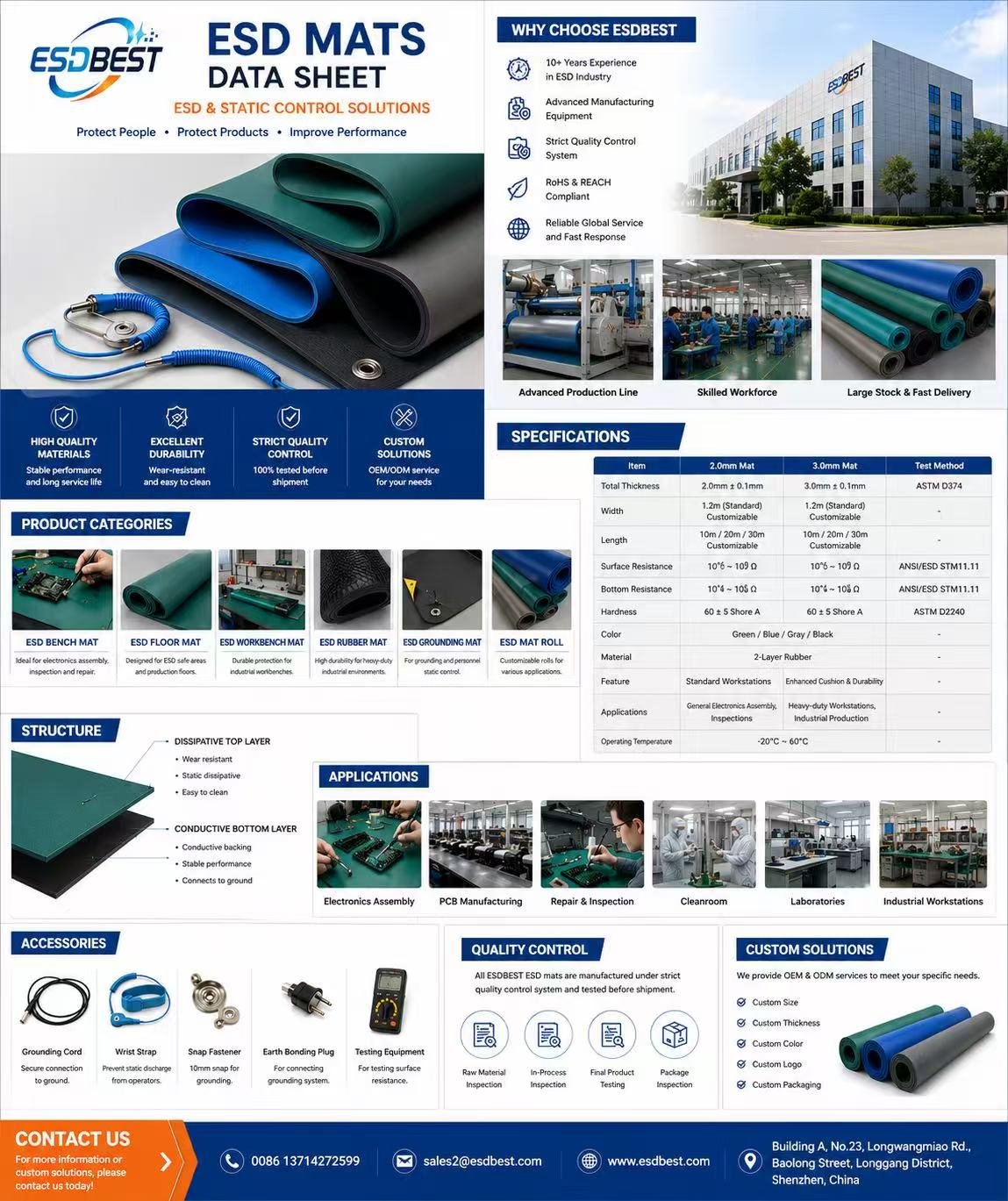
For most ESD workstations, the commonly used dissipative range is:
10⁶ Ω to 10⁹ ΩAn anti static mat is a mat used to reduce static electricity on work surfaces or floors. It is commonly placed on workbenches, production tables, repair stations, packaging areas, testing benches, and sometimes factory floors.
Static electricity is invisible, but it can damage electronic components. A person walking across a floor, touching plastic packaging, wearing ordinary clothing, or handling a PCB can generate static charges.
In many cases, the operator may not feel the discharge, but the component may still be damaged. This is why anti static mats are widely used in electronics-related environments.
Common application areas include:
PCB assemblySMT production
Electronics repair
Laboratory testing
Semiconductor handling
ESD workstations
Cleanroom work areas
Electronic component packaging
An anti static mat works as a protective surface between the operator, the workbench, and the electronic product.
Static electricity becomes dangerous because it may discharge suddenly into sensitive components.
Many electronic parts can be damaged by very low electrostatic voltage. A human may not feel a static shock until the voltage is much higher, but sensitive chips, ICs, sensors, LEDs, and PCB components can be affected at much lower levels.
Static damage can cause:
Immediate component failureHidden defects
Reduced product lifetime
Intermittent circuit problems
Quality complaints
Higher repair cost
Production yield loss
That is why anti static mats and ESD mats are important in electronics manufacturing.
An anti static mat works by reducing static charge accumulation and providing a controlled path for static electricity to dissipate.
The basic working path is:
Static charge↓
Anti static mat surface
↓
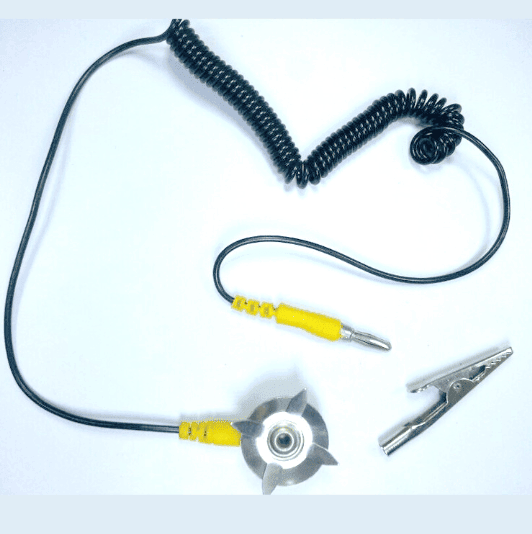
Grounding cord
↓
Common point ground
↓
Earth ground
A good anti static mat should not be too conductive and should not be too insulating.
If it is too conductive, discharge may happen too quickly.
If it is too insulating, static charge may remain on the surface.
For professional electronics manufacturing, controlled dissipation is the key.
Resistance is one of the most important factors when choosing an anti static mat.
Different mats may have different resistance levels:
| Mat Type | Typical Resistance Range | Meaning |
|---|---|---|
| Conductive Mat | 10⁴–10⁶ Ω | Fast charge dissipation |
| Dissipative Mat | 10⁶–10⁹ Ω | Controlled static dissipation |
| Anti Static Surface | 10⁹–10¹¹ Ω | Reduces static generation |
| Insulative Surface | >10¹¹ Ω | Poor static control |
For most electronics manufacturing and PCB assembly workstations, a dissipative surface is usually preferred.
Recommended range for many ESD work surfaces:10⁶ Ω to 10⁹ Ω
📞 Contact Us Today
For bulk orders, quotes, or product guidance, get in touch with our expert team:
Email: sales2@esdbest.com
Whatsapp: +86 137 1427 2599
Anti static mats are available in different forms depending on the work environment.
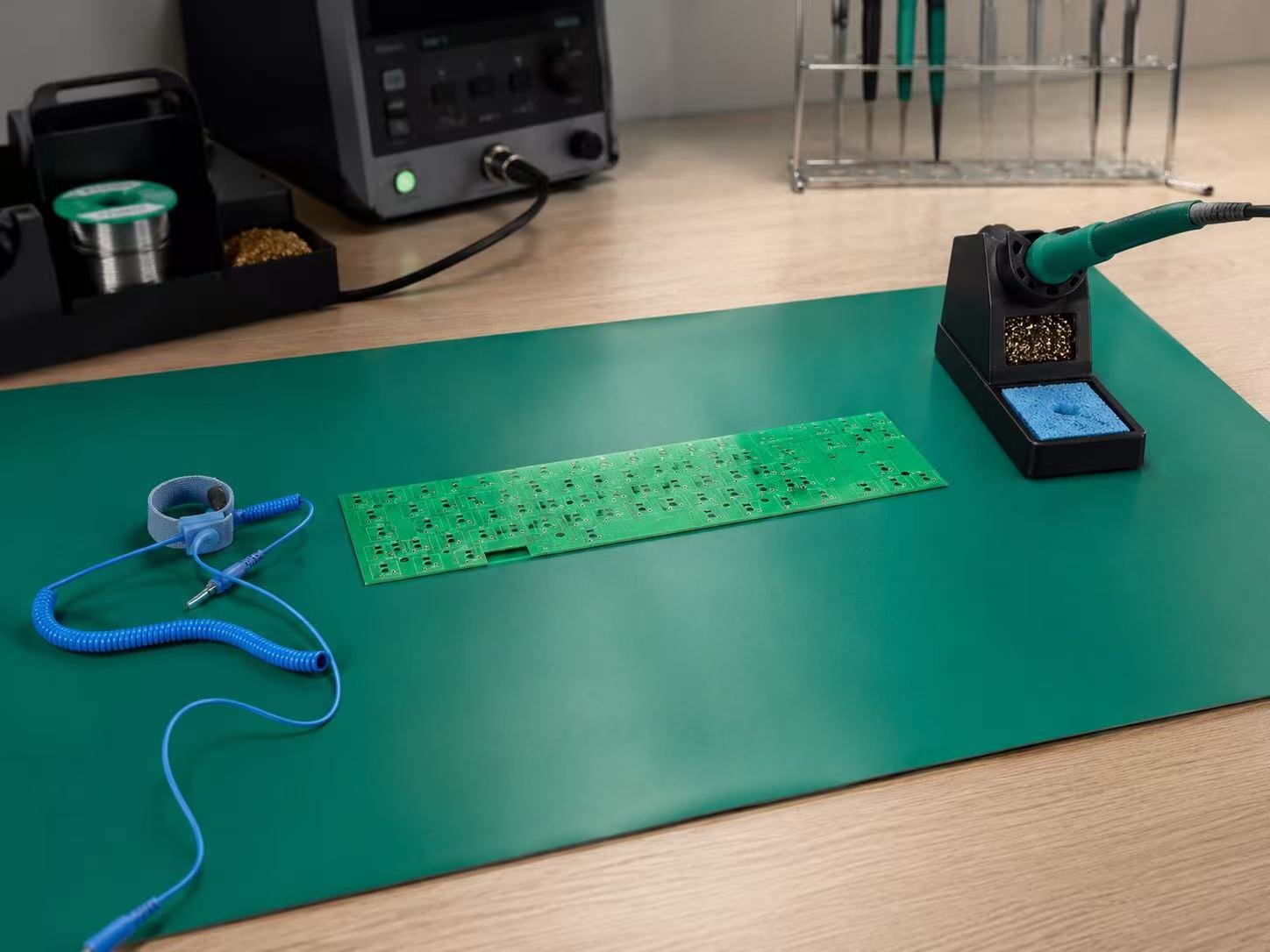
An anti static table mat is placed on a workbench or production table. It is commonly used for electronics assembly, repair, testing, and inspection.
Typical applications:
PCB repairSoldering work
Electronic product assembly
Component inspection
Testing stations
This is one of the most common types of anti static mats.
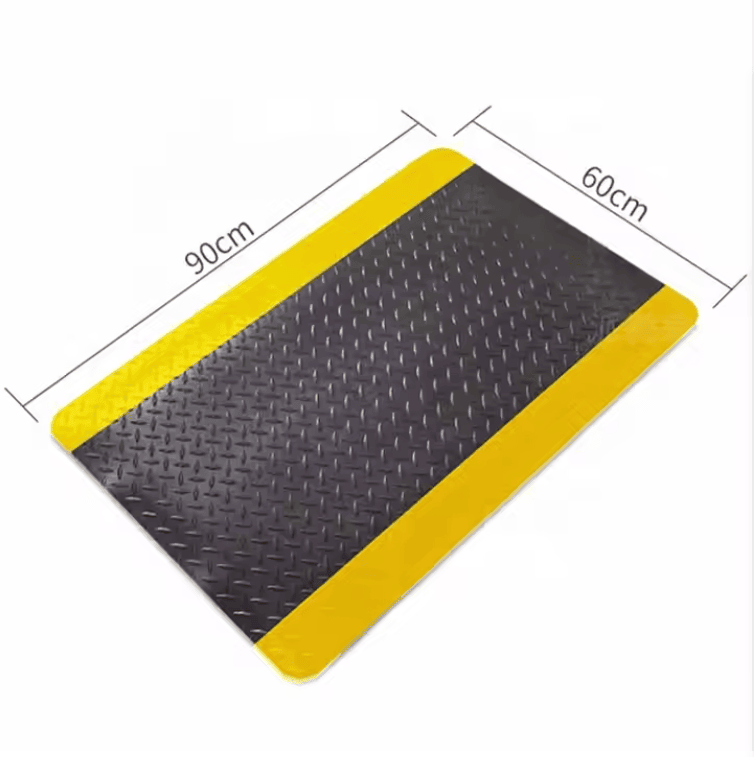
An anti static bench mat is similar to a table mat but is usually used in a more professional ESD workstation.
It may be connected to:
Grounding cordCommon point groundWrist strap
ESD monitor
ESD workbench
For factories, an anti static bench mat should have stable resistance performance and reliable grounding.
Recommended internal link:
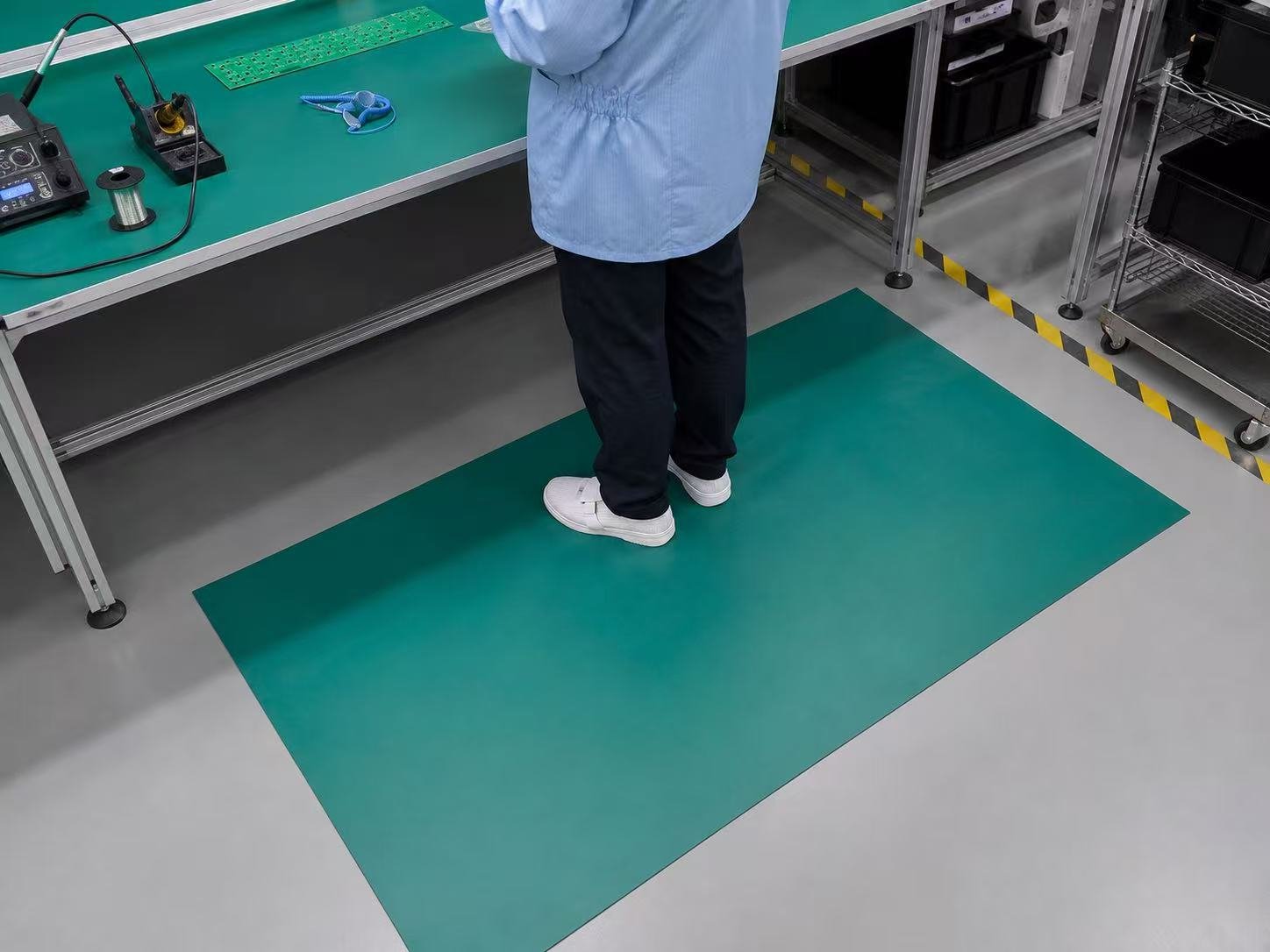
An anti static floor mat is used on the floor to reduce static charge generated by walking or standing.
It is commonly used in:
Assembly areasTesting areas
Packaging areas
Electronics workshops
ESD protected areas
Recommended internal link:
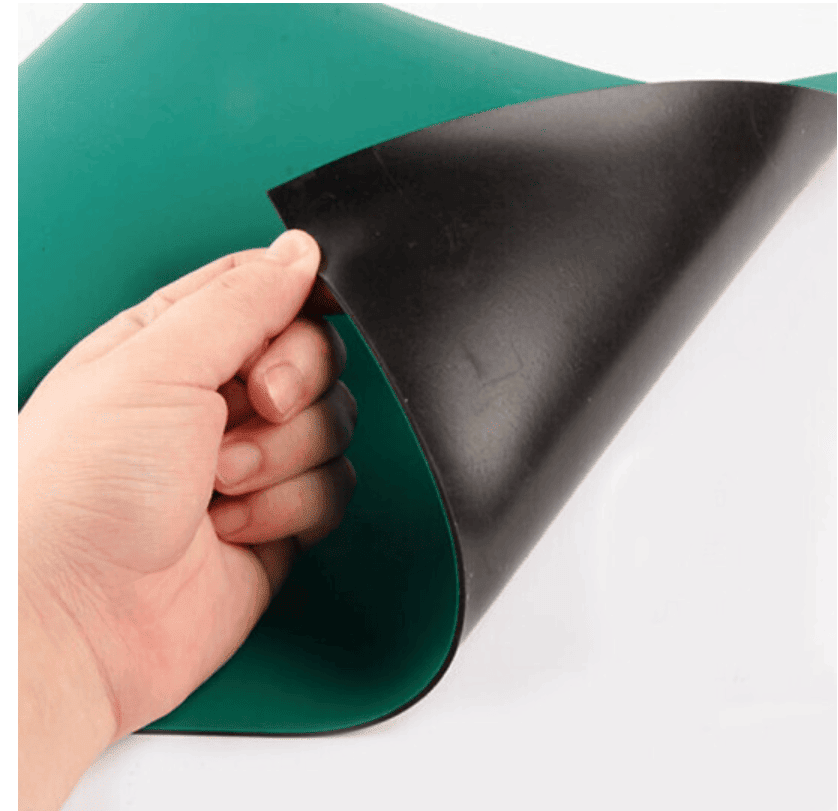
Anti static rubber mats are widely used because rubber-based materials can provide durability, flexibility, and good surface resistance.
However, not all rubber mats are anti static.
A normal rubber mat may look similar, but it may be insulating and unsafe for electronics work.
This is one of the biggest mistakes in ESD protection.
An anti static workstation mat is designed for complete ESD workstation protection.
It is usually used with:
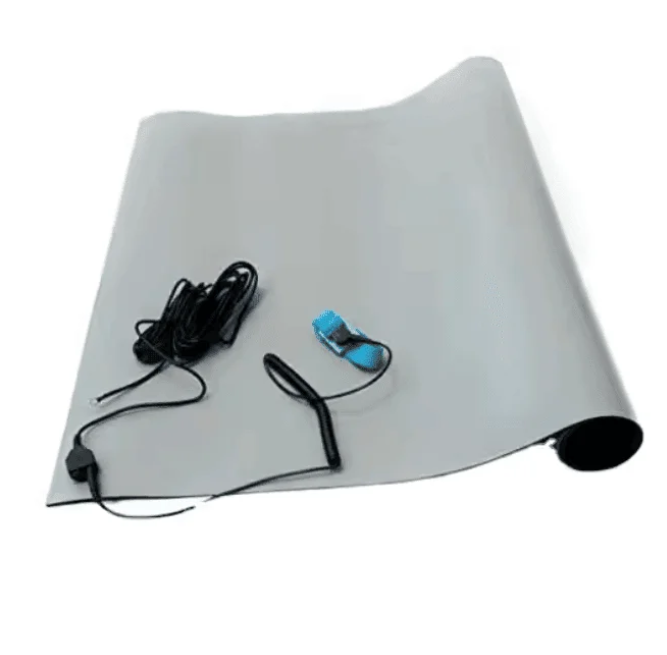
ESD wrist strapGrounding cord
Common point ground
ESD tools
ESD gloves
ESD workbench
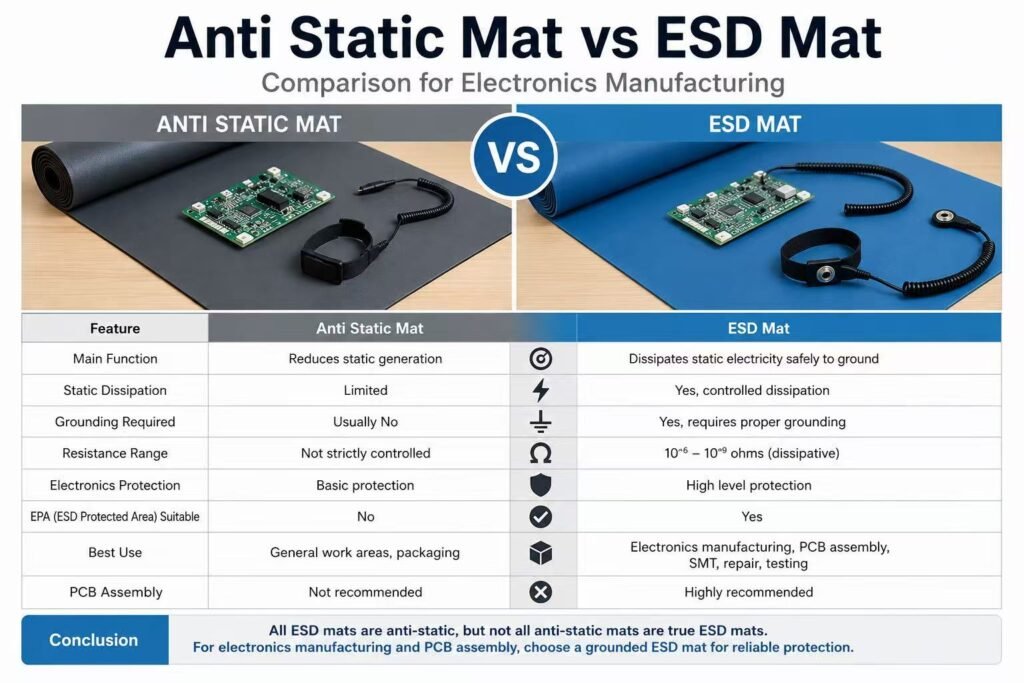
Many people use the terms “anti static mat” and “ESD mat” together, but they are not always the same.
An anti static mat may only reduce static generation.
An ESD mat is usually designed for controlled electrostatic discharge protection and should be properly grounded.
| Feature | Anti Static Mat | ESD Mat |
|---|---|---|
| Reduces static generation | Yes | Yes |
| Controlled dissipation | Sometimes | Yes |
| Grounding required | Not always | Yes |
| Suitable for PCB assembly | Sometimes | Recommended |
| Used in ESD protected areas | Limited | Yes |
| Resistance control | May vary | More controlled |
| Professional ESD protection | Basic | Stronger |
If you are working with sensitive electronics, PCB assembly, SMT production, or semiconductor components, an ESD mat is usually the safer choice.
Recommended internal link:
For electronics work, an anti static mat should do more than simply reduce static.
It should provide:
Stable surface resistanceControlled static dissipation
Reliable grounding connection
Heat and wear resistance
Comfortable working surface
Chemical resistance when needed
Long service life
Common electronics applications include:
PCB assemblySMT production
Mobile phone repair
Computer repair
IC testing
LED assembly
Sensor production
Electronic module packaging
PCB assembly is one of the most important use cases for anti static mats.
During PCB handling, static electricity may come from:
Operator movement
Ordinary gloves
Plastic trays
Packaging bags
Workbench surface
Tools
Clothing
If the workbench surface is not ESD safe, the PCB may be exposed to uncontrolled static risk.
A proper anti static mat for PCB assembly should have:
Dissipative surface
Grounding cord
Stable resistance
Flat work surface
Good wear resistance
Suitable size for the workstation
For PCB work, it is also recommended to use anti static gloves, ESD wrist straps, and ESD-safe tools together.
Recommended internal links:
Grounding is critical.
An anti static mat without grounding may reduce static generation, but it may not safely remove accumulated charge.
Basic grounding steps:
Make sure the surface is clean, flat, and dry.
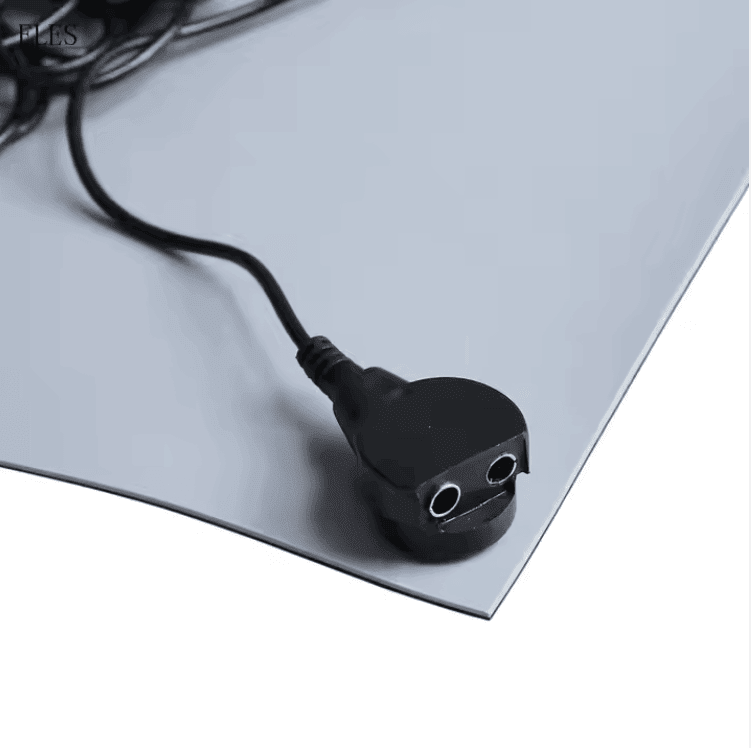
Most ESD mats have a grounding snap or connection point.
Connect the mat to a grounding cord.
The grounding cord should connect to a common point ground.
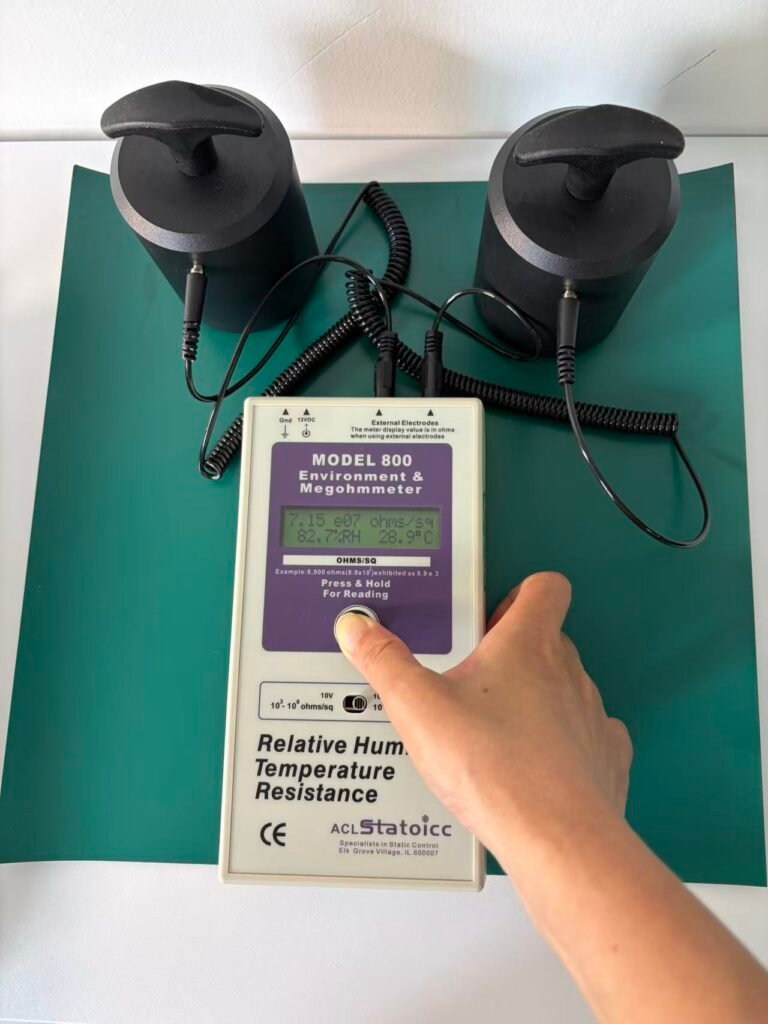
Use an ESD tester or resistance meter to confirm the mat is working correctly.
Recommended internal link:
/how-to-ground-esd-mat/
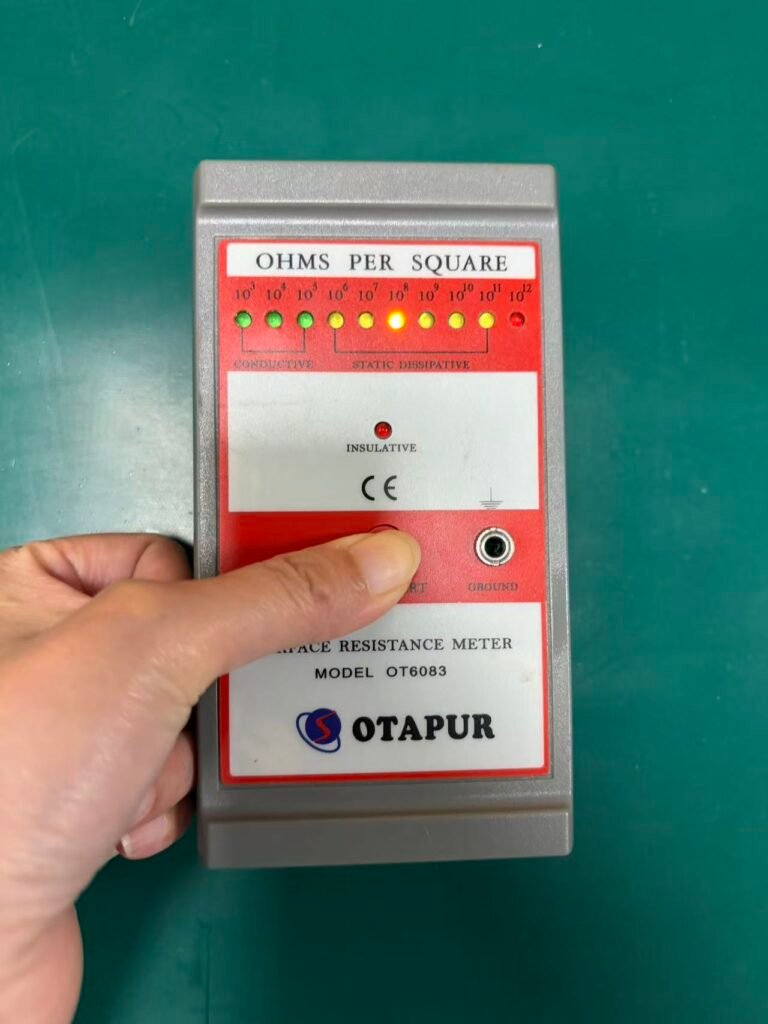
Testing is important because a mat may look normal but fail electrically.
You can test an anti static mat with:
Surface resistance meter
Resistance-to-ground tester
ESD workstation monitor
Multimeter for basic checks
Surface resistanceResistance to ground
Grounding cord continuity
Mat surface condition
Connection point stability
Recommended internal link:
A normal rubber mat is not the same as an anti static mat.
Many ordinary rubber mats are insulating. They may block static discharge and allow charge to accumulate.
| Feature | Normal Rubber Mat | Anti Static Mat |
|---|---|---|
| Looks like ESD mat | Sometimes | Yes |
| Static control | No or unstable | Yes |
| Grounding point | Usually no | Often yes |
| Safe for PCB | Not recommended | Better |
| Resistance tested | Usually no | Should be tested |
| Factory ESD use | No | Yes |
This is why factories should not choose mats only by appearance or price.
The correct choice should be based on resistance, grounding, application, and ESD requirements.
When choosing an anti static mat, consider the following factors.
For electronics work, choose a mat with stable dissipative resistance.
Typical recommended range:
10⁶ Ω to 10⁹ ΩDifferent applications need different mats.
| Application | Recommended Mat |
|---|---|
| PCB assembly | ESD bench mat |
| Electronics repair | Anti static table mat |
| Factory floor | ESD floor mat |
| SMT production | ESD workstation mat |
| Packaging area | Anti static work mat |
If the mat is used for electronics protection, grounding is important.
A mat without a grounding path may not provide complete ESD protection.
Common materials include:
Rubber
PVC
Vinyl
Composite ESD material
Rubber ESD mats are often preferred for durability and professional workstations.
Choose the right size based on your workbench or floor area.
Common thickness options:
2mm
3mm
Custom thickness
The mat should resist:
Wear
Heat
Soldering contact
Cleaning chemicals
Daily workstation use
For professional ESD areas, choose mats aligned with ESD control requirements such as:
ANSI/ESD S20.20IEC 61340
A normal rubber mat is not necessarily anti static.
It may be insulating and unsafe for electronics.
Without grounding, static charge may not leave the mat properly.
Cheap mats may have unstable resistance, poor grounding connection, or short service life.
A mat should be tested regularly to confirm resistance and grounding performance.
Anti static is not always equal to professional ESD protection.
For electronics manufacturing, ESD-grade mats are usually more reliable.
Anti static mats are used in many industries.
Used for PCB assembly, SMT production, and testing stations.
Used for mobile phones, computers, circuit boards, and electronic devices.
Used for testing sensitive components and instruments.
Used in controlled environments where static risk must be reduced.
Used when packing electronic components and finished products.
Used in areas handling static-sensitive products.
ESDBEST provides anti static mats and ESD mats for electronics manufacturing, PCB assembly, repair workstations, and industrial ESD protected areas.
Our mats are designed for stable static control, practical durability, and factory-level use.
Key advantages:
Stable dissipative resistance
Suitable for PCB assembly and electronics work
Custom size available
Bench mat and floor mat options
Grounding accessories available
OEM and ODM support
Factory supply for bulk orders
Suitable for ESD protected areas
If you need anti static mats for electronics manufacturing, PCB assembly, or ESD workstation setup, ESDBEST can provide suitable solutions based on your work environment.
Contact:
sales2@esdbest.comBest for:
PCB assemblyRepair stations
Testing benches
ESD workstations
/esd-bench-mat/Best for:
Factory floorStanding work areas
Assembly lines
Packaging zones
Best for:
Workstations requiring verified groundingStatic-sensitive production areas
Professional ESD protected areas
An anti static mat is a static control surface used to reduce or dissipate electrostatic charges. It is commonly used on workbenches, floors, and electronics workstations to help protect sensitive electronic components.
For electronics manufacturing and PCB assembly, grounding is strongly recommended. A grounded anti static mat can provide a controlled path for static charge to dissipate safely.
An anti static mat mainly reduces static generation, while an ESD mat is designed for controlled electrostatic discharge protection. For professional electronics work, an ESD mat is usually the better choice.
No. A normal rubber mat may be insulating and may not provide static protection. For electronics work, you should use a tested anti static or ESD mat.
For many electronics workstations, a dissipative resistance range of 10⁶ Ω to 10⁹ Ω is commonly used. The correct range depends on the application and ESD control requirements.
You can test an anti static mat with a surface resistance meter or resistance-to-ground tester. The test should check surface resistance, grounding connection, and continuity.
Yes, if the mat has proper resistance, grounding, and stable ESD performance. For sensitive PCB assembly, an ESD-grade bench mat is recommended.
Service life depends on material, usage, cleaning, heat exposure, and wear. In factory environments, mats should be inspected and tested regularly.
📞 Contact Us Today
For bulk orders, quotes, or product guidance, get in touch with our expert team:
Email: sales2@esdbest.com
Whatsapp: +86 137 1427 2599