Complete Guide to Grounded ESD Mats for Electronics Manufacturing

ESD Grounding Mat: Complete Guide to Grounded ESD Mats

Quick Answer

An ESD grounding mat is a static dissipative mat connected to a verified ground through a grounding cord, common point ground, and earth ground. It helps safely dissipate static electricity from the work surface, tools, components, and operators.

A grounded ESD mat is commonly used in electronics manufacturing, PCB assembly, SMT production, repair workstations, laboratories, and cleanrooms. Without proper grounding, an ESD mat may look safe, but it may not provide an effective static discharge path.

If you handle sensitive electronic components, a grounded ESD mat is not optional. It is one of the most important parts of a complete ESD-safe workstation.

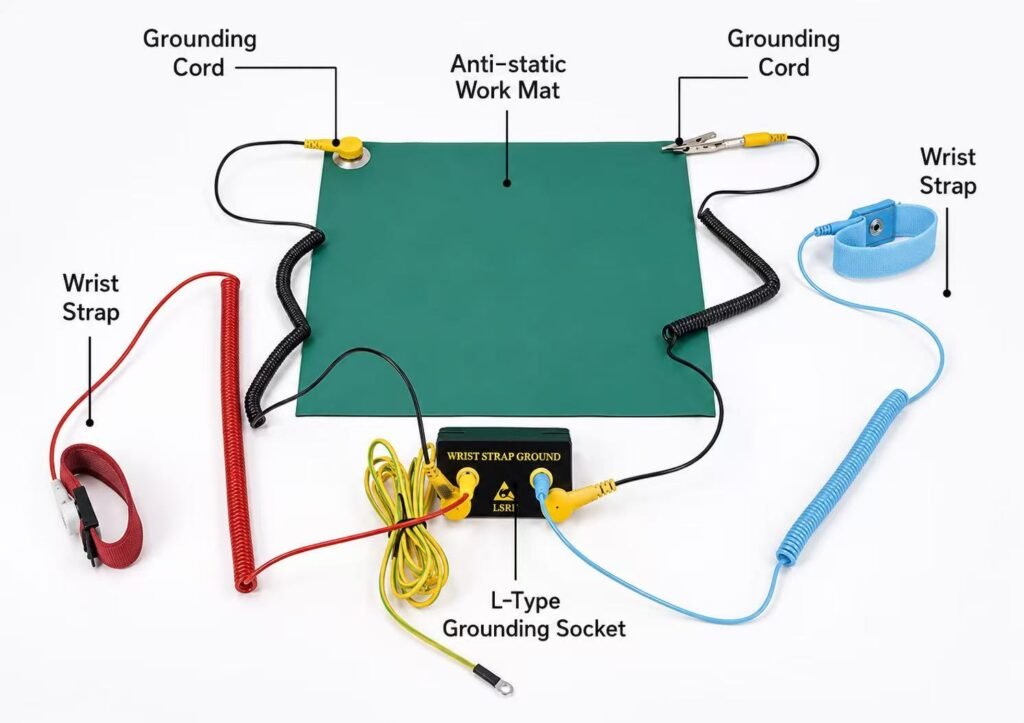
ESD grounding mat system with ground cord and common point ground
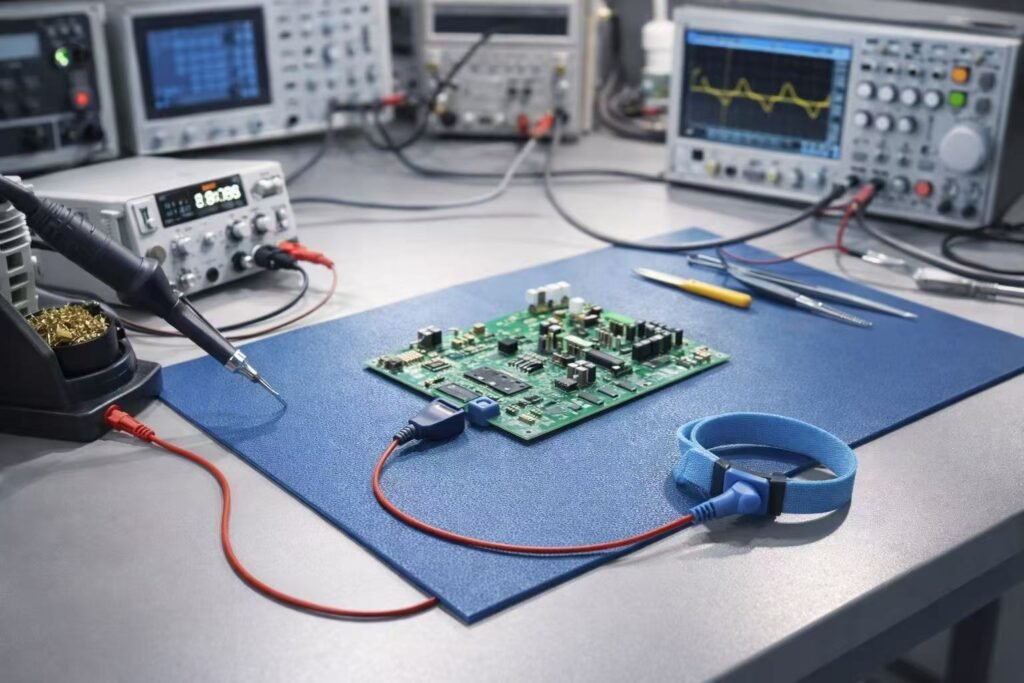
grounded ESD bench mat for electronics workstation
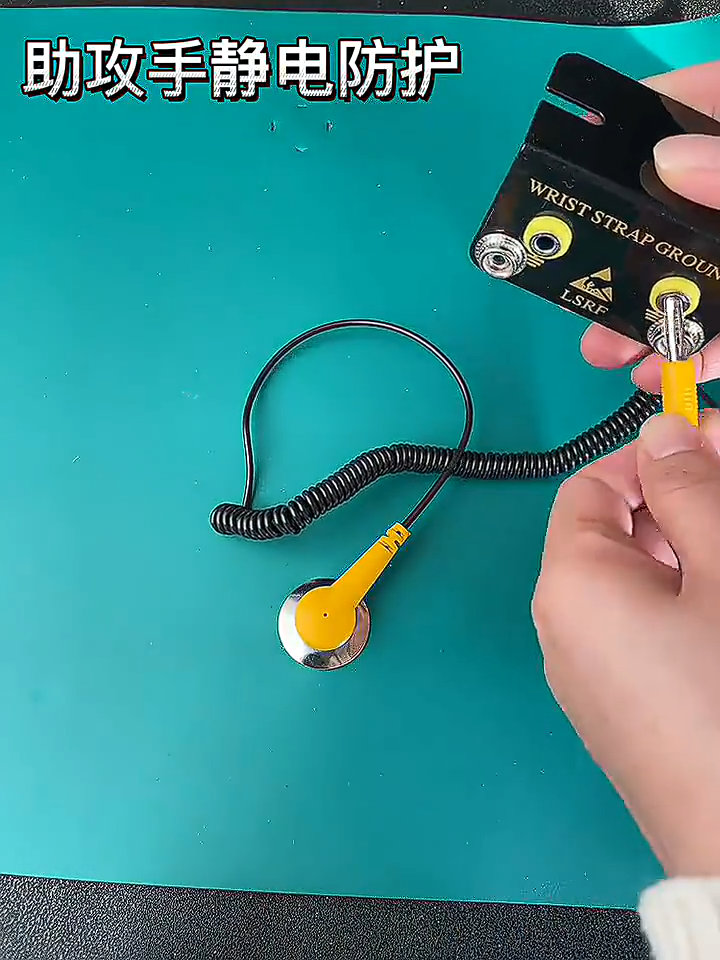
ESD mat grounding cord connected to common point ground

Need Reliable ESD Grounding Mats?

ESDBEST supplies ESD grounding mats for:

  • PCB assembly
  • SMT production
  • Electronics manufacturing
  • Repair workstations
  • Laboratories
  • Cleanrooms
  • ESD protected areas

We offer:

Contact us:
sales2@esdbest.com

Whatsapp: +86 137 1427 2599

What Is an ESD Grounding Mat?

An ESD grounding mat is a specially designed mat that helps control static electricity in an electronics work area. Unlike a normal rubber mat, a grounded ESD mat is made with static dissipative or conductive materials that allow electrostatic charges to move safely toward ground.

The main purpose of an ESD grounding mat is not only to cover a workbench or floor. Its real function is to create a controlled static discharge path.

A complete ESD grounding mat system usually includes:

  • ESD mat
  • Grounding cord
  • Snap connection
  • Common point ground
  • Earth ground
  • Wrist strap connection
  • ESD footwear or heel grounders for floor use

When these parts are connected correctly, static electricity can be safely dissipated instead of building up on the operator, work surface, tools, or electronic components.

This is why ESD grounding mats are widely used in electronics manufacturing, PCB assembly, SMT production, semiconductor handling, and repair stations.

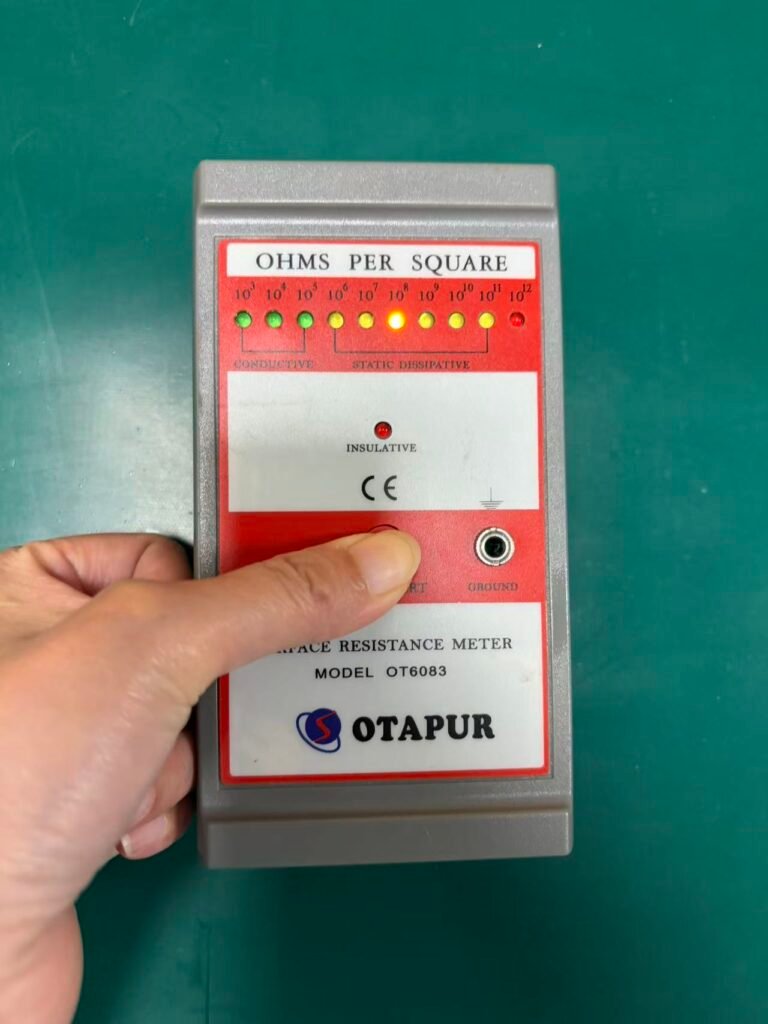
testing ESD grounding mat resistance and continuity
ESD mat grounding cord connected to common point ground

Why Does an ESD Mat Need Grounding?

An ESD mat must be grounded because static electricity needs a safe discharge path.

If the mat is not grounded, static charges may remain on the surface. In that case, the mat may look like an ESD mat, but it cannot fully perform its function.

Without grounding:

  • Static charge may accumulate
  • PCB boards may be exposed to ESD risk
  • Operators may carry static electricity
  • Components may suffer hidden damage
  • ESD control may fail
  • The workstation may not meet ESD safety requirements

With proper grounding:

  • Static electricity has a controlled path to ground
  • PCB handling becomes safer
  • Workstation protection improves
  • Operators and tools are better controlled
  • ESD risks are reduced
  • The ESD protected area becomes more reliable

A grounded ESD mat is especially important when handling circuit boards, microchips, sensors, IC components, semiconductors, and other static-sensitive devices.

How an ESD Grounding Mat Works

An ESD grounding mat works by creating a controlled path from the work surface to earth ground.

The grounding path is usually:

 
ESD Mat

Grounding Cord

Common Point Ground

Earth Ground
 

When static electricity appears on the mat surface, the charge moves through the mat material, then through the grounding cord, then to the grounding point, and finally to earth ground.

This process helps prevent uncontrolled electrostatic discharge.

The key point is control. A good ESD grounding mat should not discharge static too suddenly. It should dissipate charges in a controlled way.

That is why many ESD mats are designed with a static dissipative resistance range, commonly around:

 
10⁶ Ω to 10⁹ Ω
 

This range helps reduce static charges while avoiding an uncontrolled fast discharge.

Learn more: what is ESD ?

Need ESD Grounding Mats for Your Factory?

ESDBEST supplies grounded ESD mats, ESD bench mats, ESD floor mats, grounding cords, and complete ESD workstation solutions for electronics manufacturing.

Email: sales2@esdbest.com

Contact ESDBEST

Contact ESDBEST

Need grounded ESD mats for your factory?

Email:
sales2@esdbest.com

Whatsapp: +86 137 1427 2599

Grounded ESD Mat vs Normal Rubber Mat

Many people think a normal rubber mat and an ESD mat are similar because they may look alike. But they are very different.

Feature Grounded ESD Mat Normal Rubber Mat
Static control Yes No
Ground connection Yes No
Designed for electronics Yes No
Controlled resistance Yes No
Protects PCB handling area Yes No
Used in EPA areas Yes No
Can connect to grounding cord Yes Usually no

A normal rubber mat may insulate static electricity instead of safely dissipating it. This means static may build up on the operator, tools, or work area.

A grounded ESD mat is different. It is designed to dissipate static through a grounding system.

For electronics manufacturing, PCB assembly, SMT lines, and repair workstations, a grounded ESD mat is the correct choice.


Grounded ESD Mat vs Non-Grounded ESD Mat

Even if a mat is made from ESD material, it still needs a proper grounding path.

Item Grounded ESD Mat Non-Grounded ESD Mat
Static discharge path Yes No
Grounding cord Connected Missing
Common point ground Connected Missing
ESD workstation safety Better Unreliable
PCB protection Better Risk remains
Recommended for factories Yes No

A non-grounded ESD mat is a common mistake. The mat may have ESD properties, but without grounding, static electricity cannot be safely removed from the workstation.

That is why grounding should always be checked during workstation setup.


Main Components of an ESD Grounding Mat System

1. ESD Mat

The ESD mat is the main work surface or floor surface. It is usually made from rubber, vinyl, or other static dissipative material.

Common types include:

  • ESD bench mat
  • ESD floor mat
  • 2-layer ESD mat
  • 3-layer ESD mat
  • Conductive mat
  • Static dissipative mat

For workbenches, ESD bench mats are used to protect PCB handling areas. For standing and walking areas, ESD floor mats are used together with ESD shoes or heel grounders.


2. Grounding Cord

The grounding cord connects the ESD mat to the grounding point.

A typical ESD mat grounding cord may include:

  • Snap connector
  • Ring terminal
  • Banana plug
  • Built-in resistor
  • Coiled or straight cable

The grounding cord is critical. If the cord is broken, loose, or connected to the wrong point, the mat may not work correctly.


3. Common Point Ground

A common point ground is a central grounding location for the ESD workstation.

It may connect:

  • ESD mat
  • Wrist strap
  • Grounding cord
  • Bench ground
  • Operator grounding system

The purpose of a common point ground is to make sure all ESD protection devices are connected to the same ground reference.


4. Earth Ground

Earth ground is the final grounding destination.

The ESD system must be connected to a verified ground. This is important because using the wrong ground point can create a false sense of safety.

Before production begins, the grounding path should be inspected and tested.


5. Wrist Strap Connection

Many ESD workstations use both a grounded ESD mat and a wrist strap.

The wrist strap grounds the operator. The ESD mat grounds the work surface. Together, they help reduce static risks during PCB handling and electronics assembly.


How To Ground an ESD Mat Correctly

Step 1: Place the ESD Mat on the Work Surface

Place the ESD mat flat on the workbench or floor. Make sure the surface is clean and dry.

Avoid placing insulating materials on top of the ESD mat, such as:

  • Plastic sheets
  • Normal rubber pads
  • Paper piles
  • Foam packaging
  • Non-ESD trays

These materials can block the ESD path.


Step 2: Connect the Grounding Cord to the Mat

Attach the grounding cord to the mat snap.

Make sure the snap connection is tight. A loose snap may cause unstable grounding.

For bench mats, the grounding snap is usually installed at the corner or side of the mat.

For floor mats, the connection should be placed where it will not be damaged by walking, carts, or chairs.


Step 3: Connect to the Common Point Ground

Connect the grounding cord to the common point ground.

This allows the ESD mat and other grounding devices to share the same grounding reference.

A common point ground is especially important in ESD protected areas where operators use wrist straps, ESD mats, tools, and grounded equipment together.


Step 4: Connect to Verified Earth Ground

The common point ground should be connected to verified earth ground.

Do not randomly connect the mat to metal furniture, machine frames, or unverified structures unless they have been confirmed as proper ground points.

Wrong grounding can make the system unreliable.


Step 5: Test the Grounding Path

After installation, test the grounding path.

You can check:

  • Mat-to-ground connection
  • Ground cord continuity
  • Resistance to ground
  • Snap connection
  • Common point ground connection

Testing should be done regularly, especially in production environments.


How To Test an ESD Grounding Mat

Testing is important because an ESD mat may fail even when it looks normal.

1. Visual Inspection

Check for:

  • Broken ground cord
  • Loose snap
  • Damaged mat surface
  • Dirty mat surface
  • Incorrect ground connection
  • Cut or cracked cable

Visual inspection should be done frequently.


2. Continuity Test

A continuity test helps confirm whether the grounding path is connected.

You can test from the mat snap to the ground point. If the path is broken, the mat cannot dissipate static correctly.


3. Resistance Test

Resistance testing helps confirm whether the mat is within the correct static dissipative range.

Typical ESD mat resistance is often around:

 
10⁶ Ω to 10⁹ Ω
 

However, the exact requirement depends on your ESD control program, application, and relevant standards.


4. Resistance to Ground Test

This test checks whether the mat surface can dissipate charge to ground.

It is one of the most useful tests for confirming if the ESD mat is installed correctly.


5. Regular Production Check

In electronics factories, ESD grounding mats should be checked regularly.

Recommended checks include:

  • Before workstation use
  • After mat replacement
  • After grounding cord replacement
  • After workstation movement
  • During ESD audit
  • When ESD failure is suspected

Common ESD Mat Grounding Mistakes

Mistake 1: Using an ESD Mat Without Grounding

This is the most common mistake.

An ESD mat must be connected to ground. Without grounding, static electricity may not have a safe path to dissipate.


Mistake 2: Connecting to the Wrong Ground Point

Not every metal object is a safe ground.

A mat should be connected to a verified grounding point. Using an incorrect ground point may cause unreliable protection.


Mistake 3: Loose Grounding Cord

A loose cord can break the static discharge path.

Always check the snap and ground connection.


Mistake 4: Broken Ground Cord

A damaged cord may look normal from the outside, but the internal wire may be broken.

Regular testing is necessary.


Mistake 5: Dirty Mat Surface

Dust, oil, glue, and insulating contamination can reduce ESD performance.

ESD mats should be cleaned with appropriate ESD-safe cleaners.


Mistake 6: Using Normal Rubber Mats Instead

Normal rubber mats are not the same as ESD grounding mats.

They may not dissipate static safely and may increase ESD risk in electronics work areas.


Where Are ESD Grounding Mats Used?

PCB Assembly

PCB assembly involves sensitive circuit boards and electronic components. A grounded ESD mat helps protect the board during manual handling, soldering, inspection, testing, and repair.


SMT Production

SMT production lines handle small electronic components that can be damaged by static electricity. Grounded ESD mats are used in inspection, rework, and component handling areas.


Electronics Manufacturing

Electronics factories use grounded ESD mats as part of complete ESD control systems. They help protect products, improve workstation safety, and support quality control.


Repair Workstations

Repair stations often handle open circuit boards, ICs, sensors, and connectors. A grounded ESD mat helps create a safer repair environment.


Laboratories

Labs that test or develop electronic devices often use ESD grounding mats to protect sensitive instruments and components.


Cleanrooms

In some cleanrooms, ESD-safe mats are used to control static while maintaining a controlled work environment.


How To Choose the Best ESD Grounding Mat

1. Choose the Right Mat Type

For workbenches, choose an ESD bench mat.

For walking areas, choose an ESD floor mat.

For complete workstations, use both.


2. Check Resistance Range

A good ESD grounding mat should provide controlled static dissipation.

Common range:

 
10⁶ Ω to 10⁹ Ω
 

This helps reduce static risks while avoiding sudden discharge.


3. Check Material

Common ESD mat materials include:

  • Rubber
  • Vinyl
  • 2-layer ESD rubber
  • Conductive bottom layer
  • Static dissipative top layer

Rubber ESD mats are commonly used in industrial workstations because they are durable and suitable for electronics production.


4. Check Thickness

Common thickness options include:

  • 2mm
  • 3mm
  • 4mm
  • 5mm

Thicker mats may provide better durability. For bench use, 2mm or 3mm is common. For floor use, thicker mats may be preferred.


5. Check Grounding Accessories

A good ESD grounding mat should work with:

  • Grounding cord
  • Snap connector
  • Common point ground
  • Wrist strap
  • Ground plug
  • ESD tester

If you buy only the mat without the grounding accessories, the system may be incomplete.


6. Check Size Options

For electronics factories, custom sizes may be needed.

Common requirements include:

  • Workbench size
  • Production line size
  • Floor area size
  • Custom cut size
  • Roll material

ESDBEST can supply custom ESD grounding mat sizes for different production environments.


7. Check Application

Different applications may require different mat types.

Application Recommended Mat
PCB repair ESD bench mat
SMT inspection ESD bench mat
Electronics assembly ESD bench mat + floor mat
Standing workstation ESD floor mat
Production line ESD mat roll
Cleanroom Cleanroom-compatible ESD mat

Why Choose ESDBEST ESD Grounding Mats?

ESDBEST supplies ESD grounding mats for industrial electronics environments.

Our ESD mat solutions are suitable for:

  • Electronics manufacturing
  • PCB assembly
  • SMT production
  • Semiconductor handling
  • Laboratories
  • Repair workstations
  • Cleanrooms

Product Features

  • Static dissipative surface
  • Conductive bottom layer options
  • Grounding snap available
  • Grounding cord accessories
  • Custom size available
  • Roll material available
  • Durable industrial quality
  • Suitable for ESD workstations
  • Bulk factory supply
  • OEM and ODM support

Contact ESDBEST

Need grounded ESD mats for your factory?

Email:
sales2@esdbest.com

Whatsapp: +86 137 1427 2599

FAQ

Does an ESD mat need to be grounded?

Yes. An ESD mat should be connected to a verified ground through a grounding cord and common point ground. Without grounding, static electricity may not dissipate safely.

What is an ESD grounding mat?

An ESD grounding mat is a static dissipative mat connected to ground. It helps control static electricity in electronics workstations, PCB assembly areas, and ESD protected areas.

Can an ESD mat work without a grounding cord?

No. The grounding cord provides the discharge path from the mat to ground. Without it, the mat may not provide reliable ESD protection.

What is the difference between an ESD mat and a rubber mat?

An ESD mat is designed to dissipate static electricity through a grounded path. A normal rubber mat is not designed for ESD control and may trap static charge.

What resistance should an ESD grounding mat have?

Many ESD mats are designed in the static dissipative range, commonly around 10⁶ Ω to 10⁹ Ω, depending on application and ESD control requirements.

Where are grounded ESD mats used?

Grounded ESD mats are used in PCB assembly, SMT production, electronics manufacturing, repair workstations, laboratories, cleanrooms, and ESD protected areas.

How do you test an ESD grounding mat?

You can test an ESD grounding mat by checking continuity, mat-to-ground resistance, ground cord connection, snap connection, and the common point ground.

What happens if an ESD mat is not grounded?

If an ESD mat is not grounded, static electricity may remain on the mat or workstation. This can increase the risk of electrostatic discharge damage to electronic components.

Need ESD Grounding Mats for Your Factory?

ESDBEST supplies grounded ESD mats, ESD bench mats, ESD floor mats, grounding cords, and complete ESD workstation solutions for electronics manufacturing.

Email: sales2@esdbest.com

Contact ESDBEST