Complete Buying Guide for PCB Assembly
Choosing the best ESD mat for electronics is not only about size, color, or price.
For PCB assembly, electronics repair, SMT production, testing stations, and ESD-protected areas, the most important factors are resistance, grounding, durability, and workstation compatibility.
A good ESD mat should safely dissipate static electricity without creating a sudden discharge. It should also provide a stable working surface for sensitive components, tools, and operators.
For most electronics workstations, the best ESD mat is a static dissipative two-layer ESD bench mat with a resistance range of:
10⁶ Ω to 10⁹ Ω
This range helps control electrostatic discharge and reduce the risk of invisible damage to PCB boards, ICs, microchips, and SMT components.
The best ESD mat for electronics is a grounded static dissipative mat with stable resistance, durable surface, and proper grounding accessories.
For most electronics workstations, choose:
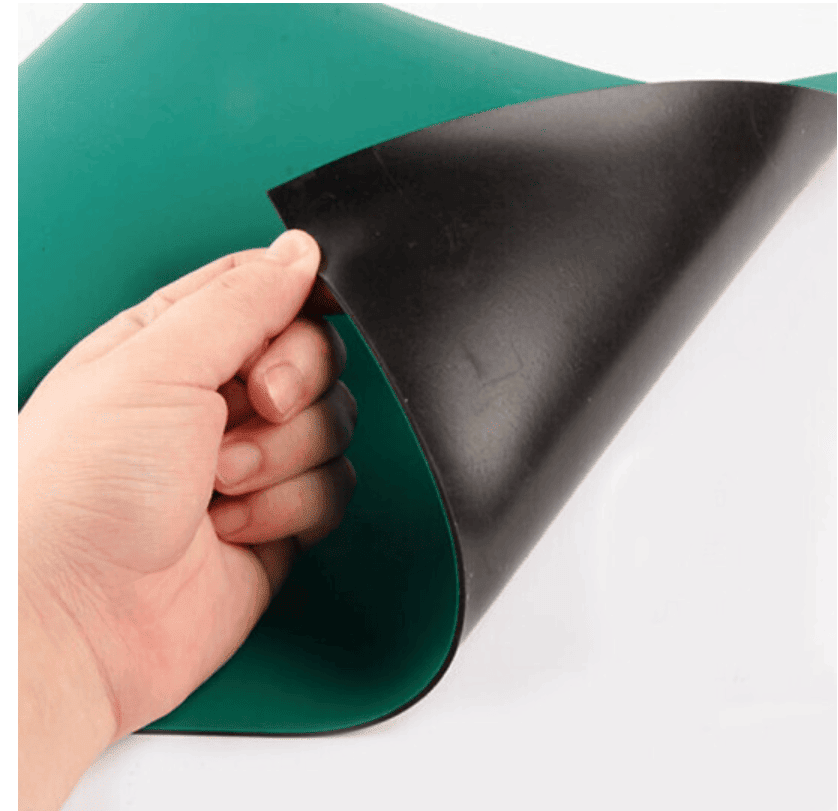
Two-layer ESD bench mat
10⁶–10⁹ Ω resistance range
2mm thickness
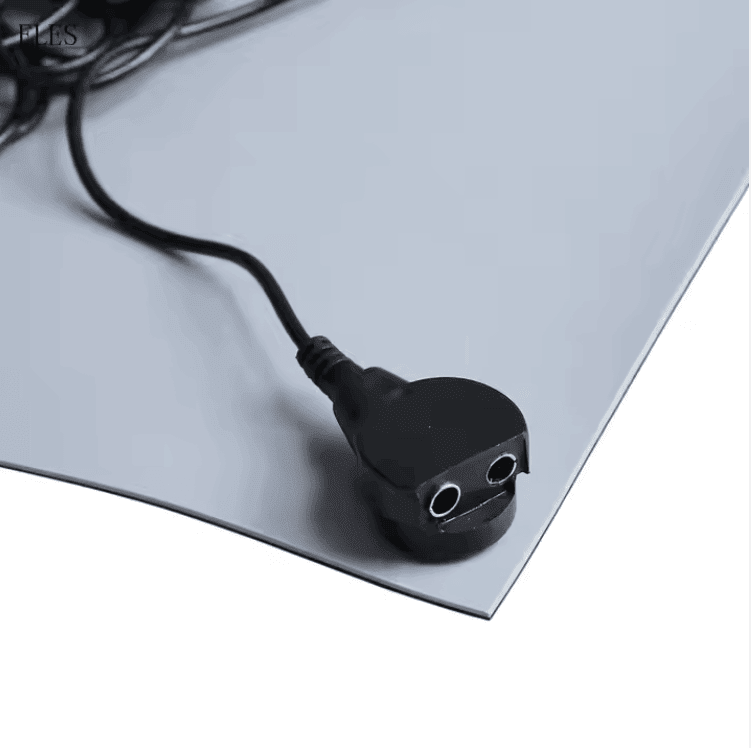
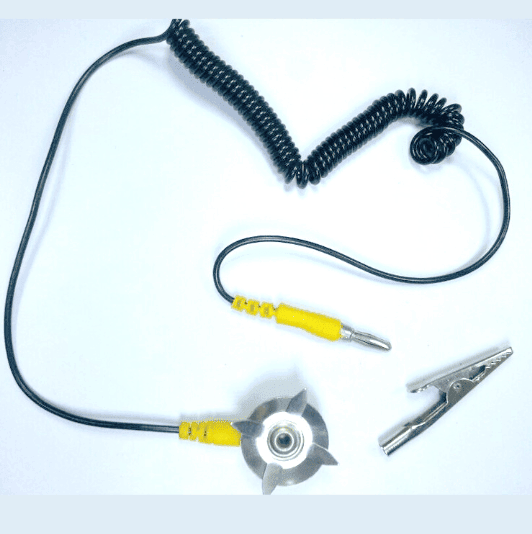
Grounding snap and ground cord
Heat-resistant and wear-resistant surface
Custom size for the workstation
Learn more:ESD mat resistance
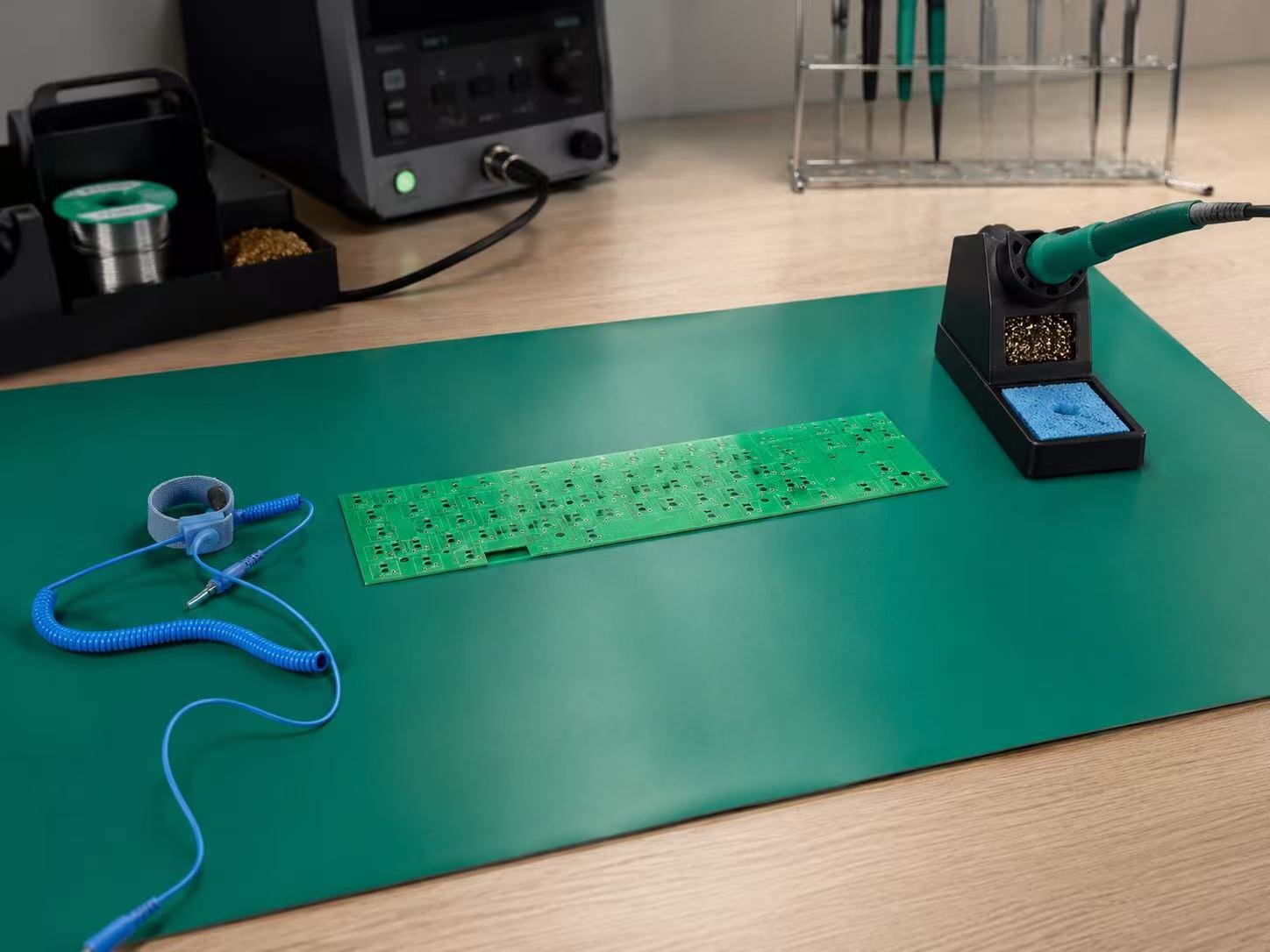
This type of mat is suitable for PCB assembly, electronics repair, SMT production, testing benches, and factory workstations.
Static electricity is invisible, but it can damage sensitive electronic components.
A PCB may look normal after electrostatic discharge, but the component inside may already be weakened. This can lead to early failure, unstable performance, or hidden quality problems.
Electronics workstations need ESD mats because they help protect:
PCB boards
IC chips
Microcontrollers
Sensors
Semiconductors
SMT components
Electronic modules
Precision instruments
An ESD mat creates a controlled surface where static charges can be safely dissipated through a grounding system.
Without an ESD mat, a normal table surface or rubber mat may allow static buildup and increase ESD risk.
A good ESD mat should have four key features:
Controlled resistance
Reliable grounding
Durable surface
Suitable workstation size
The mat should not be too conductive or too insulative.
For electronics applications, the commonly used dissipative range is:
10⁶ Ω to 10⁹ Ω
This range allows static electricity to discharge gradually and safely.
An ESD mat must be connected to a proper grounding path.
The typical path is:
ESD mat → ground cord → common point ground → earth ground
Without grounding, the mat cannot complete the static discharge path.
A good ESD mat should resist wear, pressure, cleaning, and daily workstation use.
For factories, durability is important because the mat may be used every day on production lines.
The mat should cover the main working area where PCBs, tools, and components are handled.
Too small a mat may leave unprotected areas on the workstation.
Different electronics applications need different types of ESD mats.
| Type | Best For | Main Benefit |
|---|---|---|
| ESD Bench Mat | PCB assembly and repair | Direct component protection |
| ESD Workbench Mat | Electronics workstations | Full work surface coverage |
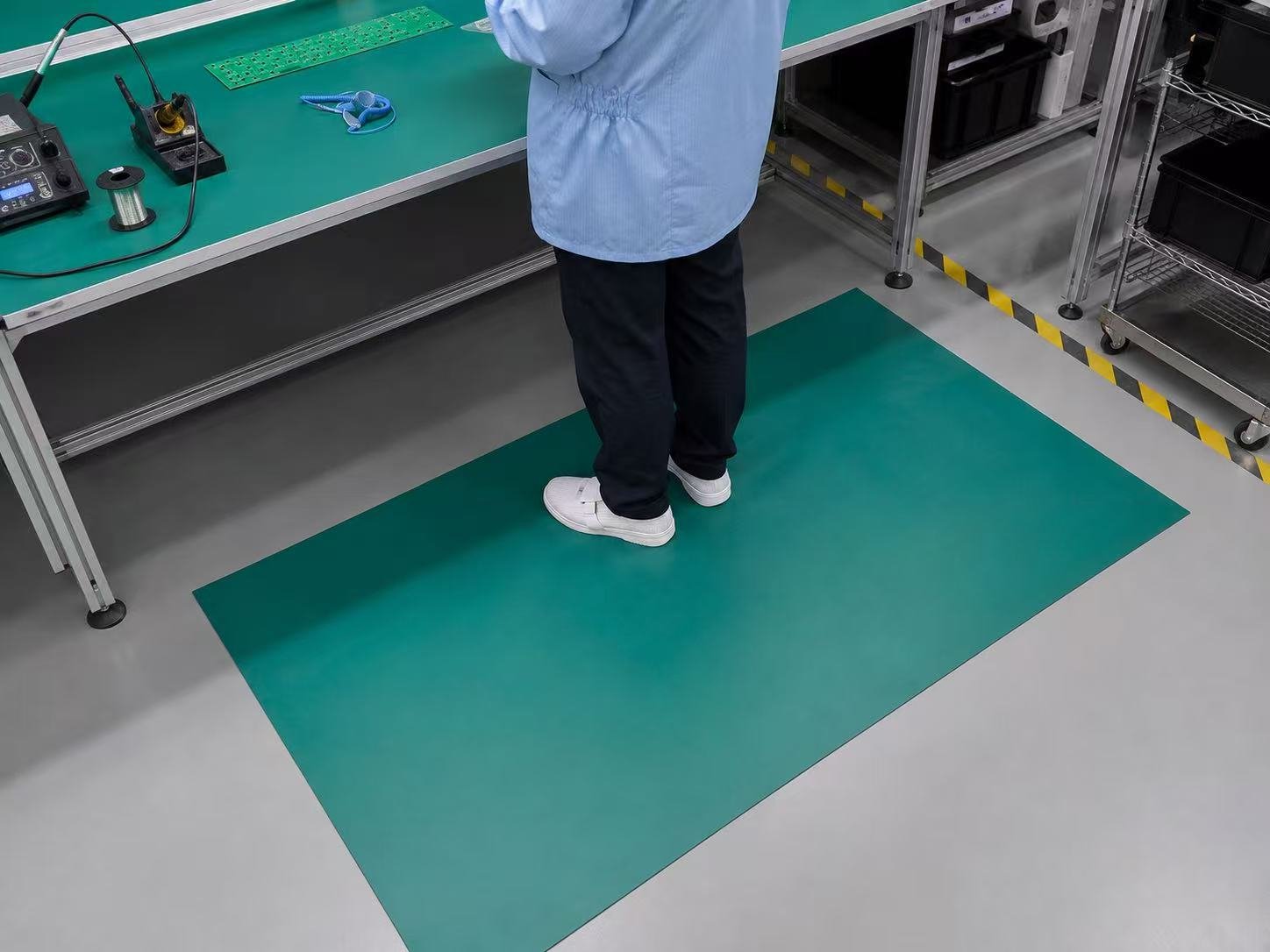
| ESD Floor Mat | EPA areas and walking zones | Reduces walking static |
| ESD Grounding Mat | Repair benches and service stations | Static discharge path |
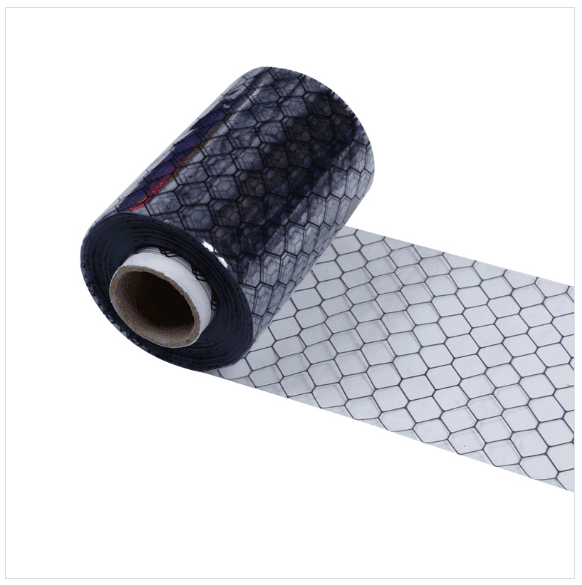
| ESD Roll Mat | Production lines |
Custom length and flexible use |
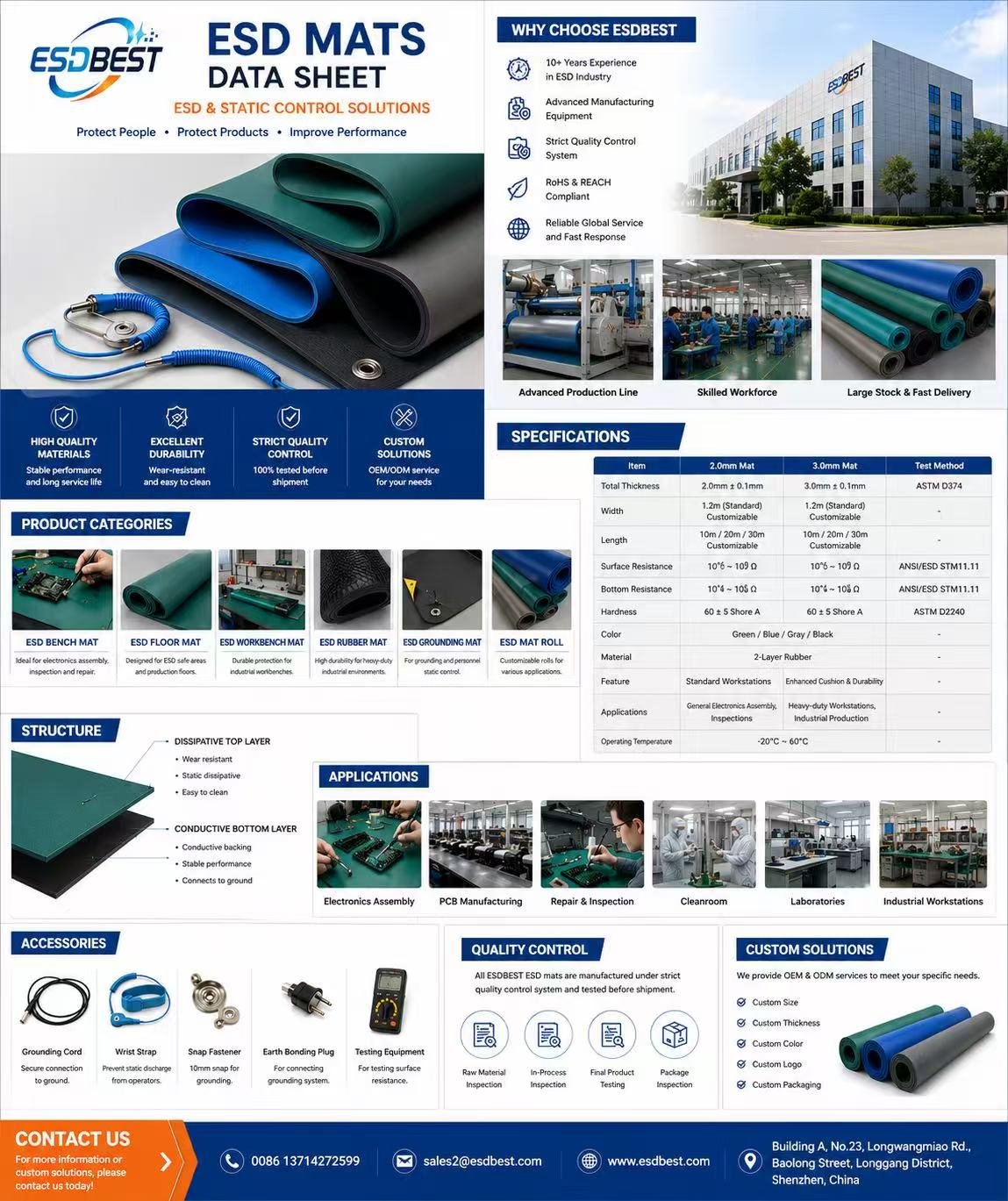
ESDBEST supplies ESD bench mats, ESD floor mats, ESD grounding mats, ESD roll mats and complete static control solutions for PCB assembly, SMT production, repair stations, testing benches and electronics factories.
Contact: sales2@esdbest.com
Request ESD Mat Quote
For most electronics workstations, an ESD bench mat is the first choice.
For factory production areas, ESD bench mats and ESD floor mats are often used together.
For PCB assembly, the best choice is a two-layer static dissipative ESD bench mat.
PCB assembly requires direct contact between the mat surface, components, tools, and operators.
A suitable PCB assembly mat should provide:
Stable dissipative resistance
Flat working surface
Good grounding performance
Comfortable operation
Resistance to wear and cleaning
Protection for sensitive components
For SMT lines and PCB production, a mat with 10⁶–10⁹ Ω resistance is commonly used because it helps discharge static electricity in a controlled way.
Related guide:
Electronics repair work often involves open devices, exposed circuit boards, replacement parts, soldering tools, and testing instruments.
For electronics repair, choose an ESD mat that is:
Easy to ground
Large enough for tools and components
Comfortable for long work
Heat resistant for soldering areas
Easy to clean
Stable in resistance
A grounded ESD workbench mat helps reduce ESD risk during repair, inspection, testing, and rework.
Common repair applications include:
Phone repair
Computer repair
PCB repair
Electronic module repair
Instrument repair
Laboratory testing
For electronics manufacturing, the best ESD mat should support high-frequency daily use.
Factories usually need mats for:
SMT production lines
PCB assembly benches
Testing stations
Packing areas
Quality inspection tables
Repair workstations
EPA zones
For factory use, the mat should be:
Resistance tested
Grounding compatible
Wear resistant
Customizable in size
Easy to install
Easy to maintain
Suitable for bulk supply
Factory buyers should avoid unverified mats that only claim to be anti-static without resistance data.
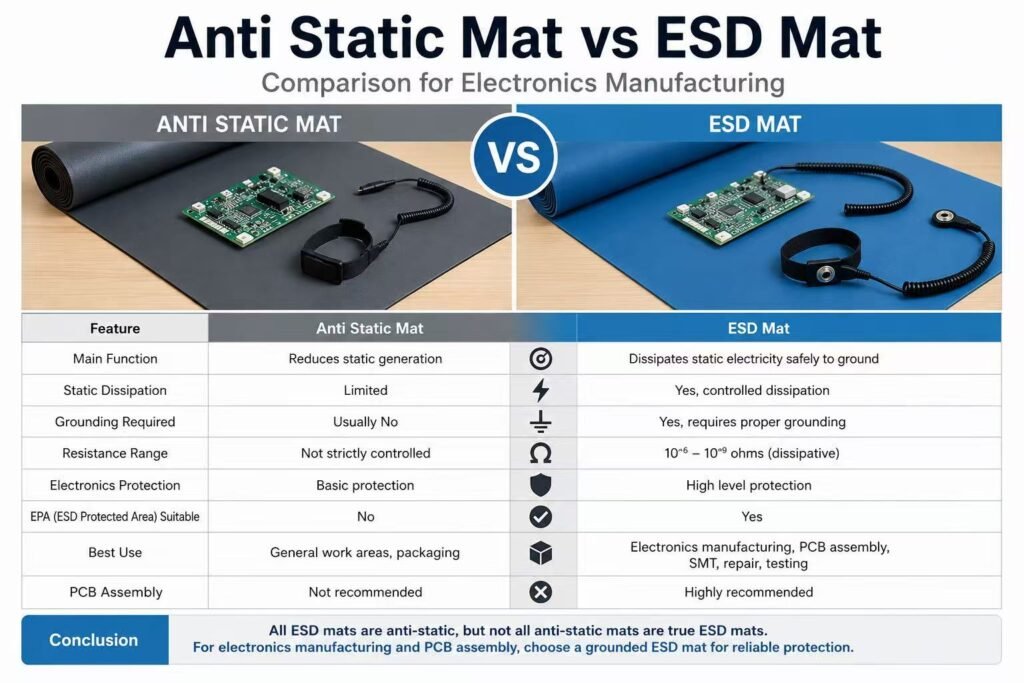
Many people search for the best anti-static mat for electronics, but not every anti-static mat is suitable for professional electronics work.
An anti-static mat may reduce static generation, but it may not provide controlled resistance or grounding performance.
An ESD mat is designed for static control and usually works with grounding accessories.
| Item | Anti Static Mat | ESD Mat |
|---|---|---|
| Static control | Basic | Professional |
| Resistance range | May vary | Controlled |
| Grounding | Not always required | Usually required |
| PCB protection | Limited | Recommended |
| Factory use | Not always suitable | Suitable |
| Testing | Often not verified |
Should be tested |
For PCB assembly, SMT production, and electronics manufacturing, a grounded ESD mat is usually the better choice.
Related guide:
For most electronics applications, the following specifications are recommended:
| Specification | Recommendation |
|---|---|
| Resistance Range | 10⁶–10⁹ Ω |
| Type | Static dissipative |
| Structure | Two-layer |
| Thickness | 2mm or 3mm |
| Surface | Matte, durable, easy to clean |
| Grounding | Snap + grounding cord |
| Application | PCB assembly, repair, SMT, testing |
| Size | Custom according to workstation |
The exact specification depends on your workstation design, ESD control program, and production environment.
Use this checklist before buying an ESD mat for electronics.
Choose a mat with verified dissipative resistance.
Recommended range:
10⁶ Ω to 10⁹ Ω
Make sure the mat supports grounding snaps, ground cords, and common point ground systems.
Measure your workbench before ordering.
Common sizes include:
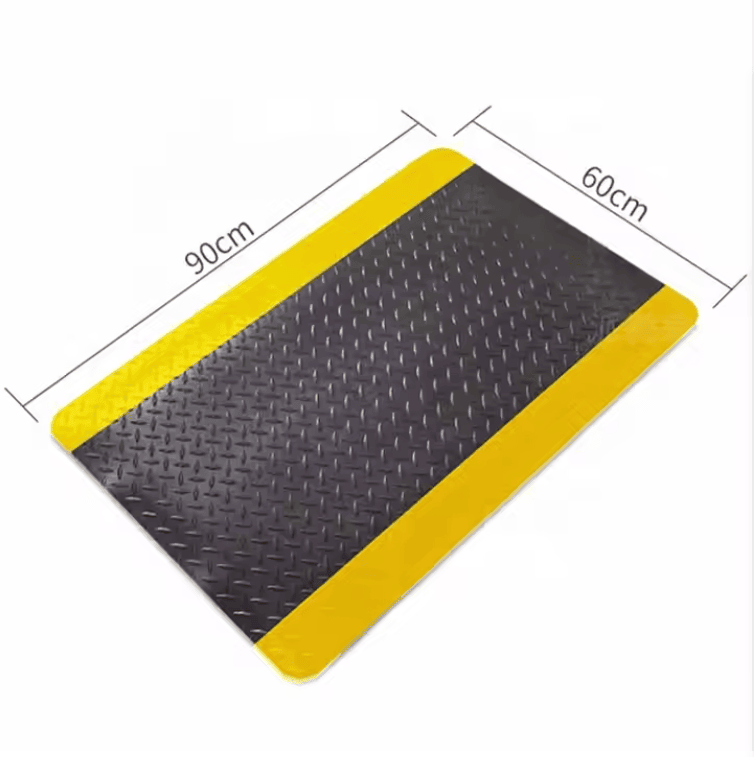
600 × 900mm
600 × 1200mm
900 × 1200mm
Custom roll sizes
Common thickness options:
2mm
3mm
2mm is widely used for electronics workbenches.
3mm may be selected for heavier-duty use.
The mat should resist wear, tools, cleaning, and regular production use.
Different applications need different mats:
PCB assembly → ESD bench mat
Factory aisle → ESD floor mat
Repair station → ESD grounding mat
Production line → ESD roll mat
Avoid these mistakes:
Buying only by color
Using normal rubber mats
Ignoring resistance values
Not grounding the mat
Choosing the wrong size
Using harsh cleaning chemicals
Not testing the mat regularly
Assuming all anti-static mats are ESD safe
The biggest mistake is buying a mat without verified resistance and grounding performance.
A mat may look like an ESD mat but fail in real static control.
Yes.
An ESD mat should be grounded to work properly.
The mat collects and dissipates static charges, but grounding provides the path for those charges to leave the workstation.
A proper grounding system usually includes:
Grounding snap
Ground cord
Common point ground
Earth ground
Wrist strap connection
If the mat is not grounded, static electricity may remain on the surface.
Related guide:
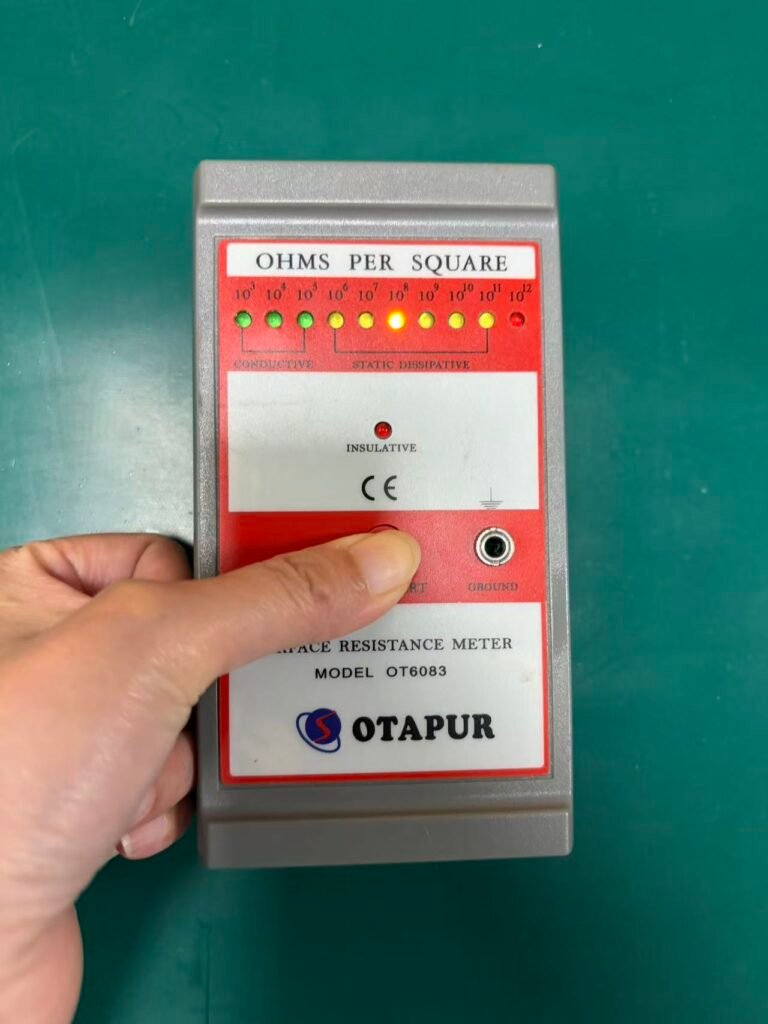
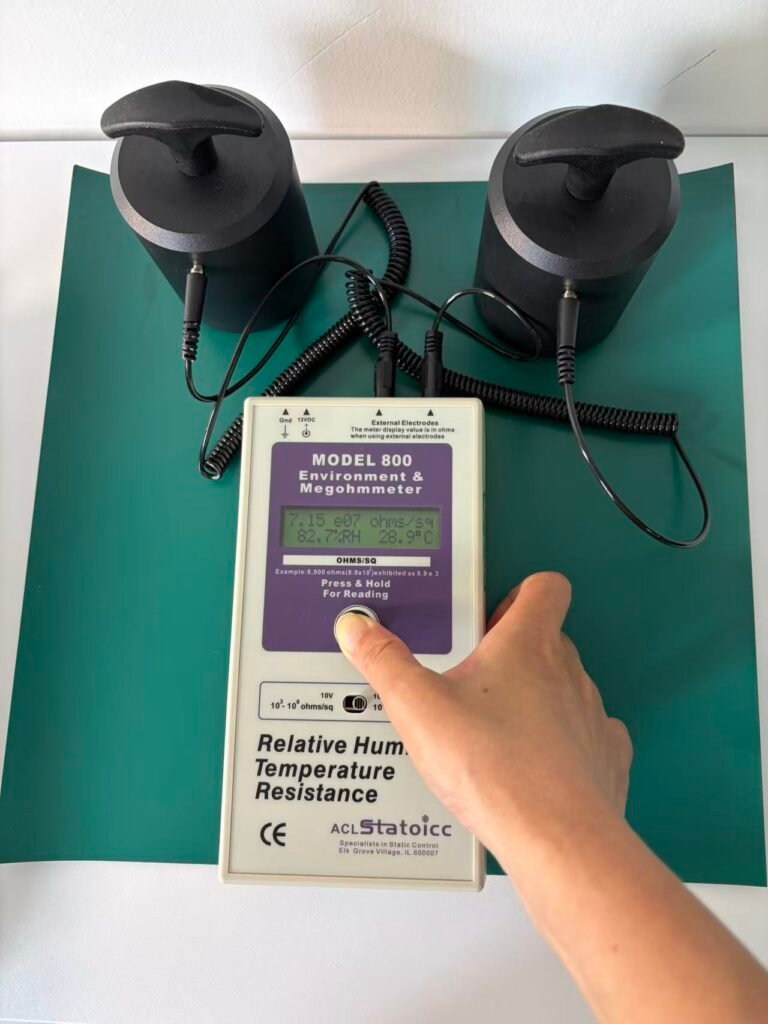
ESD mats should be tested regularly to confirm performance.
Common tests include:
RTT: Resistance Top to Top
RTG: Resistance to Ground
Surface resistance test
Grounding continuity test
Testing helps confirm whether the mat is still within the required dissipative range.
You should test ESD mats:
After installation
After cleaning
After moving the workstation
Before audits
Monthly or quarterly during routine checks
Related guide:
| Application | Recommended Mat |
|---|---|
| PCB Assembly | Two-layer ESD bench mat |
| SMT Line | ESD workbench mat |
| Electronics Repair | Grounded ESD mat |
| Testing Station | ESD bench mat |
| Packing Area | ESD floor mat + bench mat |
| Factory EPA Area | ESD floor mat |
| Laboratory | ESD workbench mat |
| Production Line | ESD roll mat |
For complete protection, electronics factories often combine ESD mats with ESD wrist straps, ESD shoes, ionizers, ESD gloves, and grounding systems.
ESDBEST supplies ESD mats for electronics manufacturing, SMT production, PCB assembly, cleanrooms, testing stations, repair centers, and industrial static control applications.
Our ESD mat solutions include:
ESD bench mats
ESD floor mats
ESD workbench mats
ESD grounding mats
ESD roll mats
Custom size ESD mats
Bulk factory supply
OEM support
Why customers choose ESDBEST:
Factory direct supply
Resistance tested products
Custom sizes available
Bulk order support
Stable quality control
Suitable for electronics factories
Global shipment
Complete ESD product solutions
Need ESD mats for your electronics factory?
Contact ESDBEST:
sales2@esdbest.com
Whatsapp: +86 137 1427 2599
The best ESD mat for electronics is a grounded static dissipative mat with stable resistance, durable surface, and proper grounding accessories. For most electronics workstations, a two-layer ESD bench mat with 10⁶–10⁹ Ω resistance is recommended.
For PCB assembly, a two-layer ESD bench mat is usually the best choice because it provides a flat work surface, controlled static dissipation, and grounding compatibility.
For general use, an anti-static mat may reduce static buildup. For professional electronics work, PCB assembly, SMT production, and repair, a grounded ESD mat is recommended.
Yes. An ESD mat should be connected to ground through a grounding cord and common point ground to safely dissipate static electricity.
For most electronics workstations, the commonly used dissipative resistance range is 10⁶ Ω to 10⁹ Ω.
The size depends on your workbench and application. The mat should cover the main area where PCBs, components, tools, and devices are handled.
ESD mats should be tested after installation, after cleaning, after workstation changes, and regularly during routine ESD audits.
No. A normal rubber mat may not safely dissipate static electricity. For electronics work, use a verified and grounded ESD mat.
ESDBEST supplies ESD bench mats, ESD floor mats, ESD grounding mats, ESD roll mats and complete static control solutions for PCB assembly, SMT production, repair stations, testing benches and electronics factories.
Contact: sales2@esdbest.com
Request ESD Mat Quote