Lifespan, Testing & Replacement Guide
How Long Do ESD Mats Last?

How Long Do ESD Mats Last?
Most high-quality ESD mats can last between 3 and 10 years, depending on material quality, usage frequency, cleaning method, grounding condition, and working environment.
For electronics manufacturing, PCB assembly, SMT lines, repair benches, and ESD protected areas, the age of the mat is not the only standard. The most important question is:
Can the ESD mat still maintain safe electrical resistance and a reliable grounding path?
An ESD mat should be replaced when it can no longer provide stable static dissipation, even if it still looks clean on the surface.
Quick Answer
A good ESD bench mat usually lasts 5–10 years with proper grounding and maintenance.
A heavy-duty ESD floor mat usually lasts 3–8 years, depending on foot traffic and factory conditions.
However, in professional electronics manufacturing, ESD mats should be tested regularly. If the resistance value is out of range, the mat should be replaced immediately.
Typical ESD Mat Lifespan
| ESD Mat Type | Typical Lifespan | Common Use |
|---|---|---|
| Economy PVC ESD Mat | 2–4 years | Light-duty workstations |
| Standard ESD Bench Mat | 3–7 years | Electronics repair, PCB handling |
| Premium 2-Layer ESD Bench Mat | 5–10 years | SMT, PCB assembly, testing |
| ESD Floor Mat | 3–8 years | EPA floor areas, production lines |
| Heavy-Duty ESD Floor Mat | 5–10 years | High-traffic industrial areas |

What Affects the Lifespan of an ESD Mat?
The lifespan of an ESD mat depends on more than just time. A mat used in a clean, controlled electronics lab may last much longer than one used in a busy production line.
The main factors include:
- Material quality
- Surface wear
- Cleaning chemicals
- Foot traffic
- Grounding condition
- Humidity and temperature
- Exposure to oils, dust, flux, or soldering residue
- Frequency of resistance testing
A low-quality mat may fail within a few years. A high-quality ESD mat with proper maintenance can provide reliable protection for many years.
Do ESD Mats Wear Out?
Yes. ESD mats can wear out over time.
An ESD mat does not usually fail suddenly. Instead, its performance gradually changes. The surface may still look usable, but the electrical resistance may become too high or unstable.
When this happens, the mat may no longer safely dissipate static electricity.
For example:
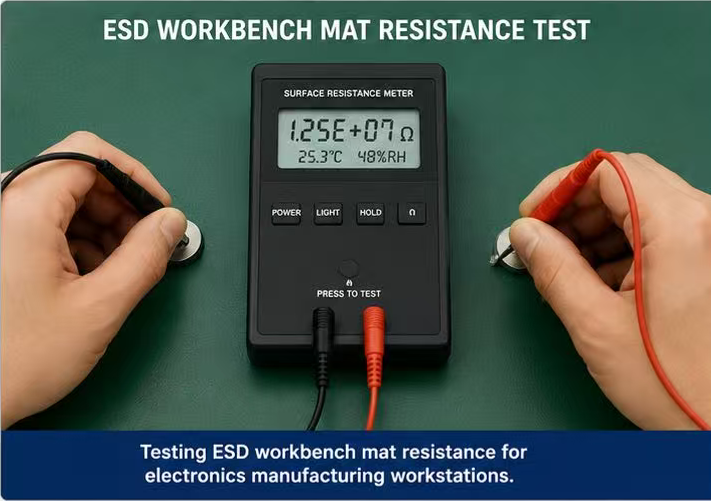
A new ESD mat may test at:
10⁶–10⁸ Ω
After years of use, contamination, or surface damage, it may drift to:
10¹⁰–10¹² Ω
At that point, the mat may no longer provide reliable static protection for sensitive electronics.
Signs Your ESD Mat Needs Replacement
1. The Resistance Is Out of Range
The most important sign is failed resistance testing.
If the mat no longer meets your required resistance range, it should be replaced.
For electronics manufacturing, ESD mats should be tested with a proper ESD resistance meter, not only judged by appearance.
Internal link:
2. The Surface Is Cracked or Damaged
Visible cracks, cuts, holes, or peeling are warning signs.
Physical damage can affect both durability and static dissipation performance.
If the surface is broken, the mat may no longer provide a consistent controlled path to ground.
3. The Mat No Longer Stays Flat
If the mat curls, wrinkles, or lifts from the floor or workbench, it can create safety and performance problems.
For bench mats, curling edges can interfere with PCB handling.
For floor mats, uneven surfaces can create trip hazards and reduce contact with ESD footwear.
4. Grounding Is Unstable
Even a good ESD mat will not work correctly without grounding.
If the grounding cord, snap, common point ground, or earth connection is damaged, static cannot safely dissipate.
Before replacing the mat, check:
- Grounding cord
- Snap connection
- Common point ground
- Earth ground
- Wrist strap connection
- Floor mat grounding path
Internal link:
5. Static Problems Still Happen
If PCB failures, static shocks, unstable readings, or ESD audit issues continue to occur, the mat should be inspected and tested.
A worn-out or contaminated ESD mat can create hidden risks in production.
How Long Does an ESD Bench Mat Last?
An ESD bench mat usually lasts 5–10 years when properly grounded, cleaned, and tested.
Bench mats often last longer than floor mats because they are exposed to less physical wear. However, they can still be damaged by soldering, sharp tools, chemicals, flux residue, and improper cleaning.
ESD bench mats are mainly used for:
- PCB assembly
- Electronics repair
- SMT inspection
- Component handling
- Testing stations
- Rework benches
Internal link:
How Long Does an ESD Floor Mat Last?
An ESD floor mat usually lasts 3–8 years, depending on foot traffic and factory environment.
Floor mats wear faster because they are exposed to shoes, carts, dust, oil, and daily movement.
ESD floor mats are commonly used in:
- ESD protected areas
- Assembly lines
- SMT production areas
- Packing stations
- Machine operation areas
- Repair workshops
Internal link:
ESD Bench Mat vs ESD Floor Mat Lifespan
| Feature | ESD Bench Mat | ESD Floor Mat |
|---|---|---|
| Main Function | Protects components | Protects personnel and floor area |
| Wear Level | Lower | Higher |
| Common Damage | Cuts, burns, chemical residue | Foot traffic, dirt, abrasion |
| Typical Lifespan | 5–10 years | 3–8 years |
| Testing Need | Regular resistance test | Regular resistance and grounding test |
How Often Should ESD Mats Be Tested?
Testing frequency depends on how critical your production environment is.
| Environment | Suggested Testing Frequency |
|---|---|
| Home electronics work | Every 12 months |
| Repair shop | Every 6 months |
| PCB assembly | Every 3 months |
| SMT production line | Monthly |
| High-reliability electronics | Monthly or before audits |
In professional electronics manufacturing, regular testing is more important than guessing based on age.
How to Extend the Life of an ESD Mat
1. Keep the Mat Properly Grounded
A grounded ESD mat provides a controlled path for static electricity.
Without grounding, the mat may not perform as intended.
Internal link:
2. Clean the Mat Correctly
Use ESD-safe cleaners instead of strong solvents.
Avoid:
- Strong alcohol cleaning every day
- Harsh chemicals
- Wax
- Silicone cleaners
- Oil-based cleaners
- Abrasive pads
Contamination can change the surface resistance of the mat.
3. Avoid Sharp Tools
Do not cut directly on the ESD mat.
Sharp tools, blades, screws, and metal parts can damage the surface layer.
Use a cutting board if cutting is required.
4. Avoid Excessive Heat
Hot soldering irons, heat guns, and heated tools can damage the mat surface.
Use heat-resistant protection when needed.
5. Test Resistance Regularly
Regular testing helps you know whether the mat is still safe.
Do not wait until PCB damage or audit failure happens.
Internal link:
/esd-mat-resistance-explained/
When Should You Replace an ESD Mat?
You should replace an ESD mat when:
- The resistance value is out of range
- The surface is cracked, cut, or peeling
- The mat no longer stays flat
- Grounding connection is damaged
- The mat is heavily contaminated
- ESD failures continue to happen
- The mat fails internal ESD audit requirements
A mat that looks “okay” may still fail electrically. Always test before making a decision.
What Happens If You Use an Old or Failed ESD Mat?
Using a failed ESD mat can increase the risk of:
- PCB damage
- Component failure
- Latent ESD defects
- Production quality problems
- Customer complaints
- Failed ESD audits
- Reduced manufacturing reliability
For sensitive electronics, ESD damage is often invisible. A component may pass initial testing but fail later in the field.
That is why regular mat testing and replacement are important.
Best Practice: Test First, Replace When Needed
The best rule is simple:
Do not replace ESD mats only based on age. Replace them based on test results, surface condition, and grounding reliability.
A 3-year-old mat in poor condition may need replacement.
A 7-year-old high-quality mat that still passes testing may still be usable.
For factories, the safest approach is to create an ESD mat inspection schedule.
Recommended ESD Mat Replacement Schedule
| Area | Suggested Replacement Review |
|---|---|
| Light-use bench area | Every 5–7 years |
| Heavy-use workbench | Every 3–5 years |
| High-traffic floor area | Every 3–5 years |
| SMT / PCB production | Based on monthly test results |
| Critical electronics manufacturing |
Based on audit and test data |
Need Reliable ESD Mats for Electronics Manufacturing?
ESDBEST supplies ESD bench mats, ESD floor mats, grounding accessories, and ESD workstation solutions for electronics manufacturing, PCB assembly, SMT production, and repair environments.
If you need bulk ESD mats for your factory, contact ESDBEST for product options, resistance specifications, and factory supply support.
Email: sales2@esdbest.com
Whatsapp: +86 137 1427 2599
FAQ
How long do ESD mats last?
Most ESD mats last between 3 and 10 years, depending on material quality, usage, maintenance, and testing results.
How long does an ESD bench mat last?
A good ESD bench mat usually lasts 5–10 years with proper grounding and maintenance.
How long does an ESD floor mat last?
An ESD floor mat usually lasts 3–8 years depending on foot traffic, cleaning, and factory environment.
Do ESD mats wear out?
Yes. ESD mats can wear out physically and electrically. Their resistance values may change over time.
How do I know if my ESD mat is still good?
Use an ESD resistance meter to test surface resistance and grounding continuity.
When should an ESD mat be replaced?
Replace an ESD mat when it fails resistance testing, has surface damage, grounding failure, or no longer provides reliable static protection.
Can an ESD mat lose effectiveness?
Yes. Wear, contamination, improper cleaning, and damaged grounding can reduce effectiveness.
How often should ESD mats be tested?
For electronics manufacturing, ESD mats should usually be tested every month to every 3 months, depending on production risk.
ESD Floor Mat vs Bench Mat,which one is better ?
Learn more: /esd-floor-mat-vs-bench-mat/
这是示例文本,单击 “编辑” 按钮更改此文本。