: Why Regular Gloves Can Damage Electronics
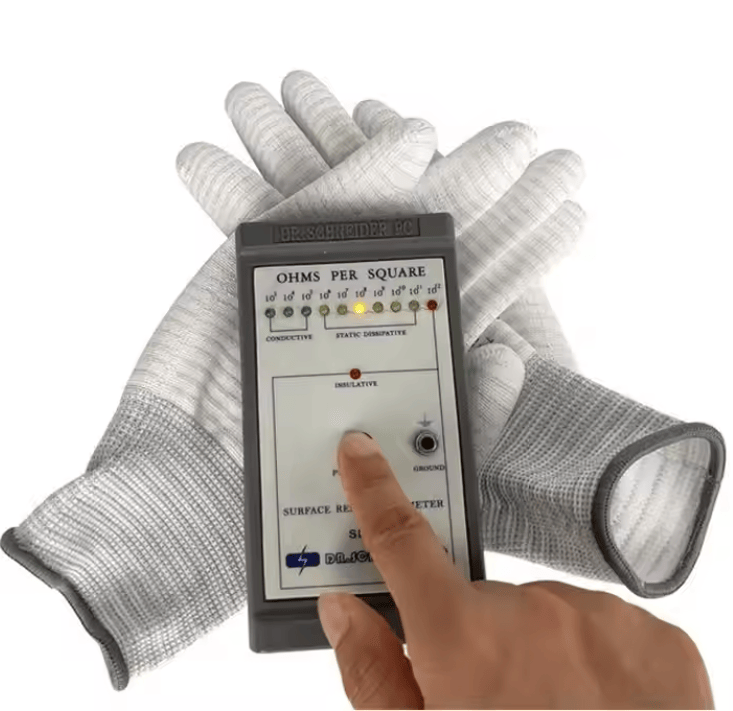


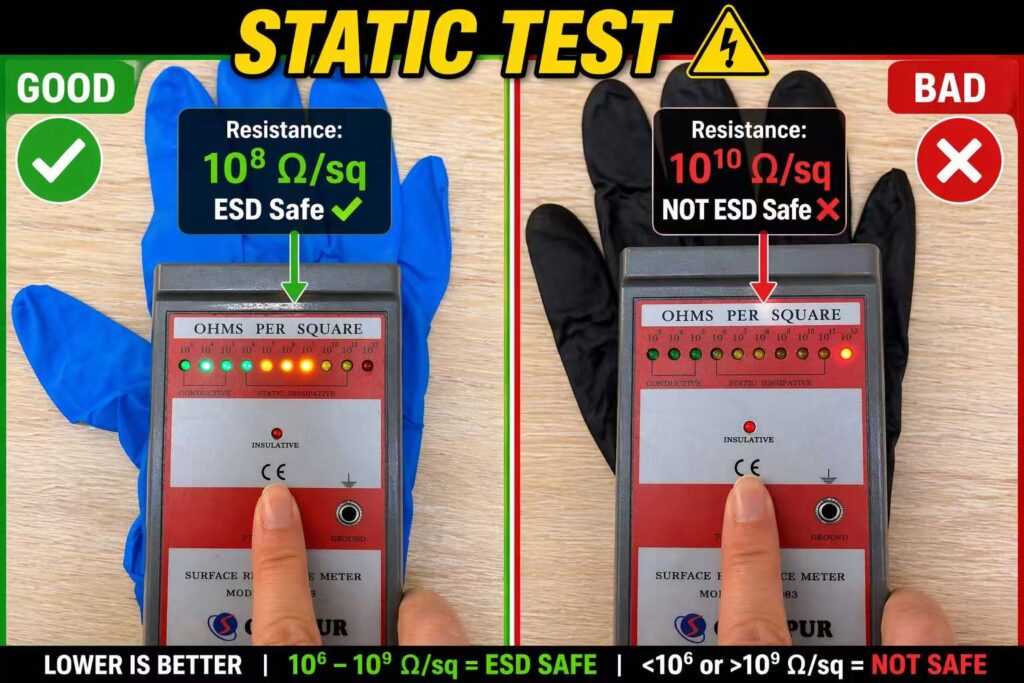
ESD Gloves vs Normal Gloves
Most people think gloves are just for hand protection.
But in electronics manufacturing, the wrong gloves can silently damage sensitive components.
That is the real difference between ESD gloves and normal gloves.
In this guide, you’ll learn:
- What makes ESD gloves different
- Why normal gloves can be risky
- Which gloves are best for electronics work
- How to choose the right glove for your factory
What Is the Difference Between ESD Gloves and Normal Gloves?
ESD gloves are designed to help control electrostatic charge in static-sensitive environments.
Normal gloves are designed mainly for hand protection, grip, or general work, but they do not reliably control static electricity.
That means normal gloves may be acceptable for general industry, but they are not ideal for electronics manufacturing, PCB assembly, or other ESD-sensitive work.
ESD Gloves vs Normal Gloves: Comparison Table
| Feature | ESD Gloves | Normal Gloves |
|---|---|---|
| Static Control | Designed to reduce and control static buildup | No reliable static control |
| Charge Dissipation | Controlled discharge | Uncontrolled discharge risk |
| Electronics Safety | Suitable for static-sensitive handling | May damage sensitive components |
| Typical Materials | Conductive or dissipative fibers, carbon blends, coated ESD liners | Standard textile, rubber, or general coating materials |
| Best Use | PCB assembly, semiconductor work, electronics manufacturing | Warehouse, construction, general industrial work |
| Factory Suitability | Recommended for ESD-protected areas | Not recommended for static-sensitive work |
Important: People often cannot feel static below around 3000V, but electronics can be damaged at much lower levels. That is why ESD glove choice matters in manufacturing.
Why Normal Gloves Can Be a Problem in Electronics Work
Normal gloves may protect the hand, but they are not designed to manage static charge.
In electronics work, that creates three common risks:
- Static charge buildup during handling
- Uncontrolled discharge to components
- Hidden damage that may not be visible immediately
For factories, this can lead to product defects, failures, and avoidable quality issues.
What Are ESD Gloves?
ESD gloves are gloves designed to help reduce static buildup and control charge movement in ESD-protected environments.
They are often used in electronics manufacturing, semiconductor handling, cleanrooms, and other precision applications.
ESD gloves are also often described as anti static gloves or static control gloves, although those terms can sometimes be used more loosely.
Are Anti Static Gloves Better Than Normal Gloves?
For static-sensitive environments, yes.
Anti static gloves are intended to reduce static buildup, while ESD gloves usually go further by helping manage and dissipate electrostatic charge more safely.
Compared with normal gloves, both anti static gloves and ESD gloves are a better fit for electronics handling.
Static Control Gloves vs Regular Gloves
Static control gloves are designed for controlled work environments where electrostatic discharge matters.
Regular gloves are designed for general protection only.
In practice, if your work involves PCB handling, electronics assembly, or other sensitive components, static control gloves are the safer choice.
Which Type of ESD Gloves Should You Choose?
The best glove depends on your application.
- PU coated ESD gloves: better for lighter, more precise handling
- ESD nitrile gloves: better for grip and durability
- Carbon fiber ESD gloves: useful for static control focused applications
If you need both static control and stronger wear resistance, nitrile-coated ESD gloves are often the preferred option.
When Should You Never Use Normal Gloves?
- PCB assembly
- Semiconductor handling
- Electronics manufacturing
- Repair of static-sensitive devices
- Any ESD-protected area
In these environments, normal gloves are not the safest choice because they are not made to support ESD control.
Final Answer: ESD Gloves vs Normal Gloves
Normal gloves are fine for general work, but they are not the right choice for static-sensitive electronics handling.
ESD gloves are designed specifically for environments where charge control matters.
If you work with electronics, ESD gloves are the safer and more professional option.
Need the Right ESD Gloves?
Choosing the wrong gloves can increase defect risk and reduce product reliability.
We supply:
- ESD nitrile gloves
- Anti static gloves
- Static control gloves
- Bulk and OEM factory orders
Frequently Asked Questions
What is the difference between ESD gloves and normal gloves?
ESD gloves are designed to control static charge, while normal gloves mainly provide general hand protection.
Can normal gloves damage electronics?
Yes, they can increase the risk of uncontrolled static discharge in sensitive environments.
Are anti static gloves the same as ESD gloves?
Not always. The terms overlap, but ESD gloves are usually the more precise term for electronics manufacturing use.
Can I use regular gloves for PCB assembly?
Regular gloves are not the best choice for PCB assembly because they do not reliably control electrostatic charge.
What are static control gloves?
Static control gloves are gloves designed to help manage electrostatic charge in controlled work environments.
Which is better for factory use, normal gloves or ESD gloves?
For electronics manufacturing and ESD-sensitive work, ESD gloves are the better choice.
What type of ESD gloves should I choose?
Choose based on your application. PU gloves are often used for precision work, while nitrile-coated ESD gloves are often used for better grip and durability.
Where are ESD gloves used?
They are widely used in electronics manufacturing, PCB assembly, semiconductor production, cleanrooms, and repair work.
FAQ
Can regular gloves create static electricity?
Yes. Regular gloves can contribute to static buildup because they are not designed to manage electrostatic charge in controlled environments.
Are cotton gloves safe for electronics?
Not necessarily. Cotton gloves may help with cleanliness, but they are not automatically ESD safe.
Are nitrile gloves better than normal gloves for electronics?
Only ESD nitrile gloves are a safer choice for static-sensitive electronics work. Standard nitrile gloves are not automatically ESD safe.
Do I need ESD gloves if I already use grounding?
Yes. Grounding helps, but gloves are still important because hand contact and material handling can influence static risk.
What gloves should I use for PCB assembly?
Use gloves specifically designed for ESD control, such as ESD PU gloves or ESD nitrile gloves, depending on whether you need more precision or more grip.
Are ESD gloves effective ?
Are nitrile gloves ESD safe ?
NO,some ESD nitrile gloves are safe,know more details,check the link are nitrile gloves ESD safe
Need gloves that are actually safe for electronics work?
Compare ESD gloves options for grip, precision, and durability.
Button: View ESD Gloves
📞 Contact Us Today
For bulk orders, quotes, or product guidance, get in touch with our expert team:
Email: sales2@esdbest.com
Whatsapp: +86 137 1427 2599