What Are ESD Gloves? Complete Guide for Electronics Manufacturing
Quick Answer
ESD gloves are specially designed gloves that help control electrostatic discharge when handling sensitive electronic components. They are commonly used in PCB assembly, semiconductor manufacturing, cleanrooms, electronics repair and precision inspection. Unlike normal gloves, ESD gloves use conductive or dissipative fibers, carbon yarn, PU coating or nitrile coating to safely reduce static risk.
For most electronics manufacturing applications, ESD gloves are expected to provide controlled resistance, stable grip, low contamination and comfortable long-term wear. They are not used alone, but as part of a complete ESD control system including grounding, ESD mats, wrist straps, ionizers and ESD-safe workstations.
What Are ESD Gloves?
ESD gloves, also called electrostatic discharge gloves or anti-static gloves, are protective gloves designed for handling electronic components that can be damaged by static electricity.
In electronics manufacturing, even a small electrostatic discharge can damage sensitive parts such as:
- PCB boards
- IC chips
- Semiconductors
- LED components
- Connectors
- Sensors
- Precision electronic modules
The problem is that human operators may not feel the discharge. Static electricity can damage electronics at levels much lower than the voltage humans can sense. This is why factories use ESD control products to reduce hidden risks during production.
ESD gloves are one part of this system. They help provide controlled static dissipation while also protecting the product from fingerprints, sweat, dust and contamination.
How Do ESD Gloves Work?
ESD gloves work by allowing static electricity to dissipate in a controlled way instead of building up or discharging suddenly.
Normal gloves may be clean and comfortable, but many normal glove materials are insulating. This means they may hold static charge rather than safely dissipating it. In sensitive electronics environments, this can create risk.
ESD gloves usually contain one or more of the following materials:
| Material / Feature | Function |
|---|---|
| Carbon fiber yarn | Helps static dissipation |
| Conductive fiber | Provides ESD control path |
| PU coating | Improves grip and precision handling |
| Nitrile coating | Improves oil resistance and durability |
| Seamless knit structure | Improves comfort and reduces lint |
| Low-lint material | Suitable for cleanroom and electronics assembly |
The goal is not to make the glove “fully conductive” in every case. In many electronics applications, the goal is controlled dissipation. This means the glove should reduce charge safely without creating sudden discharge or product damage.
ESD Gloves vs Anti-Static Gloves vs Normal Gloves
Many buyers confuse ESD gloves, anti-static gloves and normal gloves. They are not always the same.
Comparison Table
| Glove Type | Static Control | Suitable for PCB Assembly? | Typical Use | Risk Level |
|---|---|---|---|---|
| Normal gloves | No reliable ESD control | Not recommended | General handling, cleaning, packaging | High |
| Anti-static gloves | May reduce static generation | Depends on material and test result | Light electronics handling | Medium |
| ESD gloves | Designed for controlled static dissipation | Yes | PCB assembly, electronics, cleanroom, semiconductor | Low |
| Conductive gloves | Lower resistance path | Only for specific controlled applications | Specialized grounding environments | Depends on system design |
Key point: Not all anti-static gloves are true ESD gloves. For electronics manufacturing, buyers should check resistance range, material structure and test data instead of relying only on the product name.
Common Types of ESD Gloves
1. PU Coated ESD Gloves
PU coated ESD gloves are widely used for PCB assembly and precision electronics work.
They are popular because they offer:
- Good fingertip sensitivity
- Excellent grip for small components
- Lightweight comfort
- Low hand fatigue
- Good control during assembly and inspection
PU ESD gloves are usually preferred when workers need to handle small screws, chips, PCB boards and delicate components.
2. Nitrile ESD Gloves
Nitrile ESD gloves are used when stronger grip, oil resistance or chemical resistance is required.
They are suitable for:
- Oily components
- Maintenance work
- Heavier electronics handling
- Assembly environments requiring better durability
Normal nitrile gloves are not automatically ESD-safe. Only specially designed ESD nitrile gloves should be used for static-sensitive work.
3. Carbon Fiber ESD Gloves
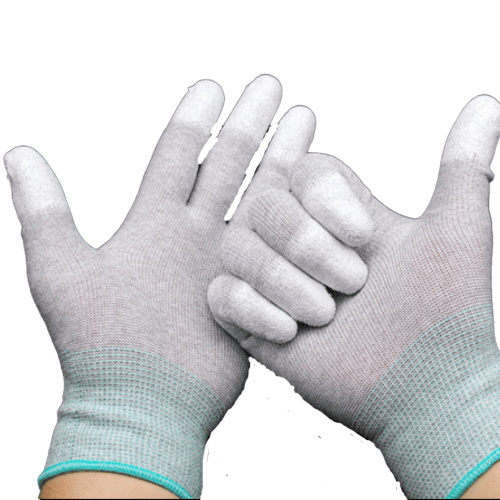
Carbon fiber ESD gloves use carbon yarn or conductive fiber to provide static dissipation. They are often used in electronics assembly, cleanrooms and inspection areas.
They are suitable for:
- Cleanroom work
- Semiconductor handling
- PCB inspection
- Precision assembly
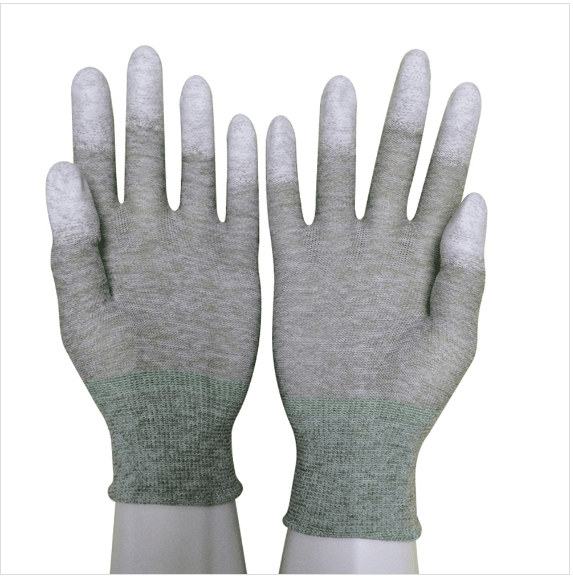
4. Finger Coated ESD Gloves
Finger coated gloves are used when workers need fingertip precision but still want breathability on the rest of the hand.
They are suitable for:
- PCB inspection
- Chip handling
- Assembly tasks requiring tactile feedback
What Resistance Should ESD Gloves Have?
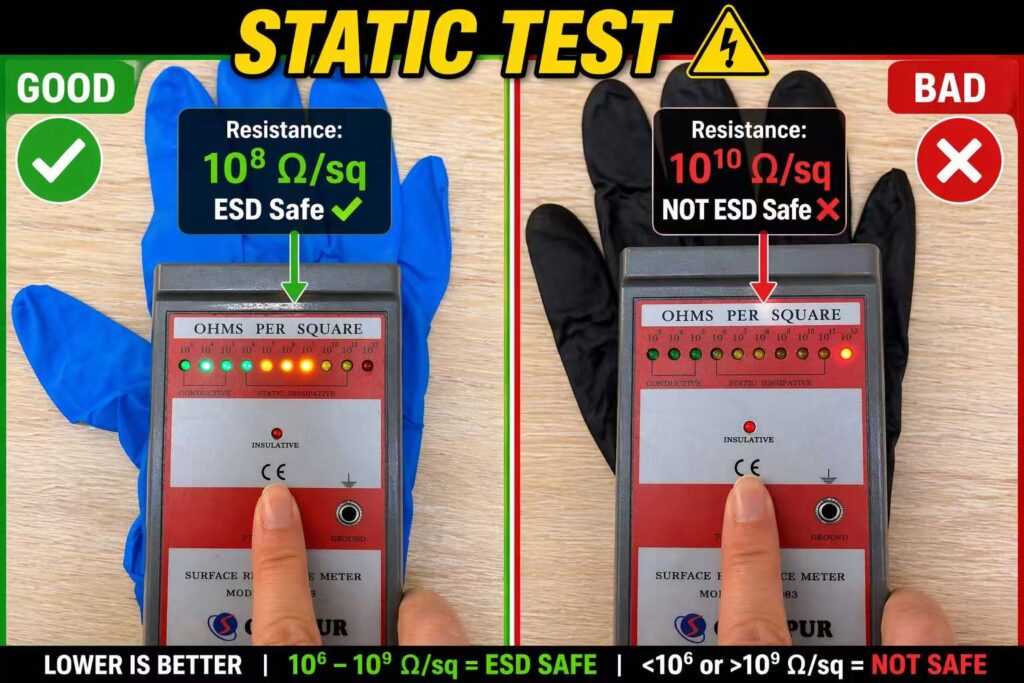
For many electronics manufacturing applications, ESD gloves are commonly designed within a dissipative resistance range. A frequently used reference range is:
10⁶–10⁹ Ω
This range helps reduce static charge while avoiding uncontrolled rapid discharge.
ESD Glove Resistance Reference Table
| Resistance Range | Meaning | Typical Interpretation |
|---|---|---|
| Below 10⁵ Ω | Conductive | May be too conductive for some applications unless properly controlled |
| 10⁶–10⁹ Ω | Dissipative | Commonly used for electronics handling |
| Above 10¹¹ Ω | Insulative | Usually not suitable for ESD protection |
Actual acceptance criteria may depend on the factory’s ESD control program, customer requirements and applicable standards. For critical applications, buyers should request test data before bulk purchase.
Testing / Data Module: How to Test ESD Gloves
A professional ESD glove should not only look clean. It should also be tested.
Common Testing Method
The most practical test is resistance measurement. A surface resistance meter or proper ESD test fixture is preferred. A multimeter may be used for basic reference, but it may not replace professional ESD testing equipment.
Simple Test Process
- Place the glove on an ESD-safe test surface.
- Use suitable electrodes or test probes.
- Measure resistance across the glove surface or from glove to ground depending on the test setup.
- Record temperature and humidity if required.
- Compare the result with your required ESD control range.
Example Test Data Format
| Sample | Test Item | Result | Reference Range | Status |
|---|---|---|---|---|
| PU ESD glove | Surface resistance | 10⁷ Ω | 10⁶–10⁹ Ω | PASS |
| Nitrile ESD glove | Surface resistance | 10⁸ Ω | 10⁶–10⁹ Ω | PASS |
| Normal glove | Surface resistance | >10¹¹ Ω | 10⁶–10⁹ Ω | FAIL |
This type of testing module is important because it shows buyers that the glove is not only marketed as “anti-static,” but actually supports ESD control.
Where Are ESD Gloves Used?
ESD gloves are commonly used in industries where static discharge can cause product failure.
PCB Assembly
PCB assembly is one of the most common applications. Workers use ESD gloves to reduce static risk while handling boards, ICs and connectors.
Recommended page: /esd-gloves-for-pcb-assembly/
Electronics Manufacturing
In electronics factories, ESD gloves help protect products during assembly, inspection, packaging and repair.
Semiconductor Manufacturing
Semiconductor components are highly sensitive to electrostatic discharge. ESD gloves used in this environment usually require better cleanliness and stricter process control.
Cleanroom Applications
Cleanrooms require both ESD control and contamination control. Low-lint ESD gloves are often preferred.
Electronics Repair
Repair technicians may use ESD gloves when working with motherboards, phones, laptops and sensitive components.
How to Choose the Right ESD Gloves
Choosing the right ESD gloves depends on the working environment.
| Application | Recommended Glove Type | Reason |
|---|---|---|
| PCB assembly | PU coated ESD gloves | Best precision and dexterity |
| Oily component handling | Nitrile ESD gloves | Better grip and oil resistance |
| Cleanroom | Low-lint carbon fiber ESD gloves | ESD control + low contamination |
| Inspection work | Finger coated ESD gloves | Better fingertip control |
| General electronics repair | PU or carbon fiber ESD gloves | Balanced protection and comfort |
Before purchasing ESD gloves, confirm:
- Required resistance range
- Coating type
- Grip requirement
- Cleanroom requirement
- Size availability
- Packaging method
- Test report availability
- Bulk supply capacity
Common Mistakes When Buying ESD Gloves
Mistake 1: Thinking All Gloves Are ESD-Safe
Normal gloves may look clean but may not provide static control. For PCB assembly, always choose gloves designed for ESD applications.
Mistake 2: Confusing Anti-Static with ESD
Anti-static may only mean the material reduces static generation. ESD gloves should provide controlled static dissipation and measurable resistance performance.
Mistake 3: Ignoring Resistance Testing
Without resistance data, it is hard to verify whether the glove is suitable for electronics manufacturing.
Mistake 4: Choosing Grip Only
Grip matters, but ESD performance, cleanliness, comfort and durability also matter.
Mistake 5: Using One Glove for Every Job
PU gloves may be best for precision PCB work, while nitrile gloves may be better for oily handling. The best glove depends on the task.
Product CTA
Need ESD Gloves for Electronics Manufacturing?
ESDBEST supplies ESD gloves for PCB assembly, electronics manufacturing, cleanroom use and bulk industrial applications.
Available options include:
- PU coated ESD gloves
- Nitrile ESD gloves
- Carbon fiber ESD gloves
- Finger coated ESD gloves
- Cleanroom ESD gloves
- OEM / bulk supply options
Request bulk quotation: sales2@esdbest.com
Recommended product page: https://esdbest.com/esd-gloves/
ESD gloves are essential for preventing electrostatic damage in electronics manufacturing.
But not all gloves are the same.
Using the wrong gloves can silently damage components—even below 100V.
In this guide, you’ll learn:
✔ What ESD gloves are
✔ How they work
✔ Why factories use them
✔ How to choose the right one
ESD gloves are gloves designed to safely dissipate static electricity and reduce the risk of electrostatic discharge when handling sensitive electronic components.
In simple terms:
Static electricity = stored charge
ESD = sudden discharge
The purpose of ESD gloves is not only to protect the operator’s hands, but also to protect PCBs, IC chips, semiconductors, and electronic assemblies from invisible static damage.
Learn more:
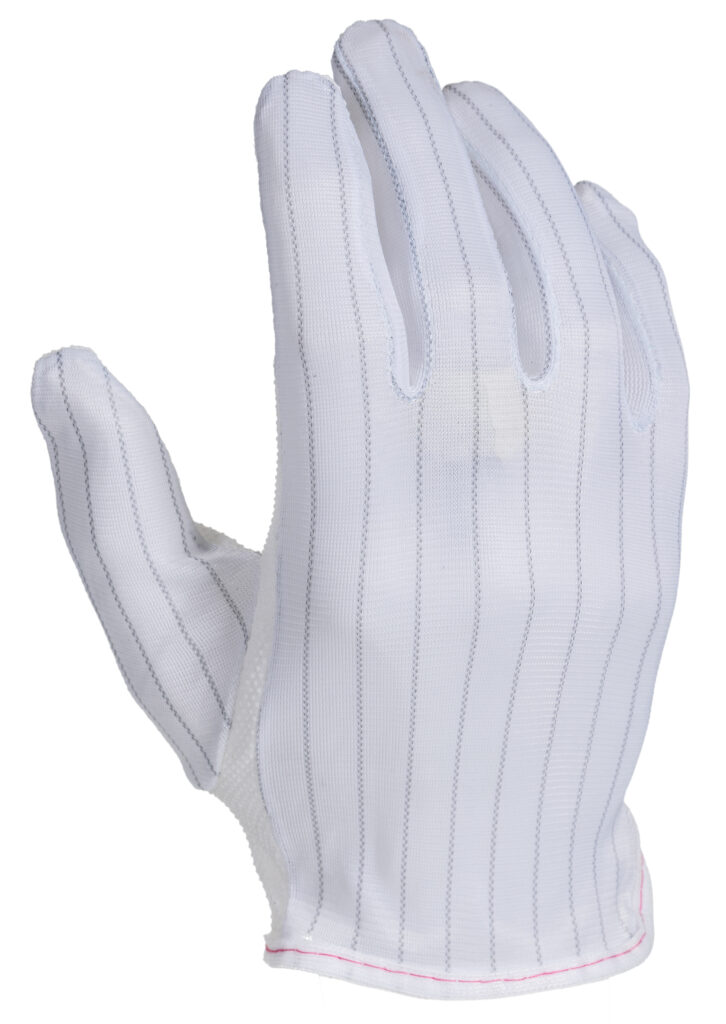
Types of ESD Gloves
👉 Related: /esd-protection/
How Do ESD Gloves Work?
ESD gloves use conductive or dissipative fibers to control static electricity.
Instead of allowing charge to build up, they:
✔ Reduce static generation
✔ Help distribute charge
✔ Work with grounding systems
⚠ Important: ESD gloves alone are NOT enough.
You still need:
• ESD mats
• Wrist straps
• Grounding systems
👉 Learn more: /how-to-build-esd-workstation/
Common Materials Used in ESD Gloves
Different materials serve different purposes:
• Polyester + Carbon Fiber → Static control
• PU Coating → Precision handling
• Nitrile Coating → Grip + durability
👉 See: /esd-nitrile-gloves/
How to Choose the Right ESD Gloves
When selecting ESD gloves, consider:
✔ Application (assembly / handling / cleanroom)
✔ Grip requirements
✔ Durability
✔ Resistance range
👉 Compare types: are nitrile gloves ESD safe
Looking for a reliable ESD gloves supplier?
Need the Right ESD Gloves for Your Factory?
Choosing the wrong glove can damage your products.
We help factories select the right ESD gloves for their production lines.
✔ OEM available
✔ Bulk supply
✔ Factory-direct pricing
[Get Factory Quote]
[Contact via WhatsApp]
Email: sales2@esdbest.com
Whatsapp: +86 137 1427 2599
Recommended Reading
What is ESD? →
/what-is-esd/Static Electricity Guide →
/static-electricity-guide/Best ESD Gloves →
/best-esd-gloves/ESD Gloves for PCB Assembly →
/esd-gloves-for-pcb-assembly/- PU vs Nitrile ESD Gloves → /pu-vs-nitrile-esd-gloves/
Need reliable ESD gloves for your factory?
ESDBEST supplies PU coated, nitrile coated, carbon fiber, and fingertip ESD gloves for electronics manufacturing.
✔ Factory direct supply
✔ Bulk orders available
✔ OEM branding supported
✔ Suitable for PCB assembly and electronics factories
Get Quote Now
WhatsApp Us :+86 137 1427 2599