ESD Work Boots for Manufacturing Environments
Introduction
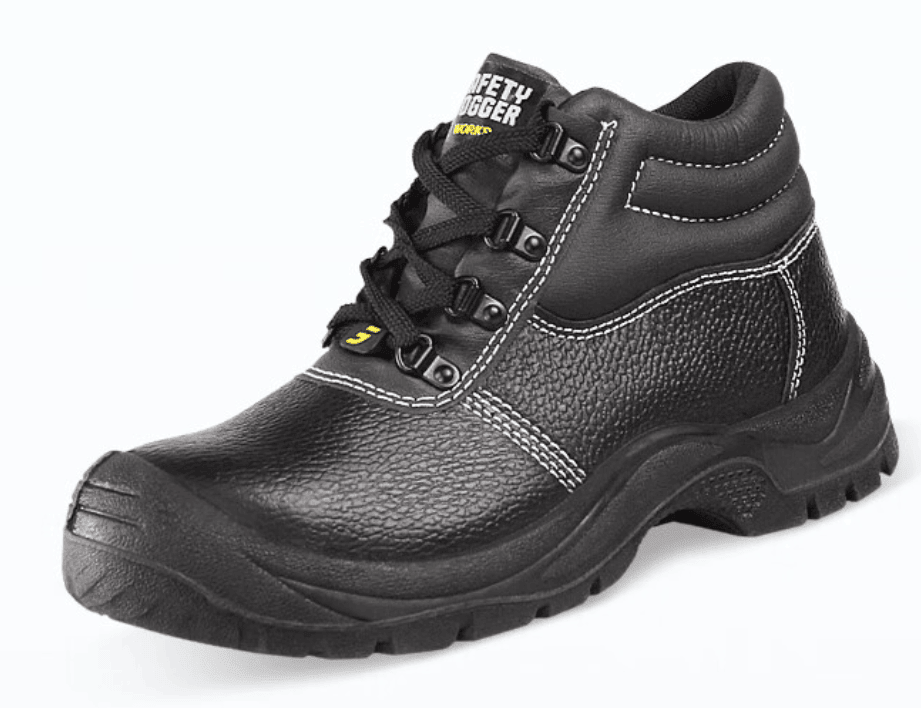
In manufacturing and electronics assembly environments, ESD work boots play a critical role in controlling body voltage.
Unlike ordinary safety footwear, ESD work boots are designed to function as part of a flooring–footwear–grounding system, not as standalone protection.
⸻
What Makes ESD Work Boots Different?
ESD work boots are engineered to:
•Maintain controlled electrical resistance
•Reduce body voltage during movement
•Work continuously across production shifts
They are commonly used in:
•Electronics assembly lines
•Semiconductor facilities
•PCB manufacturing
•EPA (ESD Protected Areas)
⸻
The Role of ESD Work Boots in a Factory System
In a compliant factory setup, ESD work boots work together with:
•Dissipative or conductive flooring
•Verified grounding paths
•Periodic system testing
If ESD work boots are used on non-dissipative floors, static charge remains trapped on the body — even if the boots themselves are compliant.
⸻
Common Factory Misuse Scenarios
Typical issues seen in factories include:
•ESD work boots paired with ordinary epoxy floors
•No verification of floor-to-footwear resistance
•Mixing ESD and non-ESD footwear in the same area
These conditions compromise the entire ESD program.
⸻
Choosing ESD Work Boots for Production Lines
Engineers should consider:
•Resistance stability over time
•Compatibility with existing flooring
•Toe protection requirements
•Factory-level testing and documentation
📞 Contact Us Today
For bulk orders ESD BOOTS, quotes, or product guidance, get in touch with our expert team:
Email: sales2@esdbest.com
Phone: +86 137 1427 2599
FAQ
They are used in manufacturing environments to control body voltage as part of an ESD flooring system.
Yes, in EPA areas where static discharge could damage sensitive components.
No. Without dissipative flooring, static charge cannot be effectively discharged.
They should be verified periodically as part of routine ESD system audits.