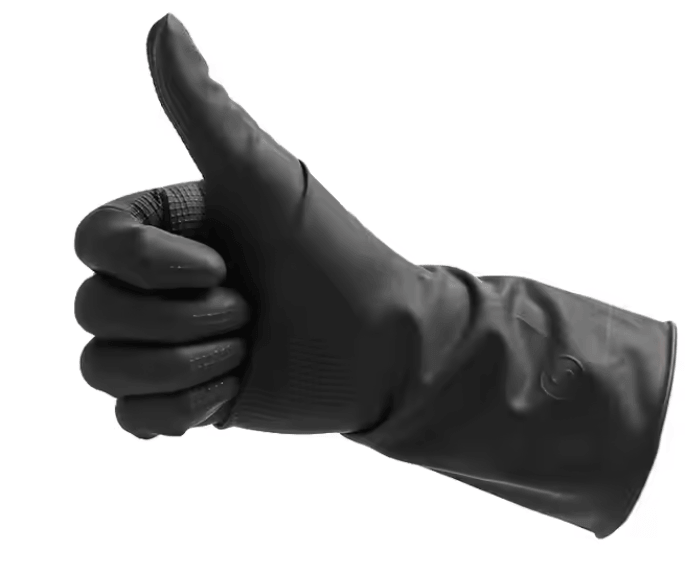




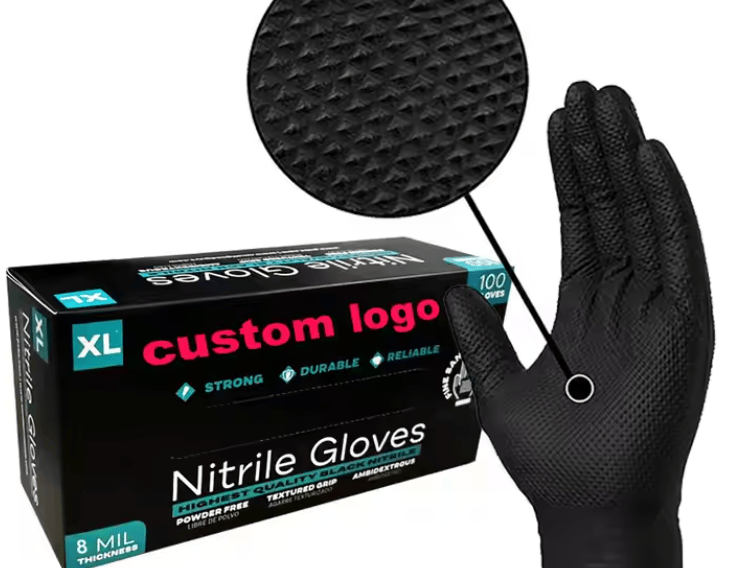

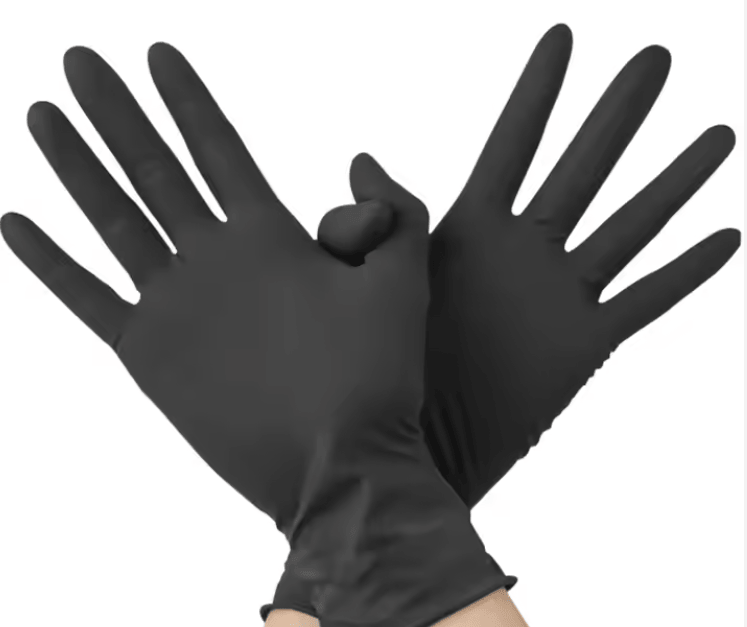
ESD Nitrile Gloves
Most suppliers call their nitrile gloves anti-static. Almost none publish a number.
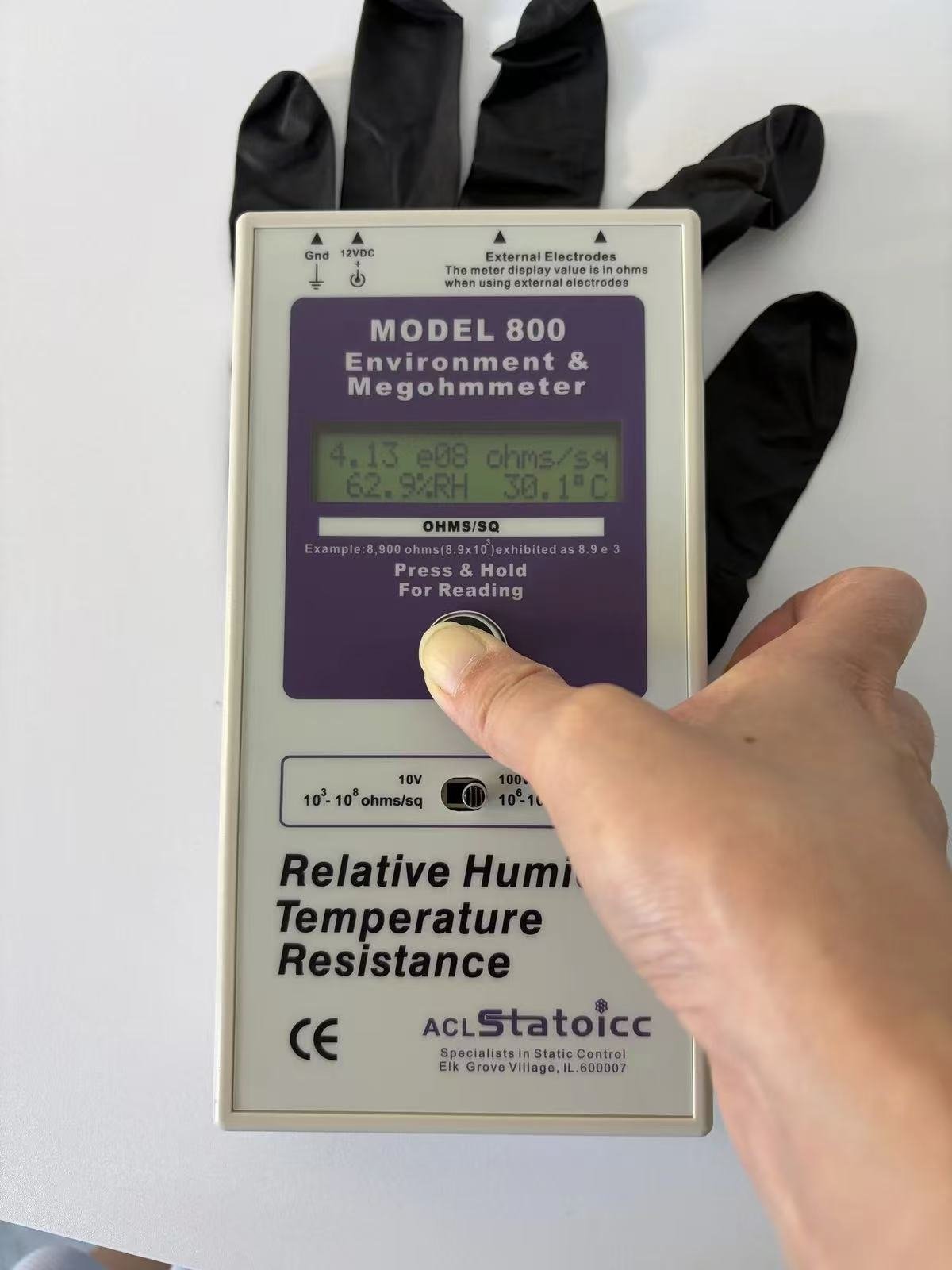
We measured ours. Three samples, on a calibrated ACL Staticide Model 800 megohmmeter, with temperature and humidity recorded for every reading.
| Sample | Colour | Surface resistance | RH | Temp |
|---|---|---|---|---|
| N-01 | Purple | 3.72 × 10⁸ Ω/sq | 62.8% | 30.2 °C |
| N-02 | Black | 4.13 × 10⁸ Ω/sq | 62.9% | 30.1 °C |
| N-03 | Black | 4.28 × 10⁸ Ω/sq | 63.1% | 30.1 °C |
Measured range: 3.72 × 10⁸ – 4.28 × 10⁸ Ω/sq
Test voltage 10 V. Instrument serial R01172234, calibrated 19 August 2026.
All three readings fall inside the static-dissipative range of 1 × 10⁶ to 1 × 10⁹ Ω, and the spread across samples is under half an order of magnitude — the material is consistent from glove to glove.
Are Nitrile Gloves ESD Safe?
Ours are, and the numbers above are the evidence.
But "nitrile" describes the polymer, not the electrical performance. Two gloves can both be nitrile and measure decades apart, depending on:
- Additives and compounding
- Surface treatment
- Powder residue
- Thickness
- Whether the glove has been handled or contaminated
A glove is ESD safe only if someone has measured it and stated the conditions. If a supplier quotes a resistance figure with no temperature and humidity attached, the figure cannot be compared to anything.
Nitrile gloves are a contact barrier, not a grounding path. They do not ground the operator. A wrist strap connected to a common point ground, or ESD footwear on a dissipative floor, is still required.
Are All Nitrile Gloves ESD Safe?
No.
A standard medical or food-grade nitrile glove is made to a different specification. It is compounded for barrier performance and tactile feel, not for controlled surface resistance. It may measure anywhere, and the supplier will not have checked.
The difference between an ESD nitrile glove and an ordinary one is not visible. Both are thin, both are powder-free, both come in a dispenser box. The only way to tell is measurement.
This is the same problem we documented with knitted gloves: a plain glove with the same knit and the same PU fingertip coating as our carbon fibre glove measured 6.47 – 8.16 × 10¹⁰ Ω/sq, about 10,000 times higher, and is indistinguishable by eye. See the full comparison.
Nitrile or Carbon Fibre?
| ESD Nitrile | Carbon fibre knitted | |
|---|---|---|
| Measured resistance | 3.72 – 4.28 × 10⁸ Ω/sq | 2.52 × 10⁶ – 2.01 × 10⁷ Ω/sq |
| Type | Disposable | Reusable, washable |
| Barrier to oils and flux | Excellent | Limited |
| Breathability | Low | High |
| Tactile sensitivity | High | Moderate |
| Cost per shift | Higher | Lower |
Choose nitrile for contamination control, flux and solvent exposure, cleanroom work, medical device assembly, and anywhere a disposable barrier is required.
Choose carbon fibre for general assembly, inspection and repair, where gloves are worn all shift and reused.
Thickness Options
| Thickness | Typical use |
|---|---|
| 6 mil | General assembly, inspection, high tactile sensitivity |
| 8 mil | Longer wear, more mechanical protection, chemical handling |
Both thicknesses use the same compound. Thickness affects durability and feel, not the electrical classification.
Specifications
| Parameter | Specification |
|---|---|
| Material | Nitrile butadiene rubber (NBR) |
| Powder | Powder-free |
| Latex | Latex-free |
| Measured surface resistance | 3.72 × 10⁸ – 4.28 × 10⁸ Ω/sq at 62–63% RH |
| Thickness | 6 mil / 8 mil |
| Colours | Black, purple, blue |
| Sizes | S / M / L / XL |
| Fingertips | Textured for grip |
| Cuff | Beaded |
| Packing | 100 pcs/box, 10 boxes/carton |
| Standards | Conforms to the dissipative range in ANSI/ESD S20.20 and IEC 61340-5-1 under the stated test conditions |
| Documentation | SGS RoHS and REACH available on request |
Applications
- PCB and PCBA assembly
- SMT production lines
- Semiconductor device handling
- Cleanroom operations
- Medical device manufacturing
- Automotive electronics
- Inspection, rework and repair
- Handling with flux, solvent or adhesive exposure
How We Test
Every batch is checked in our own laboratory in Shenzhen.
- The glove is laid flat on an insulating white work surface.
- Surface resistance is measured with ACL Staticide Model 800 concentric ring electrodes at 10 V.
- The reading is allowed to stabilise before recording.
- Temperature and relative humidity are recorded alongside every reading.
- Multiple samples from the batch are measured.
The instrument carries a current calibration certificate: serial R01172234, calibrated 19 August 2026, next due 18 August 2027, all ranges PASS within ±10% MPE.
Original test photographs and the full measurement record are available to customers on request.
Download the comparative test report (PDF)FAQ
Are nitrile gloves anti-static?
Our ESD nitrile gloves measured 3.72 – 4.28 × 10⁸ Ω/sq, inside the static-dissipative range. Ordinary nitrile gloves are not made to this specification and are not checked.
Is nitrile ESD safe?
Nitrile can be ESD safe when compounded and verified for it. The material name alone does not tell you.
Do nitrile gloves prevent ESD damage?
They reduce direct charge transfer from skin contact and act as a contamination barrier. They do not ground the operator.
Are nitrile gloves latex free?
Yes. Nitrile butadiene rubber contains no natural rubber latex, which is why it is used where latex allergy is a concern.
What is the difference between 6 mil and 8 mil?
Durability and feel. Both use the same compound and the same electrical classification.
Can disposable gloves be ESD safe?
Yes, if they are made and verified for it. See the measured data above.