Latex vs Nitrile vs Vinyl Gloves: Complete Comparison Guide

Vinyl vs Nitrile vs Latex Gloves for ESD Use
Quick Answer
Of the three common disposable glove materials, only nitrile is routinely made and verified to an ESD specification.
| Material | Made in an ESD grade? | Our position |
|---|---|---|
| Nitrile | Yes | Measured 3.72 – 4.28 × 10⁸ Ω/sq. This is what we supply. |
| Vinyl (PVC) | Rarely | Not recommended for EPA use |
| Latex | Rarely | Not recommended for EPA use |
The rest of this page explains why.
Are Vinyl Gloves ESD Safe?
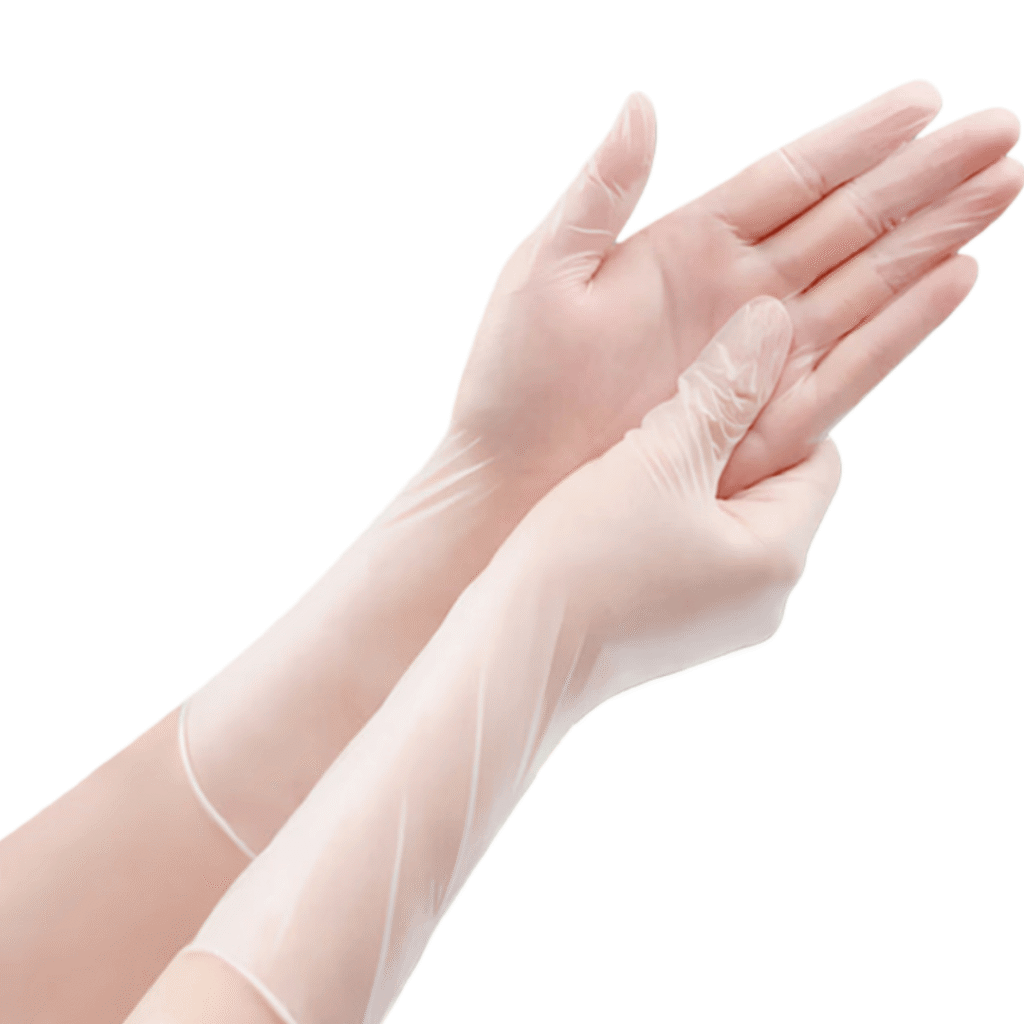
Vinyl gloves are made from PVC with plasticisers added for flexibility. They are the cheapest of the three materials and are common in food handling and light-duty tasks.
The problem is not only electrical. Vinyl has poor puncture resistance and a looser fit, both of which matter when handling small components. Plasticisers can also migrate to the glove surface and transfer to the product — a contamination risk in electronics assembly.
Very few suppliers produce a vinyl glove in a controlled ESD grade. Where a vinyl glove is described as anti-static, ask for the measured value and the test conditions before specifying it.
Are Latex Gloves ESD Safe?
Latex is natural rubber. It has excellent elasticity and tactile sensitivity, which is why it remains common in medical use.
Two reasons it is not the default in electronics:
Allergy. Natural rubber latex protein causes allergic reactions in a meaningful share of the workforce. Most electronics manufacturers have moved to latex-free gloves for this reason alone.
Powder. Powdered latex gloves shed particulate. In an EPA, and especially in a cleanroom, that is a contamination source.
As with vinyl, latex gloves are rarely produced in a verified ESD grade.
Nitrile — What We Measured
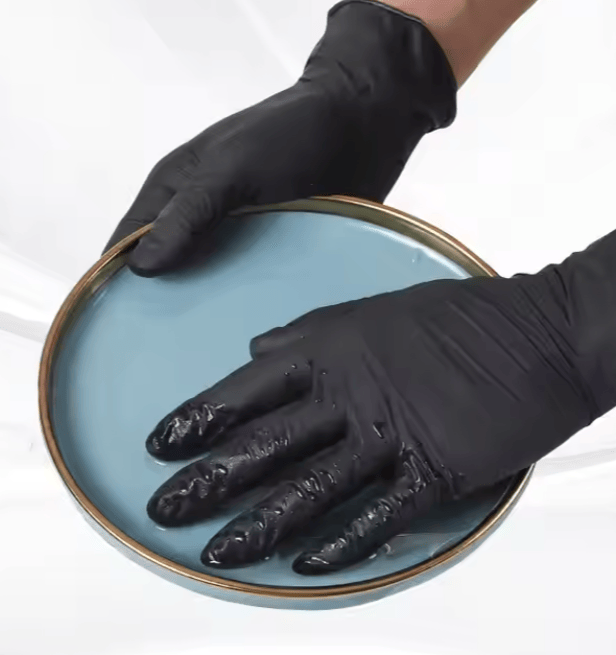
Nitrile butadiene rubber is the standard for electronics assembly: latex-free, powder-free, better puncture resistance than vinyl or latex, and available in a controlled ESD grade.
We measured three samples on a calibrated ACL Staticide Model 800:
| Sample | Colour | Surface resistance | RH | Temp |
|---|---|---|---|---|
| N-01 | Purple | 3.72 × 10⁸ Ω/sq | 62.8% | 30.2 °C |
| N-02 | Black | 4.13 × 10⁸ Ω/sq | 62.9% | 30.1 °C |
| N-03 | Black | 4.28 × 10⁸ Ω/sq | 63.1% | 30.1 °C |
Range: 3.72 × 10⁸ – 4.28 × 10⁸ Ω/sq — inside the static-dissipative range of 1 × 10⁶ to 1 × 10⁹ Ω, with a spread of under half an order of magnitude across samples.
Test voltage 10 V. Instrument serial R01172234, calibrated 19 August 2026.
→ ESD nitrile gloves — full specifications
Material Comparison
| Nitrile | Vinyl | Latex | |
|---|---|---|---|
| Base material | NBR synthetic rubber | PVC + plasticiser | Natural rubber |
| Latex allergy risk | None | None | Yes |
| Puncture resistance | High | Low | Moderate |
| Tactile sensitivity | High | Moderate | Highest |
| Chemical resistance | High | Low | Moderate |
| Available in ESD grade | Yes | Rarely | Rarely |
| Typical use | Electronics, cleanroom, medical | Food, light duty | Medical |
One Thing That Applies to All Three
"Nitrile," "vinyl" and "latex" describe the polymer, not the electrical performance.
Two gloves can be the same material and measure decades apart, depending on compounding, surface treatment, powder residue and thickness. A standard medical-grade nitrile glove is not the same product as an ESD nitrile glove, even though both are nitrile and both look identical in the box.
A glove is ESD safe only if someone has measured it and stated the conditions. If a supplier quotes a resistance figure with no temperature and humidity attached, the figure cannot be compared to anything.
Related
For bulk orders, quotes, or product guidance, get in touch with our expert team:
Email: sales2@esdbest.com
Phone: +86 137 1427 2599