
10⁶–10⁹ Ω Guide
ESD Glove Resistance Explained: 10⁶–10⁹ Ω Guide
Why Resistance Matters
ESD gloves are not just ordinary gloves. Their resistance helps control how static charge moves.
If resistance is too high, static may not dissipate properly.
If resistance is too low, the glove may become too conductive.
A controlled range is important for safe electronics handling.
What Does Resistance Mean?
Resistance measures how easily electric charge can pass through a material.
For ESD gloves, resistance affects:
-
Static dissipation
-
Operator safety
-
Component protection
-
ESD control performance
Common ESD Glove Resistance Range
Many ESD gloves are designed around:
10⁶–10⁹ Ω
This range is often used for static dissipative protection in electronics handling.
Too High vs Too Low Resistance
| Resistance | Risk |
|---|---|
| Too low | Conductive risk |
| Controlled range | Safe dissipation |
| Too high | Static buildup |
How Resistance Affects PCB Handling
When workers handle PCBs, the glove must help reduce sudden charge transfer.
A stable resistance range helps prevent:
-
Spark discharge
-
Hidden ESD damage
-
Component failure
-
Production defects
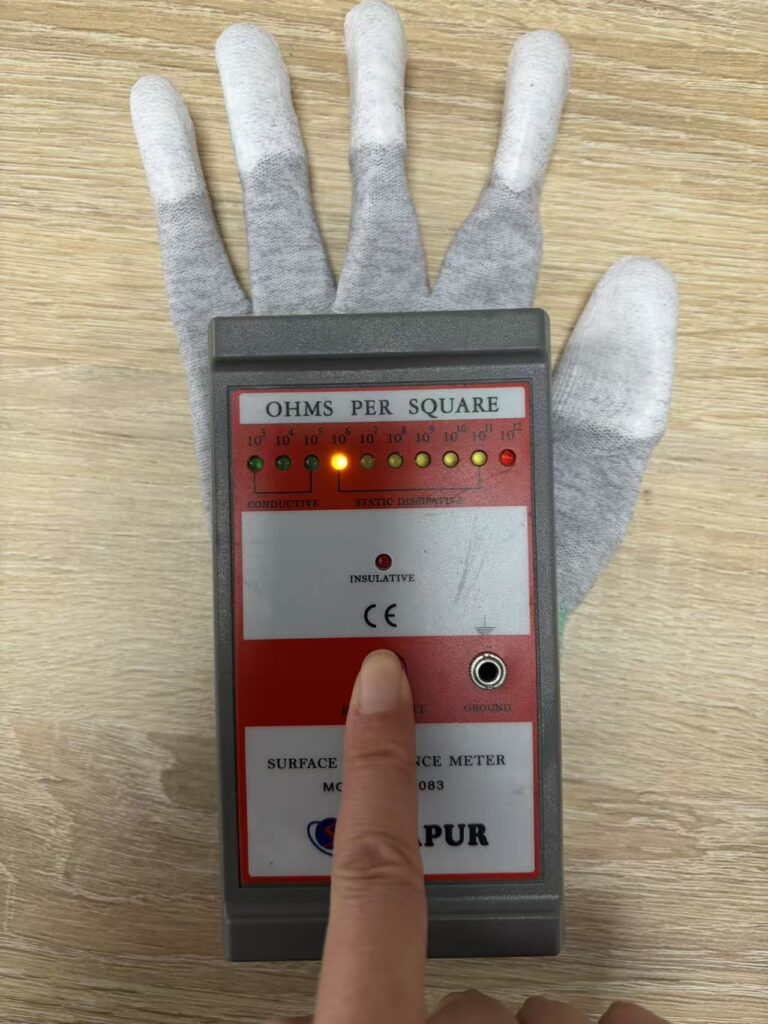

How to Test ESD Gloves
Testing methods may include:
-
Surface resistance testing
-
Point-to-point resistance testing
-
Batch inspection
-
Regular factory checks
Testing is important because gloves can change after wear, dirt, or repeated use.
Common Mistakes
-
Ignoring resistance data
-
Assuming all black gloves are ESD safe
-
Using gloves after they are worn out
-
Not checking supplier specifications
-
Only focusing on price
CTA
Need stable-resistance ESD gloves?
ESDBEST supplies ESD gloves with stable resistance quality for electronics factories.
✔ Resistance-controlled
✔ Factory direct
✔ Bulk supply
✔ OEM supported
Understanding resistance is important — but choosing the right supplier matters even more.
👉 View factory-grade ESD gloves:
ESD Gloves Bulk Supplier
📞 Contact Us Today
For bulk orders, quotes, or product guidance, get in touch with our expert team:
Email: sales2@esdbest.com
Whatsapp: +86 137 1427 2599
FAQ
What is ESD glove resistance?
It refers to how the glove controls the flow of static charge.
What resistance should ESD gloves have?
Many ESD gloves are designed around 10⁶–10⁹ Ω for static dissipative performance.
Can resistance be too high?
Yes. If resistance is too high, static may build up instead of dissipating safely.
Should ESD gloves be tested?
Yes. Regular testing helps ensure stable ESD performance.
Understanding resistance is important — but choosing the right supplier matters even more.