When to Wear Them and How to Choose Safely
Gloves at Work: What to Wear, When to Wear, and Why It Matters
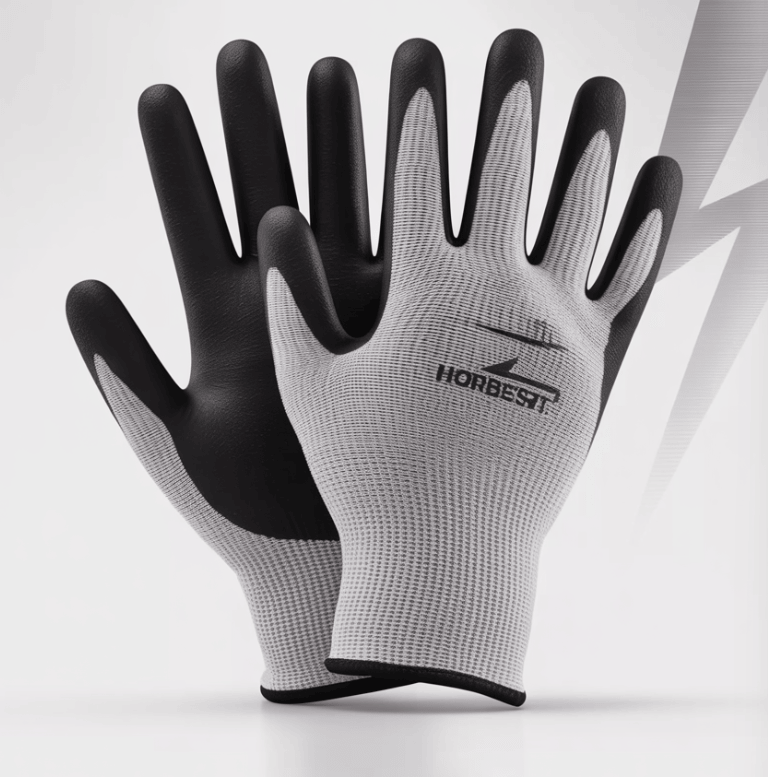
Gloves at work prevent injuries—only if they are matched to the hazard and worn correctly. The wrong glove can be worse than no glove if it reduces grip, dexterity, or creates false confidence.
When Gloves at Work Are Usually Required
Gloves are commonly needed when tasks involve:
-
Rough surfaces (abrasions)
-
Sharp edges (cuts)
-
Puncture risks
-
Wet/oily handling (slips)
-
Cold exposure
-
Chemicals (requires specialized gloves—see /work-gloves/)
Match the Glove to the Hazard (Simple Rules)
Abrasion-heavy jobs
Choose durable outer materials; prioritize EN 388 abrasion.
Sharp edges and metal
Choose cut-resistant builds; check EN 388 + ANSI cut.
Oily/wet tasks
Choose coatings that grip under oil; nitrile often performs better than PU.
Cold work
Choose warm gloves that still allow control; see /warm-work-gloves/ and /best-winter-work-gloves/.
Common Mistakes That Reduce Safety
-
Wearing oversized gloves → tool slips and pinch hazards
-
Choosing maximum thickness → slow work, fatigue, poor control
-
Ignoring wet conditions → soaked insulation becomes cold fast
-
Using “general gloves” for chemical exposure → serious risk
Quick Workplace Checklist (Supervisor + Worker)
-
What’s the hazard? (abrasion/cut/oil/cold)
-
Which rating matters? (EN 388 / ANSI / EN 511 for cold)
-
Does the glove keep grip when cold or wet?
-
Is sizing correct for control?
FAQ
Q1: When are gloves required at work?
Gloves are required when hands are exposed to hazards such as sharp edges, rough surfaces, chemicals, extreme temperatures, or slippery materials.
Q2: What happens if you wear the wrong gloves at work?
Wearing the wrong gloves can reduce grip, limit dexterity, increase fatigue, and raise the risk of accidents or injuries.
Q3: Can gloves reduce workplace injuries?
Yes. Properly selected gloves help reduce cuts, abrasions, burns, and hand injuries when matched to job risks.
Q4: Are gloves considered PPE?
Yes. Gloves are classified as personal protective equipment (PPE) when used to protect hands from workplace hazards.
Q5: What are the most common glove mistakes at work?
Common mistakes include wearing the wrong size, choosing overly thick gloves, and using general-purpose gloves for specialized hazards.
Q6: Should gloves be worn all the time at work?
Not always. Gloves should be worn when hazards are present, but unnecessary glove use can reduce dexterity for low-risk tasks.
Q7: How do gloves improve safety?
Gloves improve safety by protecting skin, improving grip, and reducing exposure to mechanical, thermal, or chemical hazards.
Q8: Who decides what gloves to wear at work?
Employers or safety managers typically decide glove requirements based on risk assessments and safety regulations.
Q9: Are gloves always required at work?
Not always, but they are recommended/required when tasks expose hands to risks like cuts, abrasion, puncture, chemicals, or cold.
Q10: What’s the most common glove mistake?
Choosing the wrong size or too much bulk, which reduces grip and dexterity.
Q11: How do I choose gloves for sharp edges?
Use EN 388 and/or ANSI cut levels to compare cut resistance.
Q12: Where can I see all glove standards?
Go to /work-gloves/.
Contact Us Today
For bulk orders, quotes, or product guidance, get in touch with our expert team:
Email: sales2@esdbest.com
Phone: +86 137 1427 2599