Best Winter Work Gloves (Top Picks + Rating Logic)
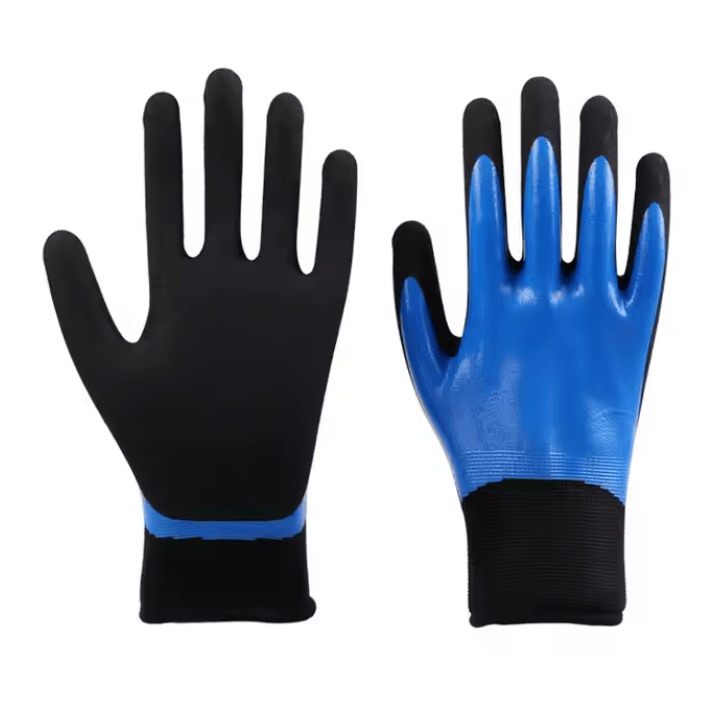
The best winter work gloves should be selected based on temperature exposure, moisture conditions, and task dexterity—not by thickness alone.
This guide ranks winter work gloves using a clear evaluation and scoring matrix, helping buyers choose the right gloves for real working conditions instead of marketing claims.
Internal link (pillar support):
If you need a full overview beyond winter gloves—including cut protection, chemical resistance, ESD gloves, and coating types—visit /work-gloves/.
⸻
What Makes the “Best” Winter Work Gloves?
1) Cold Protection That Matches the Environment
Cold protection is the foundation of any winter work glove.
EN 511 is the core reference standard for cold-protective gloves, covering:
•Convective cold (cold air / wind)
•Contact cold (cold surfaces)
•Water penetration considerations
The right level of cold protection depends on how and where your hands lose heat.
⸻
2) Grip That Remains Stable in Cold Conditions
Cold temperatures stiffen materials and reduce friction.
Grip patterns and coatings must continue to perform when temperatures drop, especially when handling tools, materials, or equipment outdoors or in refrigerated environments.
A glove that is warm but slippery is not a safe glove.
⸻
3) Durability (Winter Destroys Gloves Faster)
Winter conditions accelerate glove wear.
Salt, moisture, and rough surfaces significantly shorten glove lifespan, making abrasion-resistant construction essential.
This is where EN 388 mechanical risk concepts—such as abrasion and puncture resistance—become relevant even for winter gloves.
⸻
4) Dexterity Is a Safety Issue
Excessively bulky gloves reduce finger control, increase fatigue, and raise the risk of tool slips or handling errors.
Dexterity is not a comfort feature—it is a safety requirement, especially for tool-based and repetitive work.
⸻
Best Winter Work Gloves Comparison Matrix (Scoring Table)
| Buyer Type | Warmth | Dexterity | Waterproof Need | Best Build | Why It’s “Best” |
|---|---|---|---|---|---|
| Outdoor construction | 5 / 5 | 3 / 5 | 3 / 5 | Insulated + wind-resistant | Cold air exposure + abrasion resistance |
| Cold storage picker | 4 / 5 | 5 / 5 | 1 / 5 | Moderate insulation, low bulk | Speed, flexibility, and control |
| Snow / wet outdoor work | 5 / 5 | 3 / 5 | 5 / 5 | Insulated + waterproof shell | Wet conditions destroy warmth quickly |
| Driving / tool work | 3 / 5 | 5 / 5 | 2 / 5 | Thin insulation | Control-first, precision handling |
⸻
“Best” Picks by Scenario (Review-Style Guidance)
Best Overall (Balanced Warmth + Dexterity)
Choose gloves with mid-bulk insulation and reliable grip, suitable for mixed indoor and outdoor winter work.
This option delivers warmth without excessive bulk, making it the most versatile choice.
⸻
Best for Extreme Cold (Warmth-First)
For severe cold exposure, prioritize high insulation and wind protection.
Expect reduced dexterity—these gloves are designed for warmth-first scenarios rather than precision tasks.
⸻
Best for Wet Snow (Waterproof-First)
In snow and slush, waterproofing matters more than extra thickness.
A sealed outer shell and water-resistant construction are critical, as moisture penetration rapidly reduces insulation performance.
This is where the EN 511 water penetration concept helps explain why waterproof gloves often outperform thicker, non-waterproof ones.
⸻
Best for Cold Warehouse (Dexterity-First)
Cold warehouses demand speed, scanning accuracy, and tool control.
Choose gloves with lower bulk insulation to maintain dexterity and reduce fatigue during repetitive tasks.
⸻
Buying Checklist (Conversion-Focused)
•Is your work mainly cold air exposure or contact with cold metal?
→ Choose based on EN 511 convective vs. contact cold
•Do you frequently work in wet snow or standing water?
→ Waterproofing is more important than added thickness
•Do you rely on tools, scanning, or frequent gripping?
→ Avoid overly bulky gloves
•Do you need additional mechanical protection?
→ Also consider EN 388 abrasion and puncture resistance
⸻
How We Score Winter Work Gloves
Scoring Logic (1–5 scale)
•Warmth
Based on insulation efficiency, not thickness alone
•Dexterity
Ability to grip tools, triggers, and fasteners
•Water Resistance
Performance in snow, slush, or wet handling
•Durability
Resistance to abrasion, seams, and palm wear
Gloves scoring high in warmth but low in dexterity may fail real-world safety expectations.
FAQ
Q1: What are the best winter work gloves for wet snow?
Winter gloves with a waterproof outer shell are best, because moisture quickly reduces insulation performance.
Q2: What rating should I look for in winter gloves?
EN 511 is commonly used for cold protection, covering convective cold, contact cold, and water penetration considerations.
Q3: Are thicker winter gloves always safer?
Not always. Excess bulk reduces dexterity and tool control, which can increase safety risks.
Q4: Where can I see all glove categories and standards?
Visit /work-gloves/ for the complete guide.
Contact Us Today
For bulk orders, quotes, or product guidance, get in touch with our expert team:
Email: sales2@esdbest.com
Phone: +86 137 1427 2599