Static Electricity: The Complete Industrial Guide
What Is Static Electricity?
Static electricity is the accumulation of electrical charge on the surface of a material. Unlike current electricity, which flows through a conductor, static electricity remains on the surface of an object until the charge is released.
Static electricity occurs when electrons move from one material to another through friction, separation, or contact. This process creates an imbalance of electric charge between two objects.
When this imbalance becomes large enough, the stored electrical energy can suddenly release as a spark. This sudden release of electrical energy is known as electrostatic discharge (ESD).
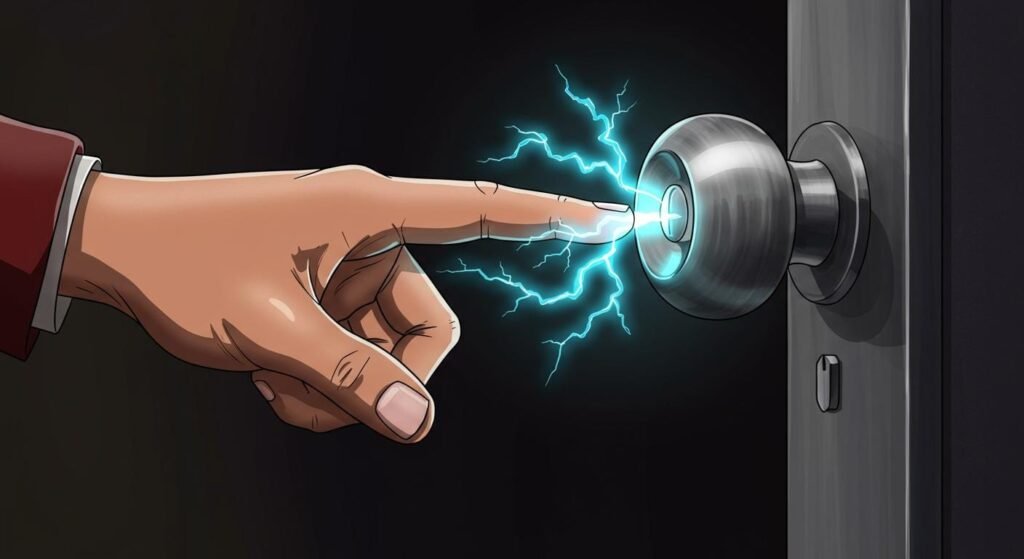
In daily life, static electricity is responsible for the small shock you feel when touching a metal object after walking across a carpet. While this shock is harmless to humans, even very small static discharges can cause serious damage to electronic components.
Because of this risk, static electricity control is critical in industries such as electronics manufacturing, semiconductor production, cleanroom environments, and precision assembly operations.
What Causes Static Electricity?
Static electricity is produced when electrons transfer between two materials that come into contact and then separate.
This process is called the triboelectric effect.
Materials have different abilities to gain or lose electrons. When two materials interact, one may lose electrons and become positively charged, while the other gains electrons and becomes negatively charged.
Common causes of static electricity include:
• Walking on synthetic carpets
• Friction between clothing fabrics
• Plastic packaging movement
• Conveyor belts in factories
• Adhesive tape removal
• Air movement across insulating surfaces
Low humidity environments also increase static electricity buildup because moisture in the air normally helps dissipate electrical charges.
In dry environments, static electricity can reach thousands of volts without being noticed.
Static Electricity Examples in Everyday Life
Although static electricity is often associated with industrial environments, it is also common in everyday life.
Walking Across Carpets
Walking on carpets can generate static charges on the human body. When the charged person touches a metal surface, the charge discharges suddenly.
Clothing Static
Clothes rubbing together in a dryer can generate static electricity, causing fabrics to cling together.
Balloons and Hair
Rubbing a balloon against hair transfers electrons, allowing the balloon to stick to walls or ceilings.
Plastic Packaging
Static electricity can cause plastic bags or films to cling together due to electrical attraction.
These examples demonstrate how simple friction can create large static charges.
Static Electricity in Industrial Environments
In industrial settings, static electricity can become a serious operational problem.
Many manufacturing processes involve continuous movement of materials, which generates static charges.
Industries most affected by static electricity include:
Electronics Manufacturing
Electronic components such as integrated circuits and printed circuit boards are extremely sensitive to static discharge.
Semiconductor Industry
Semiconductor fabrication facilities require strict static control to prevent damage to microscopic circuit structures.
Cleanroom Manufacturing
Static electricity can attract dust particles and contaminate cleanroom environments.
Pharmaceutical Production
Electrostatic charges can interfere with powder handling processes.
Printing and Packaging
Static charges may cause paper or plastic materials to stick together, slowing down production.
Because of these risks, many industries implement strict static control programs.
Static Electricity vs Electrostatic Discharge (ESD)
Static electricity and electrostatic discharge are closely related but different concepts.
Static electricity refers to the buildup of electrical charge on surfaces.
Electrostatic discharge refers to the sudden transfer of that stored charge between objects.
Example:
A worker walks across a carpet and accumulates static electricity.
The worker touches a grounded metal object.
The electrical charge suddenly transfers.
This sudden transfer is called electrostatic discharge (ESD).
Why Static Electricity Is Dangerous
Static electricity can cause significant problems in manufacturing environments.
Electronic Component Damage
Sensitive electronic components can be destroyed by extremely small electrostatic discharges.
Many semiconductor devices can be damaged by discharges as low as 30 volts.
Humans typically cannot feel static shocks until they reach around 3000 volts, meaning damage may occur without any noticeable shock.
Product Reliability Issues
Even when components do not fail immediately, static electricity may weaken internal structures, leading to premature failures later.
This type of hidden damage is known as latent ESD damage.
Dust and Contamination
Static charges attract airborne particles, which can contaminate sensitive products in cleanrooms.
Fire and Explosion Hazards
Static sparks can ignite flammable gases, powders, or vapors in certain industrial environments.
Because of these risks, controlling static electricity is essential for safety and product reliability.
Industrial Methods to Control Static Electricity
There are several widely used methods for controlling static electricity in industrial environments.
Grounding Systems
Grounding provides a safe path for electrical charges to dissipate into the earth.
Workers, tools, and equipment can be connected to grounding systems to prevent charge buildup.
ESD Workstations
ESD workstations use conductive surfaces and grounding connections to safely dissipate static electricity.
These workstations are commonly used in electronics assembly environments.
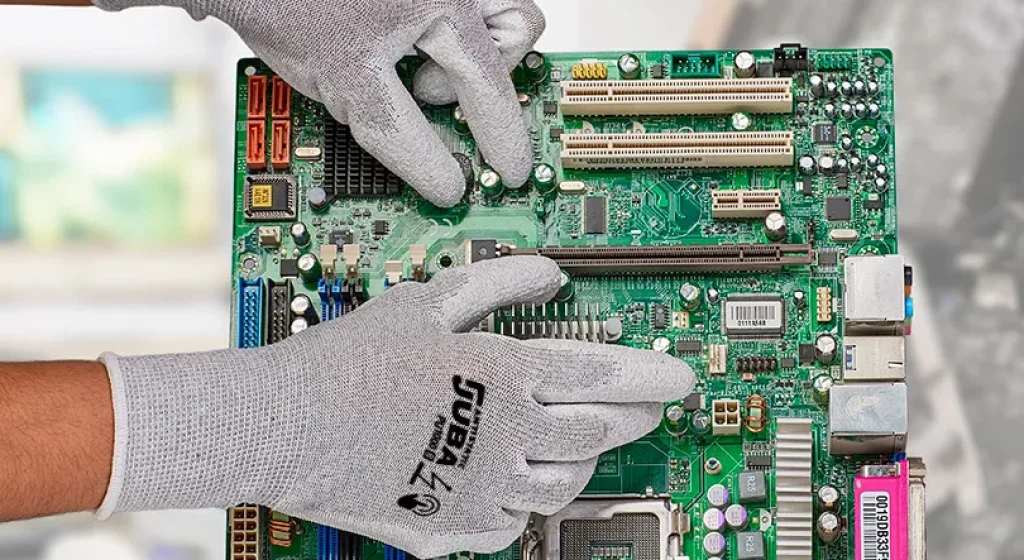
ESD Gloves
Anti-static gloves allow workers to handle sensitive electronic components without transferring static charges.
ESD Wrist Straps
Wrist straps connect workers to grounding systems, preventing static buildup on the human body.
ESD Floor Mats
Anti-static floor mats help dissipate static electricity from personnel and equipment.
Ionizing Fans
Ionizers neutralize static charges in the air by releasing positive and negative ions.
These devices are often used in environments where grounding alone is not sufficient.
Industries That Require Static Control
Static control systems are essential in industries where electronic components or sensitive materials are handled.
Key industries include:
• Electronics manufacturing
• Semiconductor fabrication
• Cleanroom production
• Aerospace assembly
• Automotive electronics
• Medical device manufacturing
• Pharmaceutical production
In these industries, strict static control programs help protect products and ensure manufacturing reliability.
Frequently Asked Questions
What is static electricity?
Static electricity is the buildup of electrical charge on the surface of a material caused by friction, separation, or contact between materials.
What causes static electricity?
Static electricity is typically caused by friction between materials that transfer electrons, creating an imbalance of electric charge.
How is static electricity controlled?
Static electricity can be controlled using grounding systems, ESD Shoes, ESD gloves, anti-static mats, ionizing fans, and other static control equipment.
Why is static electricity dangerous in electronics manufacturing?
Even very small static discharges can damage sensitive semiconductor devices and electronic components.
What industries require static electricity control?
Industries such as electronics manufacturing, semiconductor production, aerospace assembly, and cleanroom environments require strict static control measures.
Contact Us Today
For bulk orders, quotes, or product guidance, get in touch with our expert team:
Email: sales2@esdbest.com
Phone: +86 137 1427 2599