ESD Gloves: What They Are, Standards, Types & How They Prevent Static


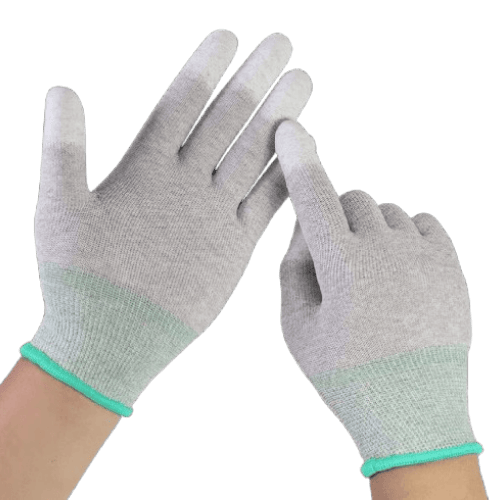

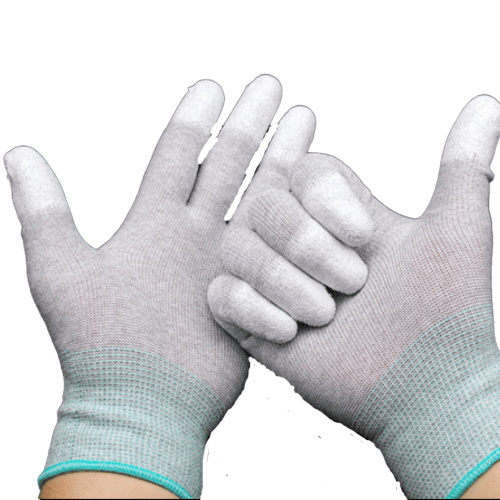

ESD Gloves: The Complete Guide to Static-Safe Hand Protection
Electrostatic discharge (ESD) is one of the most overlooked risks in electronics manufacturing, assembly, and static-sensitive workplaces. A single, uncontrolled static discharge can permanently damage electronic components, reduce product reliability, or even create safety hazards in certain environments.
This is why ESD gloves play a critical role in modern ESD control programs.
In this guide, you’ll learn what ESD gloves are, how they work, relevant standards, resistance ranges, and how to choose the right ESD-safe gloves for your application.
For a detailed comparison between ESD gloves and ordinary work gloves, see our guide:
ESD Gloves vs Regular Gloves
ESD Gloves vs Regular Gloves
⸻
What Are ESD Gloves?
ESD gloves are specialized gloves designed to control and dissipate static electricity generated by the human body. Unlike regular gloves, they are made with conductive or static-dissipative materials that allow electrical charges to flow safely to ground instead of discharging suddenly.
The primary purpose of ESD gloves is to:
•Protect static-sensitive electronic components
•Reduce the risk of electrostatic discharge
•Support a controlled grounding pathway in ESD-protected areas (EPAs)
ESD gloves are commonly used in electronics manufacturing, PCB assembly, semiconductor handling, cleanrooms, and other environments where static control is essential.
⸻
How to Use ESD Gloves Correctly
ESD gloves are only effective when used as part of a complete static control system.
Proper usage includes correct wearing, grounding through ESD shoes or flooring, and handling components on ESD-safe surfaces.
Simply wearing ESD gloves without grounding does not eliminate static risks and may create a false sense of protection.
👉 Learn how to use ESD gloves properly, including grounding methods and common mistakes, in our detailed guide.
How Do ESD Gloves Work?
ESD gloves work by preventing static charge buildup and dissipating charges gradually.
The key mechanisms include:
•Conductive fibers (such as carbon or silver)
•Static-dissipative coatings
•Engineered resistance levels
Instead of acting as insulation, ESD gloves allow static electricity to move slowly and safely through the glove material, reducing the risk of sparks or sudden discharge.
Important:
ESD gloves are not insulating gloves.
They are designed to control static—not to protect against electric shock.
⸻
Do ESD Gloves Prevent Static Electricity?
Short answer: Not completely.
ESD gloves do not eliminate static electricity. Instead, they:
•Reduce static buildup
•Control how charges are released
•Work as part of a complete ESD control system
For effective protection, ESD gloves are typically used together with:
•ESD wrist straps
•ESD footwear or flooring
•Grounded workstations
•Proper humidity control
Using ESD gloves alone, without grounding, does not guarantee full ESD protection.
⸻
What Is ESD in Safety?
ESD (Electrostatic Discharge) is the sudden flow of electricity between two objects with different electrical potentials.
Why ESD is a safety concern:
1.Product Damage
Sensitive components such as ICs, microchips, and PCBs can fail immediately or suffer latent damage.
2.Operational Risk
ESD-related failures often appear later, increasing warranty and repair costs.
3.Fire and Explosion Hazards
In environments with flammable gases, vapors, or dust, static sparks can ignite fires.
Because of these risks, ESD is treated as both a quality issue and a safety issue, making ESD gloves a form of personal protective equipment (PPE).
⸻
ESD Gloves vs Regular Gloves
| Feature | ESD Gloves | Regular Gloves |
|---|---|---|
| Static control | ✅ Yes | ❌ No |
| Conductive / dissipative materials | ✅ Yes (carbon fiber, ESD-treated yarns) | ❌ Usually no |
| Surface resistance range | ✅ Controlled (10⁵–10⁹ Ω) | ❌ Uncontrolled |
| Electronics-safe | ✅ Yes | ❌ Often unsafe |
| Grounding compatibility | ✅ Yes (works with ESD flooring & grounding systems) | ❌ No |
| Risk of static generation | ❌ Very low | ⚠️ High (cotton, nylon, standard nitrile can generate static) |
| Suitable for ESD-sensitive tasks | ✅ Yes | ❌ No |
⸻
ESD Standards for Gloves
There is no single global “ESD glove certification,” but ESD gloves are evaluated within broader ESD control standards.
The most commonly referenced standards include:
•ANSI/ESD Association
•ANSI/ESD S20.20 – ESD control program requirements
•ANSI/ESD STM51.1 – Surface resistance testing
•IEC
•IEC 61340 – Electrostatics protection standards
Typical resistance range:
•10⁵ to 10⁹ ohms
This range allows static charges to dissipate safely without causing sudden discharge.
⸻
Types of ESD Gloves
ESD gloves are available in various materials and designs to match different applications:
•ESD fabric or knitted gloves
Each type balances dexterity, durability, chemical resistance, and static control differently.
👉 For material-specific details, see our guides on ESD nitrile gloves and ESD gloves for electronics.
⸻
Common Applications of ESD Gloves
ESD gloves are widely used in:
•Electronics manufacturing
•PCB and semiconductor handling
•Cleanrooms
•Aerospace and automotive electronics
•Medical device assembly
Any environment where static-sensitive components are present benefits from proper ESD hand protection.
⸻
How to Choose the Right ESD Gloves
When selecting ESD gloves, consider:
1.Required resistance range
2.Material compatibility
3.Dexterity and comfort
4.Cleanroom requirements
5.Integration with grounding systems
Choosing the wrong glove can undermine your entire ESD control strategy.
⸻
Final Thoughts
ESD gloves are a foundational component of any effective ESD protection program. When chosen and used correctly, they help safeguard products, improve reliability, and reduce safety risks.
For specialized needs, explore our detailed guides on ESD nitrile gloves, ESD gloves for electronics, and how to evaluate ESD gloves suppliers.
{
"@context": "https://schema.org",
"@type": "FAQPage",
"mainEntity": [
{
"@type": "Question",
"name": "What are ESD gloves?",
"acceptedAnswer": {
"@type": "Answer",
"text": "ESD gloves are anti static gloves designed to safely dissipate electrostatic charges when handling sensitive electronic components."
}
},
{
"@type": "Question",
"name": "Why are ESD gloves important?",
"acceptedAnswer": {
"@type": "Answer",
"text": "They help prevent electrostatic discharge that can damage electronic components during manufacturing, assembly, and inspection."
}
},
{
"@type": "Question",
"name": "Are all anti static gloves ESD-safe?",
"acceptedAnswer": {
"@type": "Answer",
"text": "No. Only gloves with controlled dissipative resistance are considered ESD gloves suitable for ESD-protected areas."
}
}
]
}
📞 Contact Us Today
For bulk orders, quotes, or product guidance, get in touch with our expert team:
Email: sales2@esdbest.com
Phone: +86 137 1427 2599