Nitrile Coated Gloves
Nitrile coated gloves are a popular choice for both industrial and everyday use due to their excellent grip, flexibility, and chemical resistance. Whether you’re searching for nitrile coated work gloves, rubber coated gloves, or simply need large nitrile coated work gloves for heavy-duty tasks, there’s a glove coat option to fit your needs. Brands like HORBEST women’s nitrile coated knit gloves offer comfort and durability for gardening or light-duty chores. Wondering when should you wear rubber coated gloves? They’re ideal for wet or oily environments where extra grip and protection are essential. Explore a wide range of gloves nitrile coated to find the right balance of comfort and safety for your specific job.
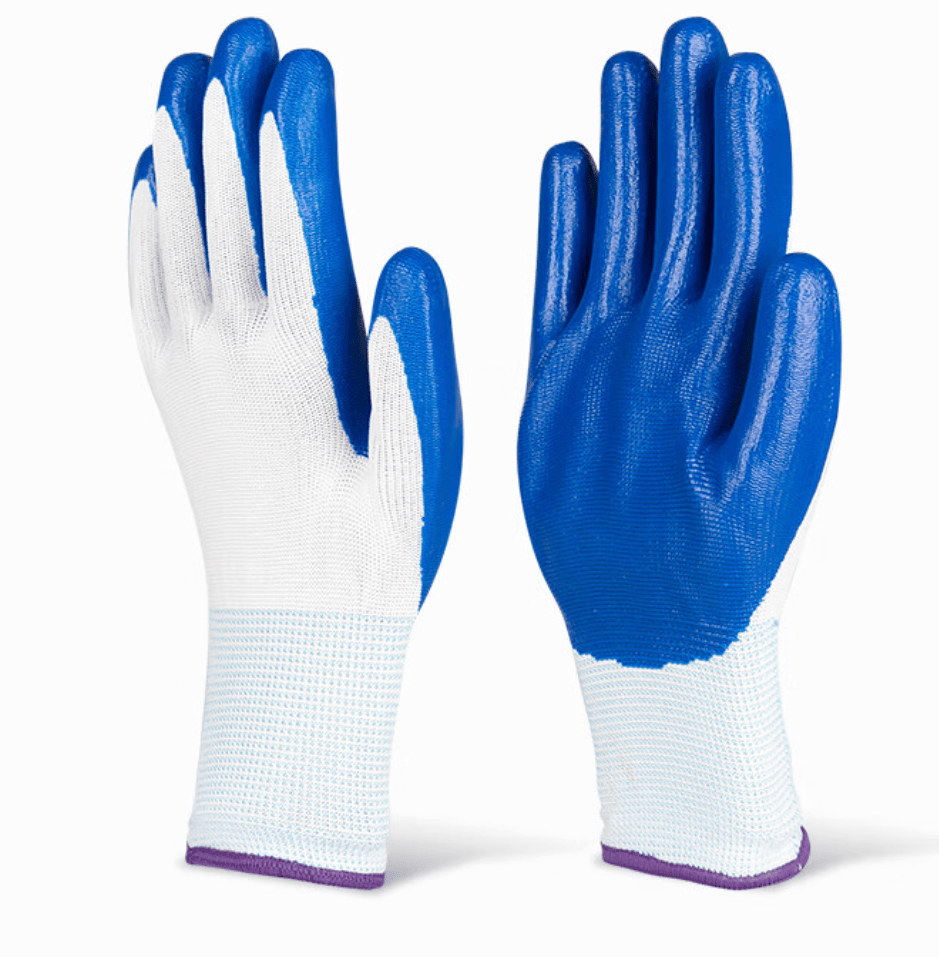
Produc Name | Nitrile Coated Gloves | |||
Liner | 15Gauge nylon spandex glove liner | |||
Palm | Nitrile Coated Gloves | |||
Cuff | Different color coded for different sizes | |||
Size | 7”/ 8”/ 9”/ 10”/ 11” | |||
Color | Red, Black,Blue,Grey, or Customized color | |||
Logo | Silkscreen printing, Heat transfer, Washing label, Woven label etc. | |||
HORBEST Nitrile Coated Gloves: Manufacturing Process, Technical Specs & Industrial Superiority
I. Core Manufacturing Process of HORBEST Nitrile Coated Gloves (5 Key Steps)
1. Raw Material Preparation: Foundation of Premium Coated Gloves
2. Wear-Resistant Particle Dispersion: Boosting Grip & Longevity
3. Latex Preparation: Crafting the Perfect Coating for Coated Gloves
- Add nitrile latex, dispersed particles, and water-based PU to a mixing device. Stir at 20rad/min for 30 minutes to blend evenly—essential for a consistent glove coat that outperforms generic coated work gloves.
- Incorporate thickener, adjust speed to 50rad/min, and stir 30 more minutes. This precision ensures our gloves nitrile coated have a smooth, non-cracking coating, unlike some pu coated gloves that peel easily.
4. Dipping Process: Shaping Durable Nitrile Coated Gloves
- Mount glove blanks on hand molds, bake to 50℃, and dip in 18% calcium nitrate-methanol coagulant for 5 seconds. This pre-treatment helps the glove coat adhere tightly, a feature that sets our nitrile coated work gloves apart from poorly bonded rubber coated gloves.
- After 1 minute of standing, dip into the prepared compound. Shake off excess glue 10 times and spread evenly 3 times to avoid glue beads—ensuring our nitrile palm coated gloves have a consistent thickness, unlike uneven palm coated gloves from other brands.
5. Stepwise Drying: Locking in Performance for Coated Work Gloves
- First drying at 60℃ for 30 minutes: Sets the initial glove coat without damaging the liner.
- Second drying at 120℃ for 60-80 minutes: Hardens the coating, resulting in nitrile coated gloves with wear resistance ≥10,000rad—far exceeding the durability of latex coated work gloves or even some rubber coated work gloves.
II. Key Technical Parameters: Why HORBEST Nitrile Coated Gloves Outperform Competitors
| Category | Specific Parameters |
|---|---|
| Raw Material Ratio | Nitrile Latex : Wear-Resistant Particles : Thickener : Water-Based PU Resin = 100:5:1:5 (mass ratio) |
| Stirring Parameters | Before thickener: 20rad/min × 30 mins; After thickener: 50rad/min × 30 mins |
| Drying Parameters | First drying: 60℃ × 30 mins; Second drying: 120℃ × 60-80 mins |
| Coagulant Composition | Calcium nitrate (18%) + methanol mixed solution |
| Wear-Resistant Particle Specs | 100-mesh, colored nitrile particles (enhances firm grip nitrile coated gloves) |
| Core Performance | Wear resistance ≥10,000rad; Peel strength 40N; Coating thickness 2mm; Tear strength ≥75N (outperforming maxiflex ultimate gloves nitrile coated per reviews) |
Comparing to Maxiflex Ultimate Nitrile Coated Gloves
III. Core Advantages: HORBEST Nitrile Coated Gloves vs. Other Coated Work Gloves
- Unmatched Wear Resistance: The synergistic effect of nitrile latex, wear-resistant particles, and water-based PU resin makes our nitrile coated gloves far more durable than polyurethane coated gloves or latex coated gloves. They exceed GB24541-2009 standards, outperforming even premium rubber coated gloves in high-abrasion environments.
- Firm Grip in All Conditions: Unlike slippery latex coated work gloves or less adhesive pu coated gloves, our firm grip nitrile coated gloves maintain traction in wet, oily, or dusty settings—perfect for machine operation and mechanical repair.
- Comfort & Versatility: Featuring a 13-gauge knitted liner and elastic cuffs, our nitrile palm coated gloves fit snugly without restricting dexterity—more comfortable than bulky rubber coated work gloves for long shifts. They also avoid latex allergies, a common issue with latex coated gloves.
- Broad Compatibility: While when should you wear rubber coated gloves depends on chemical exposure, our nitrile coated work gloves excel in oil-rich, abrasive environments. They complement heated coat and gloves in cold conditions, retaining flexibility where gloves rubber coated may stiffen.
IV. Application Scenarios & Usage Guidelines for Coated Gloves
1. Ideal Industries for HORBEST Nitrile Coated Gloves
- Industrial Manufacturing: Automotive repair (where firm grip nitrile coated gloves prevent tool slippage), hardware processing, machine tool operation.
- Equipment Maintenance: Pipeline repair, mechanical servicing (outperforming palm coated gloves in durability).
- Heavy-Duty Fields: Construction, coal mining, oil refining (more resistant to oils than polyurethane coated gloves or rubber coated gloves).
- Other Uses: Ship assembly, fishery (where gloves nitrile coated resist water and salt corrosion better than latex coated work gloves).
2. Key Tips for Using Coated Work Gloves
- When should you wear rubber coated gloves? Opt for rubber coated work gloves or gloves rubber coated for strong chemical exposure—but for oil, abrasion, or general industrial tasks, nitrile coated gloves are superior.
- Inspect coated gloves (including nitrile coated gloves, pu coated gloves, and latex coated gloves) for damage before use. Replace if the glove coat is cracked or peeling.
- Avoid prolonged immersion in water or contact with strong acids/alkalis—this degrades the glove coat faster, even for durable nitrile coated work gloves.
- Pair with heated coat and gloves in low temperatures to maintain flexibility, as coated work gloves (especially rubber coated gloves) may become rigid in cold.
V. Why Choose HORBEST Nitrile Coated Gloves Over Other Coated Gloves?
Nitrile Coated Gloves are a type of hand protection product widely used in industrial, medical, and laboratory fields. These gloves are highly favored for their excellent waterproof, oil-resistant, and chemical corrosion-resistant properties. Below is a detailed introduction to the manufacturing process of nitrile coated work gloves.
Raw Material Preparation
The primary raw materials for making Coated Gloves are natural latex and synthetic latex. Before production, these materials must be selected, cleaned, and mixed to ensure consistent quality and stability. The raw materials are then fed into a mixing machine to be uniformly blended into a milky latex solution.
Mold Preparation
Molds are key to producing Nitrile Coated Work Gloves. Typically made from metal or plastic, they come in different sizes and shapes to suit various hand sizes and applications. Before production, the molds must be inspected and cleaned to ensure smoothness and dryness, which affects the quality of the gloves.
Dipping and Forming
The dipping process is the main step in making Nitrile Coated Work Gloves. First, the molds are immersed in the latex solution so that the surface evenly absorbs a layer of latex. Then, the molds are lifted from the latex and the latex forms a thin film on the mold surface. Next, the molds are placed into a drying oven to solidify the glove shape. Finally, the gloves are removed from the molds by machines to complete the glove forming process.
Post-processing
After nitrile coated work gloves forming, several post-processing steps are needed. First, Nitrile Coated Work Gloves are inspected for appearance, size, and quality. Then, they are packaged and labeled for storage and sale. Lastly, gloves are sterilized in an oven to ensure hygiene and safety.
Conclusion
In summary, the production of Nitrile Coated Work Gloves involves multiple steps including raw material preparation, mold preparation, dipping and forming, and post-processing. Strict control and standardized procedures in these steps are crucial to ensuring glove quality and safety.
📞 Contact Us Today
For bulk orders, quotes, or product guidance, get in touch with our expert team:
Email: sales2@esdbest.com
Phone: +86 137 1427 2599