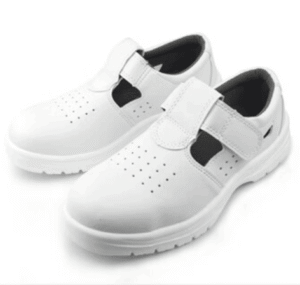
ESD Composite Toe Shoes | Lightweight & Metal-Free Protection

esd composite toe shoes

ESD composite toe shoes provide effective toe protection while remaining lightweight and metal-free. They are increasingly popular in electronics manufacturing, cleanrooms, and laboratories where comfort, mobility, and ESD compliance are equally important.


What Are ESD Composite Toe Shoes?

ESD composite toe shoes are one kind of ESD Shoes. also one kind of ESD Safety shoes, they use non-metallic materials—such as carbon fiber or reinforced polymers—to protect the toes while maintaining ESD-safe electrical resistance.

Key characteristics include:

  • Metal-free construction

  • Reduced weight

  • ESD-compliant static dissipation


Advantages of Composite Toe ESD Shoes

Composite toe ESD shoes offer several advantages over steel toe options:

  • Lighter weight for long working hours

  • Metal-free, suitable for metal detector areas

  • Better thermal insulation

  • Improved comfort for laboratories and cleanrooms


When Are Composite Toe ESD Shoes the Best Choice?

Composite toe ESD shoes are ideal when:

  • Workers stand or walk for extended periods

  • Cleanroom or laboratory environments are involved

  • Metal detection is required

  • Comfort and flexibility are priorities

They are commonly used in semiconductor facilities, electronics labs, and controlled environments.


Composite Toe vs Steel Toe (ESD)

FeatureComposite Toe ESD ShoesSteel Toe ESD Shoes
WeightLighterHeavier
Metal-freeYesNo
ComfortHigherModerate
Impact protectionHighVery high
Cleanroom useExcellentLimited

Standards and Compliance

ESD composite toe shoes typically comply with:

  • IEC 61340

  • ANSI/ESD S20.20

  • EN ISO 20345 (composite toe classification)


Summary

ESD composite toe shoes offer a balanced solution for environments that require toe protection, ESD compliance, and all-day comfort. They are especially suitable for electronics manufacturing, cleanrooms, and laboratory applications.

ESD composite toe shoes are workshops, advanced laboratories electronic semiconductor devices,computer, electronic communication equipment, integrated circuits and other microelectronic industry to reduce or eliminate electrostatic hazards. Cowhide (from face to bottom) with metal toe cap ,and the size is from 35# to 50 # .

Using an ESD composite toe shoes is the elimination of the human body electrostatic stock, and can prevent <250V shock following current for protective footwear, the product reference GB4385‐1995 standard.

Fetures:

– Material :Cowhide

-Non-marking ,anti-slip sole

-body electrostatic charge can ba derived

-With Metal Toe Cap ,ANTI-SMASH,protect foot

-system resistance: 1.0×10 ‐1.0×10  ohms (STM97.1‐1999)


📞 Contact Us Today

For bulk orders, quotes, or product guidance, get in touch with our expert team:

Email: sales2@esdbest.com
Phone: +86 137 1427 2599

Q1: What are composite toe ESD shoes?

A: Composite toe ESD shoes use non-metal toe protection (often fiberglass/carbon/kevlar composites) while still providing controlled static dissipation.

Q2: Why choose composite toe instead of steel toe?

A: Composite toe options are typically lighter and can be more comfortable for long shifts, while still offering safety-toe protection.

Q3: Are composite toe ESD shoes metal-free?

A: The toe cap is non-metal, but other components may vary by model. If metal-free construction is required, confirm material details with the supplier.

Q4: Do composite toe ESD shoes provide the same protection as steel toe?

A: Both can meet safety requirements, but protection ratings depend on the specific model and certification. Choose based on your workplace hazard level and required standard.

Q5: What workplaces are best for composite toe ESD shoes?

A: Great for electronics, clean manufacturing, light-to-medium industrial work, and environments where comfort and mobility are priorities.
{ "@context": "https://schema.org", "@type": "FAQPage", "mainEntity": [ { "@type": "Question", "name": "What are composite toe ESD shoes?", "acceptedAnswer": { "@type": "Answer", "text": "Composite toe ESD shoes use non-metallic materials for toe protection while maintaining controlled electrostatic discharge performance." } }, { "@type": "Question", "name": "Why choose composite toe instead of steel toe?", "acceptedAnswer": { "@type": "Answer", "text": "Composite toe options are typically lighter and can be more comfortable for long shifts, while still providing safety-toe protection." } }, { "@type": "Question", "name": "Are composite toe ESD shoes metal-free?", "acceptedAnswer": { "@type": "Answer", "text": "The toe cap is non-metal, but other shoe components may vary by model. If metal-free construction is required, confirm full material details." } }, { "@type": "Question", "name": "Do composite toe ESD shoes provide the same protection as steel toe?", "acceptedAnswer": { "@type": "Answer", "text": "Protection depends on the specific model and certification. Choose based on your hazard level and the safety standard required by your workplace." } }, { "@type": "Question", "name": "What workplaces are best for composite toe ESD shoes?", "acceptedAnswer": { "@type": "Answer", "text": "They are commonly chosen for electronics, clean manufacturing, light-to-medium industrial work, and environments prioritizing comfort and mobility." } } ] }
Free ‘Customized ESD Solution for Your Facility’ E-book

Sign up for our ESD & Cleanroom newsletter with the best solution.