Introduction
Electrostatic control compliance is essential for electronics manufacturing, cleanroom production, and precision assembly environments.
This page provides officially designed ESD compliance badges for ESD equipment supplier,distributors, partners, and industry publications. These badges may be embedded on your website when referencing ESDBest products or compliance resources.
All badges are aligned with international electrostatic discharge (ESD) control standards including:
ANSI/ESD S20.20
IEC 61340-5-1
EN 16350
CE PPE Directives
EPA control requirements
1. ANSI/ESD S20.20 Compliant

Products designed in accordance with ANSI/ESD S20.20 control program requirements.


Products designed in accordance with ANSI/ESD S20.20 control program requirements.
Description
Products manufactured and specified in accordance with ANSI/ESD S20.20 electrostatic control program requirements for EPA environments.
Suitable For
Grounding accessories
Embed Code
alt=“ANSI ESD S20.20 Compliant ESD Equipment Supplier” width=“160”>
</a>
PNG | SVG | Transparent Version
2. IEC 61340-5-1 Verified



Designed to meet IEC 61340-5-1 electrostatic protection standards.
Description
Designed to meet IEC 61340-5-1 electrostatic protection requirements for handling electronic components.
Embed Code
alt=“IEC 61340-5-1 Verified ESD Supplier” width=“160”>
</a>
3. ESD Gloves Certified 10⁶–10⁹ Ω

Description
Surface resistance tested within the dissipative range recommended for electronics manufacturing environments.
Embed Code
alt=“ESD Gloves Resistance Certified 10 to the power 6 to 10 to the power 9 ohms” width=“160”>
</a>
4. ESD Floor Mat Tested 10⁶–10⁹ Ω
Description
Point-to-point and surface resistance tested in accordance with international electrostatic control standards.
Embed Code
alt=“ESD Floor Mat Resistance Tested Certification Badge” width=“160”>
</a>
5. Cleanroom Compatible ESD

Description
Suitable for controlled cleanroom environments requiring both particle and static control.
Embed Code
alt=“Cleanroom Compatible ESD Equipment” width=“160”>
</a>
6. CE Certified Industrial PPE

Description
Complies with applicable European personal protective equipment directives where required.
Embed Code
alt=“CE Certified ESD PPE Supplier” width=“160”>
</a>
7. SGS Tested & Verified

Description
Third-party laboratory testing conducted to verify resistance and performance standards.
Embed Code
alt=“SGS Tested ESD Products” width=“160”>
</a>
8. EPA Approved Equipment
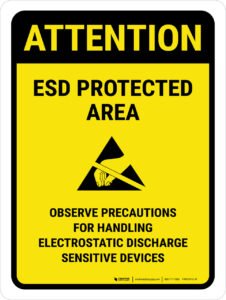
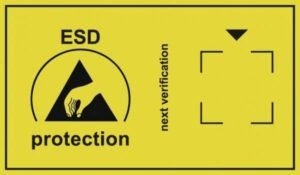
Description
Designed for use inside Electrostatic Protected Areas (EPA) requiring controlled discharge pathways.
Embed Code
alt=“EPA Approved ESD Equipment” width=“160”>
</a>
Badge Usage Policy
To maintain integrity and compliance accuracy:
Badges must not be modified.
The embedded link must remain active.
Badges may only be used when referencing ESDBest products or compliance resources.
Misuse of certification marks without actual compliance documentation is prohibited.
If you require custom badge sizing or partner co-branding, contact our technical team.
Why Compliance Badges Matter
Electrostatic discharge can damage electronic components at voltages undetectable to humans.
Displaying recognized compliance indicators helps:
Improve audit readiness
Demonstrate control program alignment
Increase customer trust
Support distributor credibility
Enhance search engine authority
Frequently Asked Questions
Are these badges official certification marks?
These badges indicate alignment with relevant standards. For formal third-party certification documentation, please request test reports.
Can distributors use these badges?
Yes, authorized partners and distributors may embed these badges when linking to relevant product or compliance pages.
Do these badges replace audit documentation?
No. Audit documentation and resistance testing logs remain required under ANSI/ESD S20.20 programs.
SEO Elements
Suggested Meta Title
ESD Compliance Badges | ANSI S20.20 • IEC 61340 Certified Supplier
Suggested Meta Description
Download and embed official ESD compliance badges including ANSI/ESD S20.20, IEC 61340-5-1, CE, SGS and EPA approved indicators for electronics manufacturing environments.
Contact Us Today
For bulk orders, quotes, or product guidance, get in touch with our expert team:
Email: sales2@esdbest.com
Phone: +86 137 1427 2599


