Disposable Laboratory Gown Materials: PP vs SMS vs Microporous
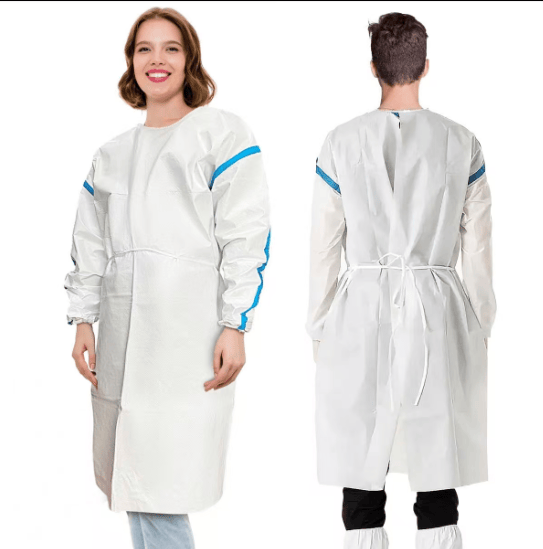
Introduction
Choosing the right material is critical when selecting disposable laboratory gowns.
Different laboratory environments require different levels of breathability, fluid resistance, and contamination control.
This guide compares the three most common disposable laboratory gown materials:
•Polypropylene (PP)
•SMS (Spunbond–Meltblown–Spunbond)
•Microporous film
Understanding their differences helps ensure proper protection, comfort, and compliance.
👉 For a full selection guide, see: Disposable Laboratory Gowns: Protection, Materials, and Buying Guide
⸻
Polypropylene (PP) Disposable Laboratory Gowns
What Is Polypropylene (PP)?
Polypropylene is a nonwoven synthetic fiber widely used in disposable PPE due to its lightweight and cost efficiency.
Key Characteristics
•Lightweight and breathable
•Low lint generation
•Economical for large-volume use
•Limited fluid resistance
Best Use Scenarios
PP disposable laboratory gowns are ideal for:
•Educational laboratories
•Low-risk research environments
•Dry laboratory tasks
•Short-duration use
Limitations
•Not suitable for liquid splash exposure
•Lower barrier protection compared to SMS or microporous gowns
⸻
SMS Disposable Laboratory Gowns
What Is SMS Material?
SMS stands for Spunbond–Meltblown–Spunbond, a three-layer nonwoven structure designed to improve barrier protection while maintaining comfort.
Key Characteristics
•Enhanced fluid resistance
•Stronger tensile strength
•Better particle filtration
•Balanced breathability and protection
Best Use Scenarios
SMS disposable laboratory gowns are commonly used in:
•Pharmaceutical laboratories
•Biotechnology facilities
•Medical research labs
•Medium-risk environments
Why SMS Is the Most Popular Choice
For many labs, SMS offers the best overall balance between protection, durability, and wearer comfort.
⸻
Microporous Film Disposable Laboratory Gowns
What Is Microporous Film?
Microporous gowns combine a nonwoven substrate with a breathable film coating, offering superior liquid and particle barriers.
Key Characteristics
•High fluid and chemical splash resistance
•Excellent particle barrier
•Reduced breathability compared to SMS
•Higher protection level
Best Use Scenarios
Microporous disposable laboratory gowns are recommended for:
•Chemical handling laboratories
•Biohazard environments
•High-contamination risk tasks
•Cleanroom-adjacent operations
Trade-Offs
While protection is high, microporous gowns may be less comfortable for extended wear.
⸻
Material Comparison Table
| Feature | PP | SMS | Microporous |
|---|---|---|---|
| Breathability | High | Medium–High | Medium |
| Fluid Resistance | Low | Medium | High |
| Particle Barrier | Low | Medium | High |
| Comfort | High | Balanced | Lower |
| Typical Risk Level | Low | Medium | High |
⸻
How to Choose the Right Material for Disposable Laboratory Gowns
When selecting disposable laboratory gown material, consider:
1.Type of exposure (dry, liquid, chemical, biological)
2.Duration of use
3.Required protection standards
4.Comfort requirements
5.Waste handling and disposal policies
No single material fits all laboratories—risk assessment should always guide material selection.
learn more: disposable vs reusable lab gowns
⸻
Frequently Asked Questions
Which material is best for disposable laboratory gowns?
SMS is the most commonly used material due to its balance of protection and comfort.
Are PP disposable laboratory gowns suitable for wet labs?
PP gowns are not recommended for wet or splash-prone environments.
Do microporous gowns protect against chemicals?
They provide splash resistance but are not a substitute for fully encapsulated chemical suits.
Can different materials be used in the same laboratory?
Yes. Many labs use PP for low-risk tasks and SMS or microporous gowns for higher-risk activities.
📞 Contact Us Today
For bulk orders, quotes, or product guidance, get in touch with our expert team:
Email: sales2@esdbest.com
Phone: +86 137 1427 2599
{
"@context": "https://schema.org",
"@type": "FAQPage",
"mainEntity": [
{
"@type": "Question",
"name": "What materials are disposable laboratory gowns made from?",
"acceptedAnswer": {
"@type": "Answer",
"text": "Disposable laboratory gowns are commonly made from polypropylene (PP), SMS nonwoven fabric, or microporous materials. Each material offers different levels of breathability, fluid resistance, and barrier protection."
}
},
{
"@type": "Question",
"name": "What is the difference between PP and SMS lab gown materials?",
"acceptedAnswer": {
"@type": "Answer",
"text": "Polypropylene (PP) lab gowns are lightweight and breathable but provide limited fluid resistance. SMS lab gowns use a multi-layer structure that offers improved strength, particle filtration, and moderate fluid protection."
}
},
{
"@type": "Question",
"name": "When should microporous disposable laboratory gowns be used?",
"acceptedAnswer": {
"@type": "Answer",
"text": "Microporous disposable laboratory gowns should be used in higher-risk environments where liquid splashes, fine particles, or chemical exposure are possible, such as chemical handling or biohazard laboratories."
}
},
{
"@type": "Question",
"name": "Which disposable laboratory gown material is the most breathable?",
"acceptedAnswer": {
"@type": "Answer",
"text": "Polypropylene (PP) is generally the most breathable disposable laboratory gown material, making it suitable for low-risk tasks and short-duration use."
}
},
{
"@type": "Question",
"name": "Which lab gown material offers the best fluid resistance?",
"acceptedAnswer": {
"@type": "Answer",
"text": "Microporous materials provide the highest level of fluid and particle barrier protection among disposable laboratory gown materials, followed by SMS fabrics."
}
},
{
"@type": "Question",
"name": "Can different disposable lab gown materials be used in the same laboratory?",
"acceptedAnswer": {
"@type": "Answer",
"text": "Yes, many laboratories use different disposable laboratory gown materials based on task risk, such as PP for low-risk work and SMS or microporous gowns for higher-risk activities."
}
}
]
}