Which Is Better for Electronics Manufacturing?
PU vs Nitrile ESD Gloves: Which Is Better?
Quick Answer
Looking for complete ESD glove solutions? Visit our main ESD Gloves for Electronics Manufacturing page.
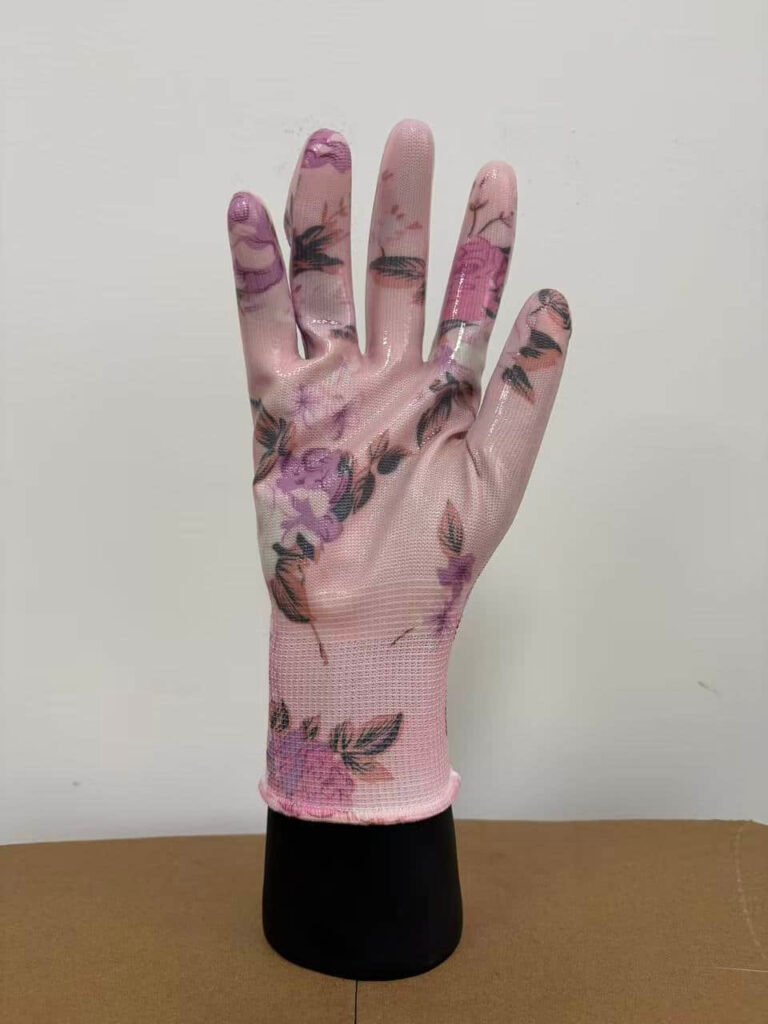
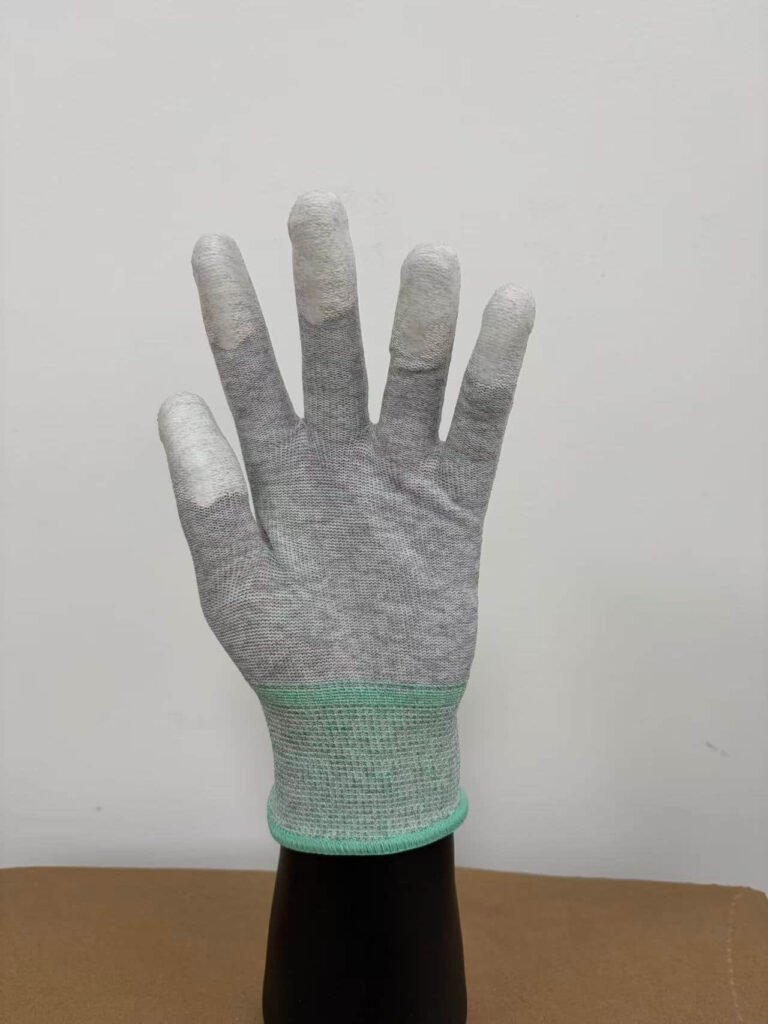
PU vs Nitrile ESD Gloves: Quick Comparison
| Feature | PU ESD Gloves | Nitrile ESD Gloves |
|---|---|---|
| Dexterity | Excellent | Good |
| Grip | Good dry grip | Better oily grip |
| Durability | Medium | Higher |
| Touch sensitivity | Very high | Medium-high |
| Oil resistance | Medium | Strong |
| Best for | PCB handling, inspection, light assembly | Production lines, tools, oily parts, heavier handling |
| Feature | PU ESD Gloves | Nitrile ESD Gloves |
|---|---|---|
| Best For | PCB assembly, SMT, precision work | Oily parts, slippery parts, stronger grip |
| Dexterity | Excellent | Good |
| Fingertip Control | Excellent | Good |
| Grip | Good | Stronger |
| Oily Part Handling | Medium | Better |
| Flexibility | Very flexible | Good |
| Durability | Good | Better |
| Comfort | Lightweight | Slightly thicker |
| Recommended Use | Precision handling | Grip-heavy work |
What Are PU ESD Gloves?
PU ESD gloves are usually made with a carbon fiber or conductive yarn liner and a polyurethane coating. They are lightweight, flexible, and suitable for precision electronics work.
They are commonly used in:
-
PCB assembly
-
SMT lines
-
Electronics inspection
-
Component handling
-
Clean assembly areas
PU coating gives workers better fingertip control, which is why PU ESD gloves are often preferred when precision matters more than heavy abrasion resistance.
What Are Nitrile ESD Gloves?
Which Is Better for PCB Assembly?
Which Is Better for Oily Parts?
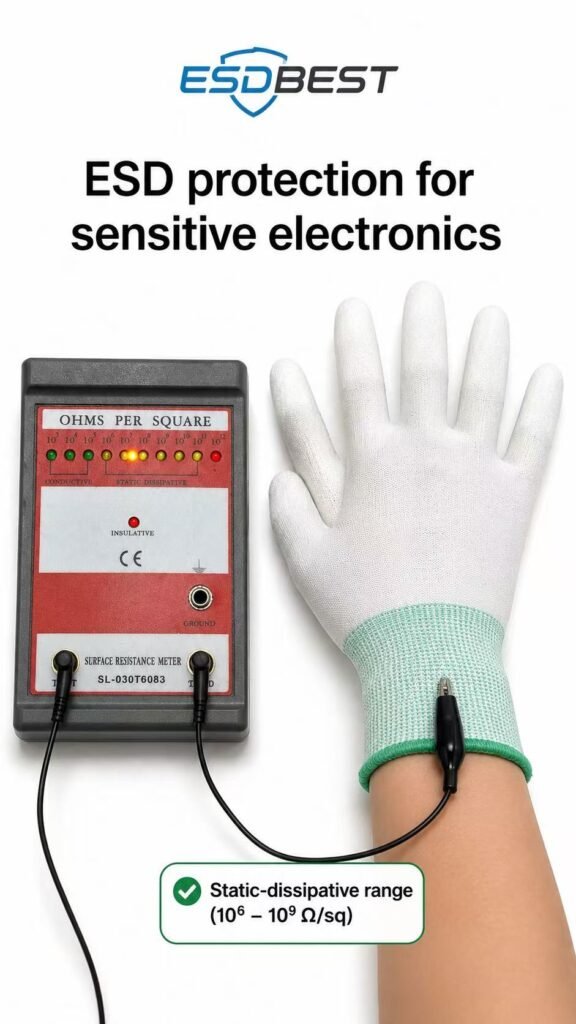
ESD Resistance Test for PU and Nitrile Gloves
Application
| Application | Recommended Glove | Why |
|---|---|---|
| PCB assembly | PU ESD gloves | Better fingertip control |
| SMT line work | PU ESD gloves | Lightweight and precise |
| IC chip handling | PU ESD gloves | Better precision |
| Small components | PU ESD gloves | Easier to pick up |
| Oily parts | Nitrile ESD gloves | Stronger grip |
| Slippery parts | Nitrile ESD gloves | Better traction |
| Grip-heavy work | Nitrile ESD gloves | Better durability |
| Mixed production line | Use both | Different stations need different gloves |
Contact Us Today
For bulk orders, quotes, or product guidance, get in touch with our expert team:
Email: sales2@esdbest.com
Whatsapp: +86 137 1427 2599
FAQ
1. What is the difference between PU and nitrile ESD gloves?
PU ESD gloves are thinner and better for precision work. Nitrile ESD gloves provide stronger grip for oily or slippery parts.
2. Are PU ESD gloves good for PCB assembly?
Yes. PU-coated ESD gloves are widely used for PCB assembly because they are lightweight, flexible and precise.
3. Are nitrile ESD gloves better than PU?
Nitrile is better for grip-heavy or oily work. PU is better for PCB assembly and small components.
4. Which gloves are better for SMT lines?
PU-coated ESD gloves are usually the best overall choice for SMT lines.
5. Can both PU and nitrile gloves be ESD safe?
Yes. Both can be designed and tested for ESD-sensitive handling.