Complete Buyer’s Guide for Electronics Handling
How to Choose ESD Gloves
Looking for complete ESD glove solutions? Visit our main ESD Gloves for Electronics Manufacturing page.
Quick Answer
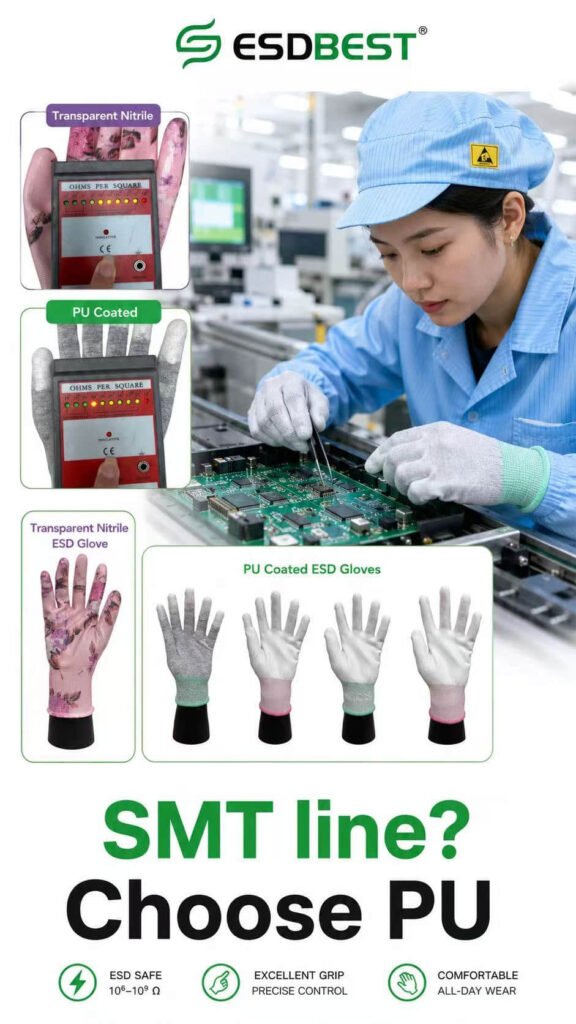
Step 1: Choose by Application
| Application | Recommended Glove |
|---|---|
| PCB assembly | PU-coated ESD gloves |
| SMT line work | PU-coated ESD gloves |
| IC chip handling | PU ESD gloves or ESD finger cots |
| Oily parts | Nitrile-coated ESD gloves |
| Slippery parts | Nitrile ESD gloves |
| General inspection | Carbon fiber ESD gloves |
| Sharp edge handling | Cut-resistant ESD gloves |
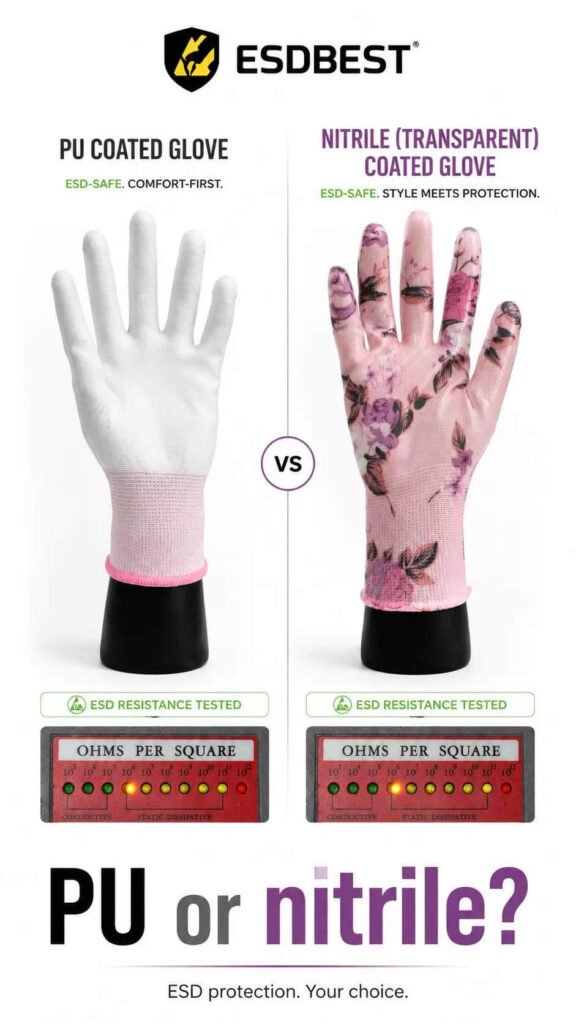
Step 2: Choose by Coating
Step 3: Choose by Grip Requirement
Step 4: Choose by Dexterity
Step 5: Check ESD Resistance Testing
Step 6: Check Size and Comfort
Comfort affects worker compliance. If gloves are too thick, too tight or uncomfortable, workers may remove them or use them incorrectly.
For long shifts, choose gloves that are lightweight, breathable and properly sized.
Step 7: Choose a Stable Supplier
For electronics factories, stable supply is important. Buyers should choose suppliers who can provide consistent glove quality, resistance testing support, packaging, bulk supply and export service.
ESDBEST supplies PU-coated and nitrile-coated ESD gloves for PCB assembly, SMT lines, cleanrooms and electronics manufacturing.
Buying Checklist
Before buying ESD gloves, check:
1. What application will the gloves be used for?
2. Do workers need precision or stronger grip?
3. Is the work dry, oily or slippery?
4. Do the gloves support ESD-sensitive handling?
5. Is resistance testing available?
6. Are the gloves comfortable for long shifts?
7. Can the supplier support bulk orders?
8. Is OEM packaging required?
9. Do you need PU, nitrile or both?
Need Help Choosing ESD Gloves?
Tell ESDBEST your application, glove type, size, quantity and resistance requirement. We can help you choose suitable ESD gloves for your electronics production line.
Email: sales2@esdbest.com
FAQ
1. How do I choose ESD gloves?
Choose based on application, coating type, grip requirement, dexterity, comfort and resistance testing support.
2. Which ESD gloves are best for PCB assembly?
PU-coated ESD gloves are usually best for PCB assembly because they provide fingertip control and flexibility.
3. When should I choose nitrile ESD gloves?
Choose nitrile ESD gloves when workers need stronger grip for oily or slippery parts.
4. Do ESD gloves need resistance testing?
For ESD-sensitive work areas, resistance testing helps confirm whether gloves are suitable for static-safe handling.
5. Can one glove type be used for every station?
Not always. A factory may need PU gloves for precision work and nitrile gloves for grip-heavy work.
Need Help Choosing ESD Gloves?
Tell ESDBEST your application, glove type, size, quantity and resistance requirement. We can help you choose suitable ESD gloves for your electronics production line.
Email: sales2@esdbest.com
Contact Us Today
For bulk orders, quotes, or product guidance, get in touch with our expert team:
Email: sales2@esdbest.com
Whatsapp: +86 137 1427 2599
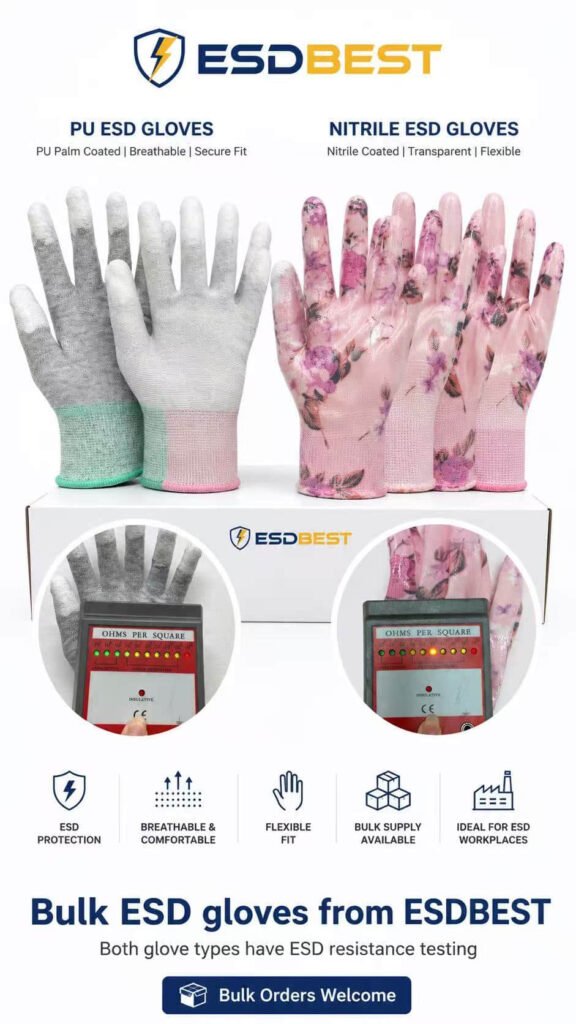
Need Help Choosing the Right ESD Gloves?
Tell us your application, required resistance range, and working environment. ESDBEST can recommend suitable ESD gloves for PCB assembly, SMT lines, and electronics manufacturing.
Request ESD Glove Samples Read Best ESD Gloves Guide