(ESD Explained)
Do I Need an Ionizer If I Have Grounding?
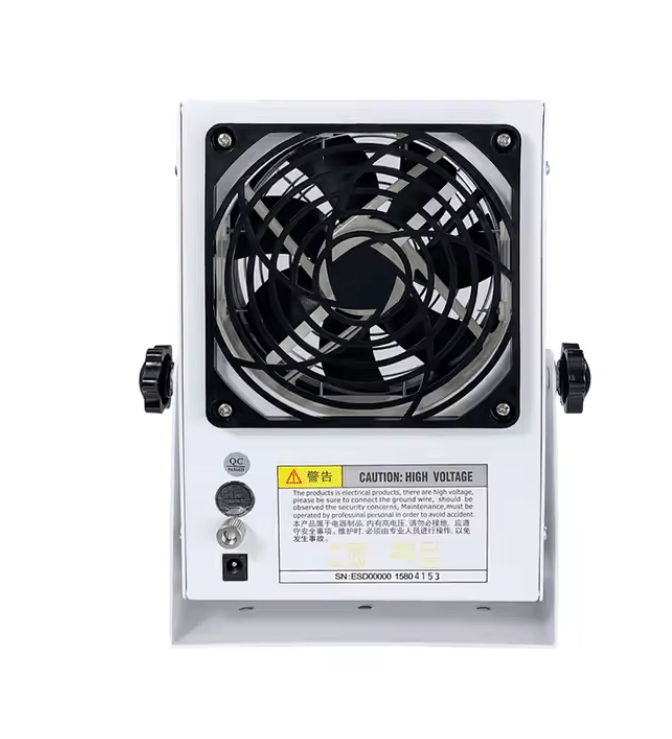
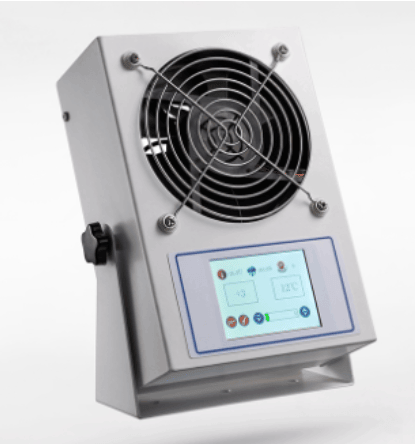
Even if you have proper grounding, you may still need an ionizer. Grounding removes static from conductive objects, but it cannot eliminate charge on insulators such as plastics, packaging, and films. Ionizers are required when these materials are present near sensitive electronics.
Why Grounding Alone Is Not Always Enough
Grounding is the foundation of ESD control. It safely removes static charge from:
-
operators
-
workbenches
-
tools
-
conductive materials
However, grounding has a major limitation.
👉 It does not work on insulators.
Insulators such as plastic trays, packaging films, labels, and foam materials can hold static charges for long periods. These charges can create electric fields that affect nearby sensitive components.
Even in a fully grounded workstation, these materials can still cause:
-
electrostatic discharge
-
latent damage
-
product failure
What Grounding Actually Does in ESD Control
Grounding works by providing a path for electrical charges to flow safely to earth.
This keeps:
-
people
-
equipment
-
surfaces
at the same electrical potential.
👉 This reduces sudden discharge between conductive objects.
But again:
👉 Grounding only works when charge can flow
If the material does not conduct electricity, grounding cannot remove the charge.
What an Ionizer Does That Grounding Cannot
Ionizers solve the problem of insulators.
They work by:
-
generating positive and negative ions
-
neutralizing charges in the air
-
eliminating static without physical contact
This allows ionizers to control static on:
-
plastics
-
films
-
PCB surfaces
-
isolated components
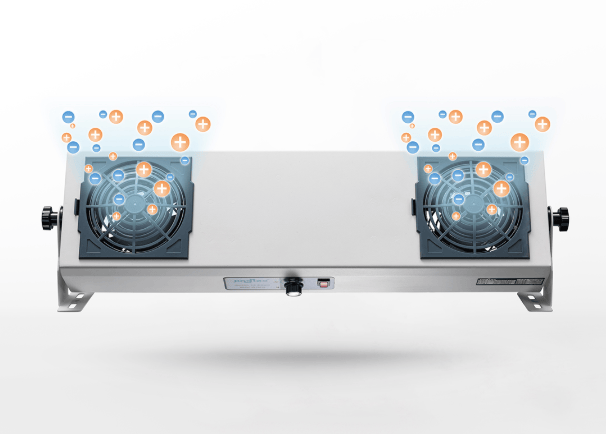
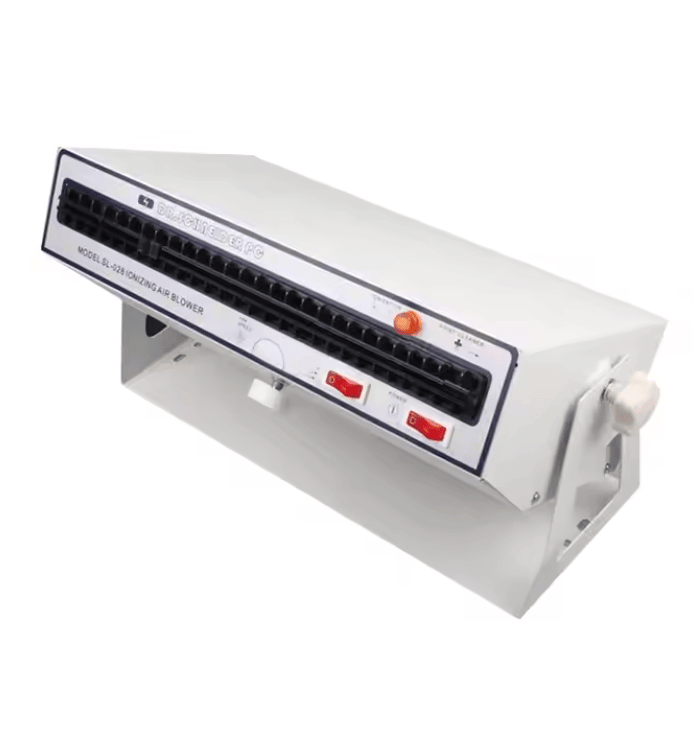
Ionizer vs Grounding: The Real Difference
Grounding removes charge through a path.
Ionizers neutralize charge in the air.
Grounding controls conductive objects. Ionizers control insulators
Read full ionizer vs grounding comparison
When You Do NOT Need an Ionizer
You may not need an ionizer if:
-
your environment has minimal plastic materials
-
all items are conductive or dissipative
-
components are not highly sensitive
👉 example:
-
simple assembly lines
-
low-cost electronics production
When You MUST Use an Ionizer
You need an ionizer when:
✔ Plastics are present
-
trays
-
bags
-
films
✔ High sensitivity components
-
semiconductors
-
microchips
✔ Cleanroom environments
-
contamination + static risk
✔ Automated production lines
-
isolated machine parts
Real Example: PCB Assembly Line
In PCB assembly:
-
operators are grounded
-
workbenches are grounded
But nearby:
-
plastic trays
-
component reels
still hold static.
👉 Result:
Grounding alone is NOT enough → ionizer required
Best Practice: Grounding + Ionization Together
The most effective ESD control system combines:
-
grounding
-
ionization
-
ESD-safe materials
If insulators are present, you need both grounding and ionization.
Need Better Static Control?
If your ESD workstation includes plastics or sensitive electronics, grounding alone may not be enough.
View ESD IonizersFAQ
Frequently Asked Questions
Do I need an ionizer if I already have grounding?
Yes, if your environment includes insulators such as plastics, grounding alone is not enough.
Can grounding remove static from plastic?
No. Plastics are insulators and do not allow charge to flow to ground.
What happens if I don’t use an ionizer?
Static can remain on insulators and may damage sensitive electronics.
Is an ionizer required for PCB assembly?
In most cases, yes, especially when plastic materials are involved.
Can ionizers replace grounding?
No. Ionizers complement grounding but do not replace it.
Why are insulators dangerous in ESD control?
They can hold static charges and create electric fields that affect nearby components.
When is grounding enough?
When only conductive and dissipative materials are present.
Do all ESD workstations need ionization?
Not all, but many modern electronics environments do.
📞 Contact Us Today
For bulk orders, quotes, or product guidance, get in touch with our expert team:
Email: sales2@esdbest.com
Phone: +86 137 1427 2599