Cushioning for EPA Packaging
Anti Static Bubble Bags: Cushioning for ESD Packaging (Correct Use)
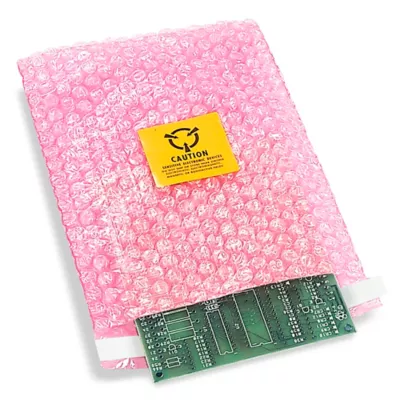
Anti static bubble bags provide cushioning with low static charge generation and are typically used as secondary ESD packaging.
Made from polyethylene with antistatic additives, they help reduce tribocharging while protecting against shock and vibration. Anti static bubble bags generally do not provide electrostatic shielding.
Introduction
Anti static bubble bags are designed to provide two benefits in one:
-
cushioning protection against shock and vibration
-
low charging / antistatic behavior to reduce static risk during handling
They’re widely used in electronics logistics—but they are typically secondary ESD packaging, not a replacement for shielding when shielding is required.
What Anti Static Bubble Bags Are Made Of
Industry descriptions commonly refer to antistatic bubble packaging as polyethylene-based film treated with antistatic agents/additives (often referenced in “treated during manufacturing / coating or integrated” explanations).
Practical takeaway:
-
material is designed to reduce charge build-up during rubbing/handling
-
the “bubble” structure adds impact protection
What They Do Well
Cushioning and impact protection
Bubble structure helps protect fragile items from mechanical damage.
Reduced static charge generation
Anti-static treatment increases surface conductivity and helps static charges dissipate more quickly rather than accumulating.
Great for EPA internal packaging workflows
Inside controlled environments, low-charging cushioning is often exactly what you need.
What They Do NOT Do (Important)
Many anti-static bubble bags do not prevent external static charges from penetrating the bag, and therefore are not suitable as the sole protection method if external static threats remain.
That’s why you’ll often see the recommendation:
-
use bubble bags for cushioning
-
use shielding when electronics are ESD-sensitive and exposed to external risks
Shielding vs Pink Bubble (Do Not Confuse)
| Packaging type | Cushioning | Low charging | Shielding |
|---|---|---|---|
| Anti static bubble bags (pink) | ✅ Yes | ✅ Yes | ❌ No (typically) |
| Static shielding bags (metallized) | ❌ No | ✅ Yes | ✅ Yes |
| Shielding bubble bags (specialized) | ✅ Yes | ✅ Yes | ✅ Yes (product-specific) |
Anti-Static Bubble Bags vs Shielding Options
Best Use Cases
-
Secondary cushioning for boxed electronics
-
Packing accessories/tools inside an EPA
-
Short-distance internal transport where shielding is handled elsewhere
Buying Checklist (fast)
-
Bubble size & thickness (based on fragility)
-
Bag size (do not overstuff)
-
Handling environment: EPA vs shipping network
-
If shipping sensitive electronics: pair with shielding bags when required
FAQ
Q1: Do anti static bubble bags provide ESD shielding?
Generally no—these bags provide cushioning and low charging behavior, but often do not block external static threats.
Q2: When should I use anti static bubble bags?
When you need cushioning and reduced static generation, typically as secondary packaging.
Contact Us Today
For bulk orders, quotes, or product guidance, get in touch with our expert team:
Email: sales2@esdbest.com
Phone: +86 137 1427 2599