Kitchen Cut Resistant Gloves
Cut resistance level (Cut Resistance: Level 1–5).Kitchen Cut Resistant Gloves (Gloves with Level 3 cut resistance) can withstand 10–15 newtons of cutting force, making them suitable for environments with moderate cut hazards such as kitchen work, automotive maintenance, and plastic processing. These gloves provide adequate protection against common cutting injuries in such work settings, ensuring worker safety.
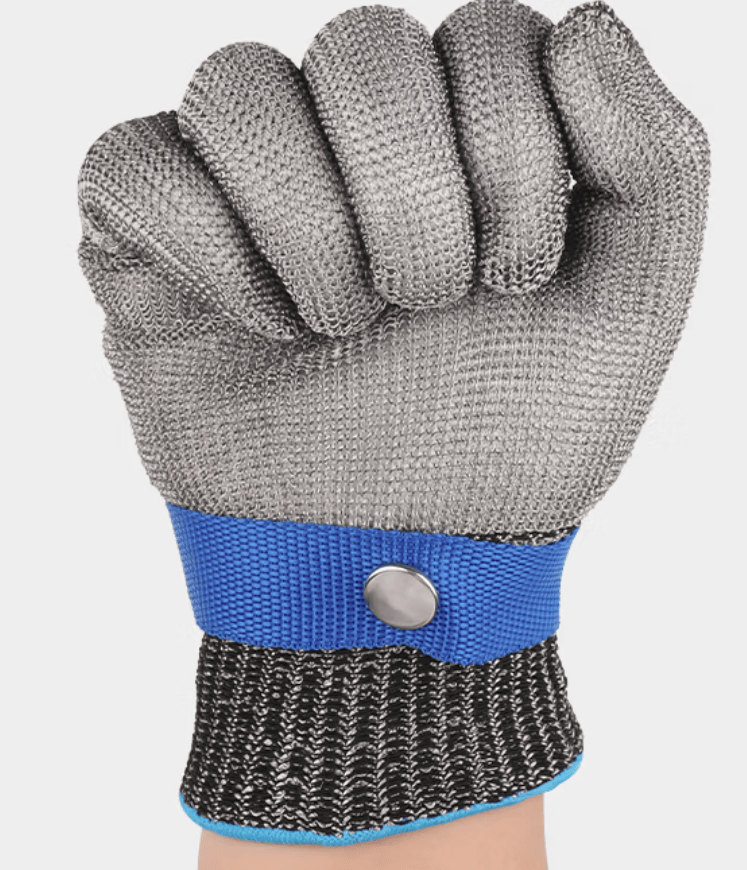
Name:Kitchen Cut Resistant Gloves
•Material: HHPE
•Type : Knitted Working Safety Gloves
•Weight:31-63g
•Features: Comfortable ,Breathable , Durable , Protective
• Cut -Reistance: 3 Level Anti-Cut
•Color : Grey
•Application, For Kitchen Construction ,Industry , Gardening , Repairing and daily safety working
•Packing :1 pair per Opp Bag
•Type : Knitted Working Safety Gloves
•Weight:31-63g
•Features: Comfortable ,Breathable , Durable , Protective
• Cut -Reistance: 3 Level Anti-Cut
•Color : Grey
•Application, For Kitchen Construction ,Industry , Gardening , Repairing and daily safety working
•Packing :1 pair per Opp Bag
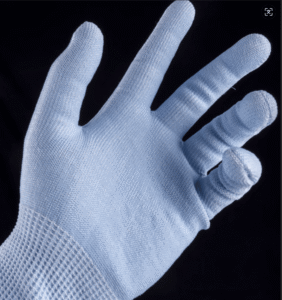
Application of Kitchen Cut Resistant Gloves
Kevlar* is an aramid fibre composed of long polymer chains of poly-paraphenylene terephthamide. The fibre is inherently yellow, strong, lightweight, and flexible—five times stronger than steel of the same weight. Its polymer chains are aligned along the fibre direction, with strong bonding between molecules; in addition, the overlapping of phenyl groups between strands makes the fibre extremely strong yet flexible. The molecular structure of Kevlar is planar, similar to that of graphite. Due to its high carbon-to-oxygen ratio, the material is flame-resistant: it does not melt at high temperatures and only decomposes above 400°C. Kevlar fibre has a higher density than water. However, water molecules can reduce the fibre’s strength; on the other hand, they can improve the surface wettability of the fibre material.
Application of Kitchen Cut Resistant Gloves: Mechanical Performance Levels, Materials, Characteristics & Uses
- Model 4540: Knitted kitchen cut resistant gloves made of Spectra blended with other man-made fibres. Ambidextrous and machine-washable. Suitable for food manufacturing, slaughtering, and kitchen tasks like slicing, dicing, and chopping.
- Model 2540: Kitchen cut resistant gloves made of Spectra blended with 3 strands of stainless steel. Can be worn over other functional gloves for enhanced protection. Suitable for handling meats, fish, and sharp kitchen tools like mandolins or graters.
- Kevlar Applications in Kitchen Settings: Similar to Dyneema/Spectra, Kevlar can be used to make high-performance kitchen cut resistant gloves. Its fire-resistant property also adds safety in high-heat kitchen environments. However, Kevlar decomposes when exposed to strong acids or alkalis. Kevlar-based kitchen cut resistant gloves are suitable for use at temperatures ranging from -30°C to 16°C.
- Model 3544: Knitted Kevlar kitchen cut resistant gloves with a latex coating on the palm. Provides strong grip on dry ingredients and tools. Suitable for handling glassware, wood, metal kitchen utensils, and food processing tasks.
- Model 4331: Kevlar kitchen cut resistant gloves with a nitrile rubber coating on the palm. Machine-washable and compliant with food contact standards. Suitable for handling greasy meats, oil-contaminated tools, glass, and kitchen maintenance tasks.
Reference Standards
- BS EN 388:2003 Protective Gloves Against Mechanical Risks (applicable to kitchen cut resistant gloves for cutting hazard protection)
- BS EN 420:2003 Protective Gloves—General Requirements and Test Methods (covers fit and comfort for kitchen use)
- BS EN 1082-1:1997 Protective Clothing—Gloves and Arm Guards Protecting Against Cuts and Stabs by Hand Knives (relevant for kitchen knife protection)
- FDA 21 CFR 177.2800 (food contact safety standard for kitchen cut resistant gloves)
Summary
When selecting kitchen cut resistant gloves as a safety measure, in addition to considering materials, cut resistance levels, and specifications, it is also necessary to take user comfort and food safety compliance into account. It is important to note that users must understand the limitations of the gloves and follow the usage guidelines, which can be found in the gloves’ instruction manuals or labels. For example:
- Kitchen cut resistant gloves are cut-resistant but not cut-proof; they are only suitable for manually operated kitchen knives and tools.
- Gloves made by knitting cannot resist serrated blades or wavy-edged kitchen tools effectively.
- Most kitchen cut resistant gloves are machine-washable with mild detergent, but avoid fabric softener and bleach to preserve performance .
*Kevlar fibre is an aramid product developed by DuPont (USA) in 1965.
Specifications and Common Materials of Kitchen Cut Resistant Gloves
Cut-Resistance Ratings
- Dyneema/Spectra fibres can achieve a cut-resistance rating of Level 5, ideal for heavy-duty kitchen tasks like meat cutting and fish scaling.
- Kevlar fibres can reach cut-resistance ratings of Level 4 to Level 5, suitable for daily slicing and chopping.In general, the cut resistance of materials for kitchen cut resistant gloves follows this order: man-made fibres > natural fibres; cotton > leather; leather > latex.
Common Materials
- Stainless Steel Wire Kitchen Cut Resistant Gloves: Offer the highest cut resistance, suitable for manually operated kitchen blades. Easy to clean and sterilize, they are widely used in food processing and home kitchens . Their drawbacks are high weight and potential hand fatigue. BS EN 1082-1 stipulates that their weight shall not exceed 4 kg/m²; therefore, manufacturers also offer lighter titanium-infused versions as an option.
- Ultra-High Molecular Weight Polyethylene (HPPE) Fibres: A key material for lightweight kitchen cut resistant gloves, 10 times stronger than steel of the same weight. Water-resistant and wear-resistant, it prevents sharp blades from cutting through . Blended with other fibres, it ensures flexibility for precise kitchen tasks like vegetable slicing.
- Kevlar Fibres: Heat-resistant and flame-retardant, suitable for kitchen environments with high temperatures. It maintains performance even when exposed to hot surfaces, making it ideal for multi-tasking kitchen work .
Kitchen cut resistant gloves serve as the final line of defence for hand protection during food preparation. Cooks, butchers, and home chefs engaged in meat cutting, fish handling, and vegetable slicing often wear them. The following section details their specifications and material performance.
The most widely used cut-resistance standard for kitchen cut resistant gloves is the British/European BS EN 388 (equivalent to AS/NZS 2161.3). This standard covers four mechanical performance categories: abrasion resistance, cut resistance, tear resistance, and puncture resistance. Gloves meeting this standard must be marked with a shield symbol, with levels 1 to 4 indicating performance grades; cut resistance can reach the highest Level 5. Occasionally, “X” and “0” are used, representing “not applicable” and “performance below Level 1,” respectively. Kitchen cut resistant gloves must also comply with BS EN 420 for fit and comfort, as well as FDA standards for direct food contact .
Dyneema/Spectra* Fibres for Kitchen Cut Resistant Gloves
Polymerized from ultra-high molecular weight polyethylene (UHMWPE), this bright white fibre is 10 times stronger than steel of the same weight. During manufacturing, polyethylene molecules are aligned in the crystalline direction, and its carbon molecular structure is similar to that of diamond. The unique gel-spun yarn production process gives Spectra a higher melting point (150°C) than regular polyethylene.
Dyneema/Spectra fibres are strong, lightweight, and buoyant in water; they are also water-resistant, UV-resistant, and wear-resistant. Their low friction coefficient allows sharp kitchen blades to slide off their surface. When blended with glass fibres or cotton yarn, they create comfortable and protective kitchen cut resistant gloves . However, they have drawbacks: they should not be washed in hot water above 70°C for more than 10 minutes and should be air-dried to preserve shape .
Puncture Resistance: Stainless Steel Wire Kitchen Cut Resistant Gloves
Stainless steel wire kitchen cut resistant gloves are made of independently welded and interlocked wire rings (similar to ancient chainmail). They are available in lengths covering the wrist to the forearm, suitable for different kitchen tasks. A typical glove uses 12,000 wire rings, each capable of withstanding 200 Newtons of tensile force. Made of AISI 304L stainless steel, the rings are tightly interlocked to ensure gaps do not exceed 3.2 mm—preventing puncture from sharp kitchen tools .
Full stainless steel kitchen cut resistant gloves are more durable than those with nylon wristbands; they can withstand temperatures up to 150°C and can be sterilized with high-temperature steam. Common cleaning methods include: first cleaning with warm water and food-grade detergent, scrubbing with a bristle brush to remove meat residues, then soaking in diluted bleach, and finally rinsing and drying .
Mechanical Performance Levels for Kitchen Cut Resistant Gloves
| Test Item | Level 1 | Level 2 | Level 3 | Level 4 | Level 5 |
|---|---|---|---|---|---|
| a: Abrasion Resistance (Cycles) | 100 | 500 | 2000 | 8000 | – |
| b: Cut Resistance (Index) | 1.2 | 2.5 | 5.0 | 10.0 | 20.0 |
| c: Tear Resistance (Newtons) | 10.0 | 25.0 | 50.0 | 75.0 | – |
| d: Puncture Resistance (Newtons) | 20.0 | 60.0 | 100.0 | 150.0 | – |
During cut resistance testing for kitchen cut resistant gloves, samples are taken from the palm and cut back and forth with a rotating blade. The number of rotations required to cut through the sample is recorded and compared with a standard cotton fabric sample. A higher index indicates better protection against kitchen knives .
*Dyneema/Spectra is one of the strongest and lightest man-made fibres in the world. It was invented by DSM (Netherlands) in 1979, and another version was developed by Honeywell’s predecessor (USA) in the 1980s.
*Other functional gloves (e.g., heat-resistant gloves) can be worn over kitchen cut resistant gloves for combined protection during high-temperature tasks.
Summary 1: Kitchen Cut Resistant Gloves (Food-Grade Hand Protective Gear) – Encyclopedia
Kitchen cut resistant gloves are a type of protective gear with cut-proof functionality, usually made of high-strength materials such as stainless steel wire, Kevlar fibre, and ultra-high molecular weight polyethylene. These materials can resist cutting and puncture injuries from kitchen knives, glass shards, and sharp tools, protecting hands during food preparation.
The protection level of kitchen cut resistant gloves is typically indicated by ISO cut resistance levels, ranging from Level 1 to Level 5. Level 5 is the highest, representing the strongest cut protection for heavy-duty tasks like meat cutting . Stainless steel wire kitchen cut resistant gloves have an EN388 cut resistance level of 3-5, while HPPE-based gloves often reach Level 5.
Kitchen cut resistant gloves feature cut resistance, wear resistance, and food-grade safety, with a long service life. They are widely used in home kitchens, restaurants, meat processing plants, and food factories.
Wearing kitchen cut resistant gloves allows users to safely handle sharp tools like kitchen knives and graters. Even if the tool slips, the gloves prevent cuts to hands. These gloves are essential for chefs, butchers, and home cooks to protect their hands during daily food preparation.
Key Features of High-Quality Kitchen Cut Resistant Gloves
- Meet international standards (EN1082/EN420) and food contact safety requirements (FDA 21 CFR 177.2800) .
- A single stainless steel wire glove consists of over 5,000 independently welded stainless steel rings, ensuring flexibility and protection .
- Solid welding between steel rings withstands tensile force while remaining form-fitting for kitchen tasks.
- Made of food-grade materials, safe, hygienic, and easy to clean—ideal for the food industry .
- Ergonomic design allows free finger movement and comfortable wear during long cooking sessions.
- Equipped with adjustable nylon wristbands for easy wearing and secure fit .
- Ambidextrous design, suitable for both left and right hands .
Core Functions
- Cut-resistant, puncture-resistant, anti-slip, and wear-resistant.
- Effectively protect hands from kitchen knives, graters, and sharp food items (e.g., fish bones).
- Excellent anti-slip performance prevents ingredients or tools from slipping during gripping .
Application Scenarios
Kitchen cut resistant gloves are essential protective products for workers in restaurants, meat processing plants, and food factories. They are also ideal for home cooks engaged in slicing, dicing, meat cutting, fish scaling, and vegetable preparation.
Technical Specifications
(1) Good elasticity, breathability, and easy to put on and take off. (2) Main material is a composite of high-strength polyethylene fibre (5-10 times stronger than steel) and stainless steel wire, non-toxic and food-safe . (3) Surface is smooth, without defects such as loose threads or gaps. (4) Sizes range from S to XXL, with XL size length ≥251 mm and width ≥121 mm . (5) Available in multiple colours (black, white, lime, etc.) . (6) Tested with a dedicated machine (20 N cutting pressure, 20 r/min blade speed): 5 cuts perpendicular to the finger direction, with over 7 cutting cycles before cut-through . (7) Suitable for use at -20°C to +55°C, maintaining Level 5 cut resistance .
Summary 2: DuPont Innovation Awards: Outstanding Kitchen Cut Resistant Gloves and Fabrics
DuPont (NYSE: DD) grandly announced the list of winners of the 2025 DuPont Innovation Awards, focusing on thermal protection and mechanical protection for kitchen and industrial settings. The awards recognized groundbreaking innovative achievements in personal protective equipment (PPE), including high-performance kitchen cut resistant gloves using Kevlar® fibres.
This year’s entries focused on three cutting-edge themes: reducing the environmental footprint of kitchen safety gear, improving recyclability, and enhancing protection against kitchen cutting hazards. Multiple innovative solutions targeted specific risks faced by kitchen workers, reflecting the industry’s high attention to food safety and hand protection.
“For the first time, DuPont is bringing together global breakthrough achievements of Nomex® and Kevlar® through the Innovation Awards,” said Stephanie Vrakas, Global Marketing Director of DuPont Personal Protection. “These award-winning kitchen cut resistant gloves provide comprehensive protection for food industry workers, protecting their hands more effectively while promoting sustainable development.”
The jury evaluated entries based on product performance, innovative design, quality, and environmental responsibility. In the “Kevlar® for Industrial Personal Protective Equipment” category, three award-winning products were kitchen cut resistant gloves balancing performance and comfort:
- Ejendals (Sweden) developed TEGERA® welding gloves (adaptable for high-heat kitchen tasks), combining heat resistance and cut resistance with optimal fit and fingertip flexibility.
- Escorts Advanced Textiles (Pakistan) designed the Kevlar® SoftShield 379 A9-level liner, using stainless steel wire-reinforced Kevlar® fabric to provide top-level (A9) cut protection for kitchen use.
- PIP Global Safety (USA) launched ultra-lightweight G-Tek® Paradox™ 21-gauge kitchen cut resistant gloves, featuring flexibility, sensitive touch, and heat resistance for precise food preparation .
Summary 3: Aramid Fibres – Key Material for High-Performance Kitchen Cut Resistant Gloves
Aramid fibre (abbreviated as aramid) refers to fibres in which aramid segments account for more than 85% of the molecular structure. It is divided into four categories, with para-aramid fibres (e.g., Kevlar) being the core material for high-strength kitchen cut resistant gloves.
All aramid fibres are produced via low-temperature solution polycondensation. Para-aramid fibres are isolated and dissolved in concentrated sulfuric acid for dry-jet wet spinning, ensuring high strength and modulus for kitchen protection.
Properties of Aramid Fibres for Kitchen Cut Resistant Gloves
- Good impact resistance: Absorbs force from slipping knives during food preparation.
- Excellent abrasion resistance: Withstands repeated use with kitchen tools.
- Good chemical resistance: Resists food acids and detergents.
- High thermal degradation resistance: Maintains performance near stovetops or ovens.
Main Applications in Kitchen Safety
Aramid fibres are mainly used as raw materials for kitchen cut resistant gloves, providing Level 4-5 cut protection while ensuring flexibility. They are also used in other protective gear for food industry workers, such as heat-resistant sleeves.
Summary 4: Kevlar – High-Strength Material for Premium Kitchen Cut Resistant Gloves
Kevlar (English name: Kevlar) is a trademarked para-aramid synthetic fibre developed by DuPont (USA), also translated as Kevlar or Keflar. Its scientific name is poly-paraphenylene terephthamide, with repeating units connected to benzene rings via para-position amide groups.
Kevlar is usually yellow and has permanent heat resistance (limited oxygen index (LOI) of 29), anti-static properties, acid and alkali resistance, high strength, high rigidity, and low density. It is well-known for being used in premium kitchen cut resistant gloves, providing exceptional protection against sharp knives.
Kevlar was discovered by Stephanie Kwolek of DuPont in 1964, commercialized in 1972, and registered as the trademark “Kevlar”. Over the years, DuPont has upgraded Kevlar technology, launching advanced versions (e.g., Kevlar AP) with finer fineness, higher strength, and lower elongation—reducing material usage in kitchen cut resistant gloves while lowering costs.
Forms of Kevlar for Kitchen Use
Kevlar is available in various short-fibre forms, including staple fibres and pulp. Staple fibres are used in weaving flexible kitchen cut resistant gloves, while pulp enhances the performance of glove coatings for better grip.
Key Advantages for Kitchen Cut Resistant Gloves
- High kinetic energy absorption capacity: Reduces impact from sharp tools.
- Heat resistance: Withstands temperatures up to 200°C, suitable for multi-task kitchen work.
- Lightweight: Five times stronger than steel but much lighter, reducing hand fatigue during long cooking sessions .
Application in Kitchen Cut Resistant Gloves
Kevlar-based kitchen cut resistant gloves offer Level 4-5 cut resistance, ideal for heavy-duty tasks like meat cutting and fish scaling. They comply with FDA food contact standards, ensuring safety during food preparation . DuPont’s Kevlar XP technology makes gloves 10% lighter, improving comfort without compromising protection.
Summary 5: HORBEST – Functional Kitchen Cut Resistant Gloves
According to a Securities Daily Online report, on July 3, HORBEST that the company’s functional safety protective gloves include high-quality kitchen cut resistant gloves with multiple characteristics for food preparation scenarios.
The company’s lightweight, breathable, and reinforced thumb crotch cut-resistant nitrile gloves have excellent grip and tear resistance, effectively resisting friction from ingredients and tools. The cut-resistant PU gloves have strong sweat absorption capacity and protect hands from wooden thorns (e.g., from cutting boards) and metal edges.
In food production and home kitchens, the company’s food-grade kitchen cut resistant gloves, cut-resistant canvas aprons, and wire-woven gloves meet food safety requirements, effectively protecting against cuts and oil stains . Long-sleeved anti-fouling nitrile kitchen cut resistant gloves provide comprehensive protection for cleaning staff, resisting stains and food residues.
Summary 6: Aramid Fibres – The “Super Fibre” for Kitchen Cut Resistant Gloves
Aramid fibre is a high-performance synthetic fibre made of aromatic polyamide, known as the “super fibre of the 21st century”. It is 5 times stronger than steel but much lighter, making it an ideal material for kitchen cut resistant gloves.
Six Key Characteristics for Kitchen Use
- Ultra-High Strength: 5 times stronger than steel, protecting against sharp kitchen knives.
- High Modulus (Rigidity): Maintains shape without deformation during gripping.
- High-Temperature Resistance: Usable long-term below 200°C, suitable for kitchen environments.
- Flame Retardancy: Self-extinguishing, adding safety near stovetops.
- Impact Resistance: Absorbs energy from slipping tools, reducing injury risk.
- Low Density: Lightweight, ensuring comfort during extended wear .
Two Main Types Relevant to Kitchen Cut Resistant Gloves
- Para-Aramid Fibres: Representative product: Kevlar. High strength and modulus, core material for Level 5 kitchen cut resistant gloves.
- Meta-Aramid Fibres: Representative product: Nomex. High-temperature resistance, used in gloves for high-heat kitchen tasks.
Application in Kitchen Cut Resistant Gloves
Aramid fibres are the core material for high-performance kitchen cut resistant gloves, providing cut resistance, puncture resistance, and comfort. They are widely used in home kitchens, restaurants, and food processing plants, protecting hands during slicing, dicing, meat cutting, and fish handling .
Limitations to Note
- Poor UV Resistance: Long-term exposure to sunlight can degrade fibres, so store gloves in dark places.
- Hygroscopicity: May absorb moisture in humid kitchens, so dry thoroughly after cleaning .
- Special Cleaning Requirements: Avoid bleach and high-temperature washing to preserve performance .
Conclusion
As a high-performance material, aramid fibre has revolutionized kitchen cut resistant gloves, providing lightweight and strong protection for food industry workers and home cooks. With technological advancements, future kitchen cut resistant gloves will be more comfortable, durable, and eco-friendly, further safeguarding hand safety during food preparation.
📞 Contact Us Today
For bulk orders, quotes, or product guidance, get in touch with our expert team:
Email: sales2@esdbest.com
Phone: +86 137 1427 2599