How to Choose for ESD Control
Ionizing Fan vs Ionizing Blower: Which One Do You Actually Need?
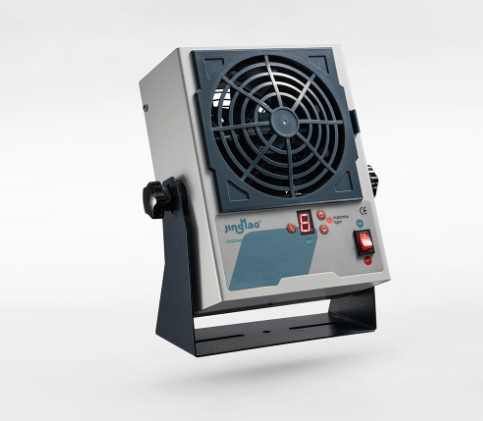
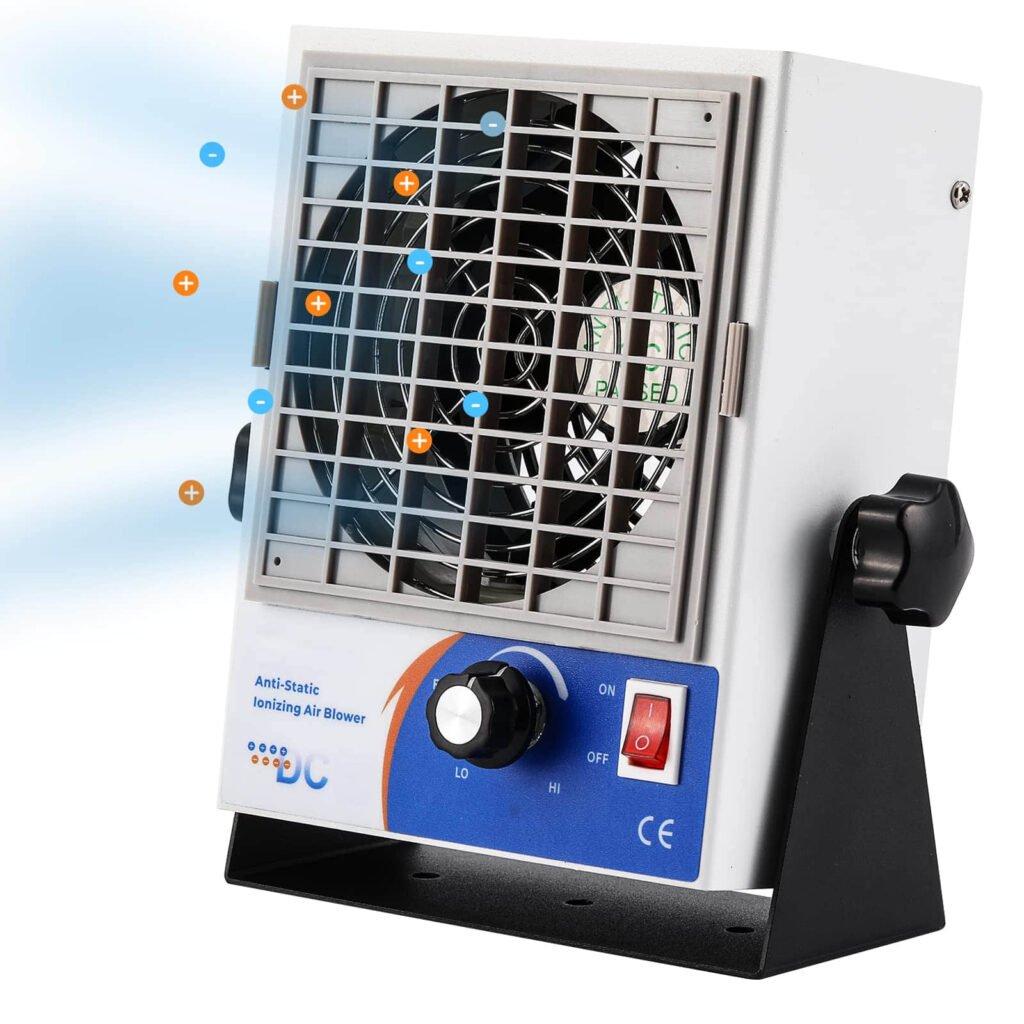
If you’re deciding between an ionizing fan and an ionizing blower, you’re already asking the right question. Both neutralize static, but they do it in different ways—and choosing the wrong one usually means inconsistent neutralization, wasted budget, or operator complaints (noise, airflow, maintenance).
This page compares the two options using practical engineering factors: coverage, control, air volume, and typical ESD use cases.
What’s the Real Difference?
An ionizing fan (often called an ionizer fan or fan ionizer) is designed for directional, controlled ion delivery—ideal for workstations and inspection areas.
An ionizing blower is designed for high air volume across a larger area—often used on packaging lines or plastic processing where broad neutralization is needed.
Comparison Table (Fast Decision)
| Factor | Ionizing Fan | Ionizing Blower |
|---|---|---|
| Typical Coverage | Local / workstation | Large area / line |
| Air Volume | Moderate | High |
| Precision | High (directional control) | Medium (diffuse) |
| Best Use | Electronics assembly, inspection | Packaging, molding, web handling |
| Operator Comfort | Usually quieter | Often louder |
| Risk of Over-Airflow | Lower | Higher |
| Maintenance Sensitivity | Medium | Medium–high |
Rule of thumb:
If you need consistent neutralization at a bench or a defined workstation zone, pick an ionizer fan. If you need wide-area neutralization on moving materials, consider a blower.
When to Choose an Ionizing Fan
Choose an air ionizer fan if you have:
-
ESD workstations handling PCBs, components, optics
-
Insulators near the bench (trays, films, plastic housings)
-
A defined neutralization zone where precision matters
-
Noise/airflow comfort requirements for operators
For a complete workstation selection framework, use the main guide here:
Ionizing Fan Selection Guide → /https://esdbest.com/ionizing-fan/
When to Choose an Ionizing Blower
Choose an ionizing blower if you have:
-
Large work areas needing broad neutralization
-
Packaging or plastic operations generating continuous static
-
Long-distance neutralization requirements
-
Moving webs/films where airflow is part of the process
Common Mistake: Buying “More Airflow” Instead of Better Neutralization
More airflow does not automatically mean better neutralization. What matters is:
-
ion balance stability
-
decay performance at your working distance
-
the ability to maintain performance with realistic maintenance
If you’re unsure, start with the specification checklist and target values:
Ionizing fan specifications and targets → /https://esdbest.com/ionizing-fan-specifications/
FAQ
Is an ionizer fan the same as an ionizing fan?
Yes—“ionizer fan” and “ionizing fan” are commonly used interchangeably.
Can an ionizing blower replace a fan ionizer at a workstation?
Usually not. Blowers can create excessive airflow, reduce precision, and cause operator discomfort.
Which is better for electronics assembly?
Most electronics assembly benches perform best with an ionizing fan due to directional control.
Which is better for packaging lines?
Often an ionizing blower, because broad-area neutralization is more important than precision.
What should I check before buying either one?
Ion balance, decay time, coverage distance, maintenance method, ozone/noise constraints.
Internal Link Anchor Text Table (This Page → Targets)
| Where to place the link | Anchor text | Target URL |
|---|---|---|
| After “When to Choose an Ionizing Fan” | Ionizing Fan Selection Guide | /https://esdbest.com/ionizing-fan/ |
| After “Common Mistake” | ionizing fan specifications and targets | /https://esdbest.com/ionizing-fan-specifications/ |
| Near intro paragraph | ionizer fan vs blower decision matrix | /https://esdbest.com/ionizing-fan/ |
| Footer / Related reading | explore ionizers | /https://esdbest.com/ionizers/ |
📞 Contact Us Today
For bulk orders, quotes, or product guidance, get in touch with our expert team:
Email: sales2@esdbest.com
Phone: +86 137 1427 2599