Static Shielding vs Anti Static Bags: What’s the Difference and Which One Should You Use?
Quick Answer:
Anti static bags reduce static generation, but static shielding bags protect sensitive electronic components from external electrostatic discharge. For PCB, IC, and electronic assemblies, static shielding bags are usually the better choice.

Need the Right ESD Bag for Your Electronics?
Not sure whether you need anti static bags or static shielding bags? Our team can help you choose the right ESD packaging solution based on your product sensitivity, packaging process, and shipping requirements.
📞 Contact Us Today
For bulk orders, quotes, or product guidance, get in touch with our expert team:
Email: sales2@esdbest.com
Phone: +86 137 1427 2599
When packaging or transporting sensitive electronic components, many buyers ask the same question: what is the difference between static shielding bags and anti static bags? At first glance, they may look similar. Both are used in ESD-safe packaging. Both are common in electronics manufacturing, PCB assembly, semiconductor handling, and storage. But in actual use, they do not provide the same level of protection.
Choosing the wrong bag can lead to costly damage. Sensitive components such as PCBs, ICs, chips, sensors, and circuit boards can be harmed by electrostatic discharge even when no visible spark is seen. In many cases, the component may not fail immediately. Instead, the damage becomes latent and causes reliability problems later.
That is why understanding the difference between anti static bags and static shielding bags is important for both engineers and purchasing teams.
In simple terms, anti static bags help reduce static generation, while static shielding bags help protect the contents from external electrostatic discharge. This difference is critical. One bag mainly controls static on the packaging itself. The other creates a protective barrier around the product inside.
What Are Anti Static Bags?
Anti static bags are packaging materials designed to reduce the buildup of static electricity caused by friction, handling, or movement. They are commonly made from polyethylene materials treated with anti-static additives. One of the most common examples is the pink anti static bag.
These bags are called anti static because they are intended to prevent the bag itself from generating high static charges. This makes them useful for general packaging and storage in environments where static control is needed.
However, anti static bags do not provide full shielding from external electrostatic discharge. If a charged object or person touches the outside of the bag, the electrostatic event can still reach the sensitive device inside. That is why ordinary anti static bags are generally not recommended for the packaging of highly ESD-sensitive electronic devices such as integrated circuits or bare PCBs.
Common features of anti static bags:
-
Reduce triboelectric charge generation
-
Lightweight and economical
-
Often pink or transparent
-
Suitable for non-sensitive parts or general static-aware packaging
-
Commonly used for hardware, spare parts, and items not highly vulnerable to ESD
What Are Static Shielding Bags?
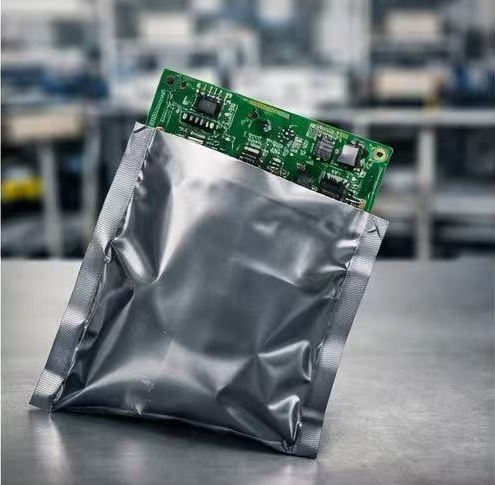
Static shielding bags are designed to do more than just reduce static generation. They are built to shield the contents from external electrostatic fields and discharge events. In most cases, they are made with multiple layers, including a metalized shielding layer that creates a Faraday-cage-like effect.
This means that when an external static charge contacts the outside of the bag, the electrical energy is distributed around the surface of the bag rather than passing through to the sensitive contents inside.
That is why static shielding bags are widely used for:
-
PCBs
-
integrated circuits
-
motherboards
-
electronic modules
-
semiconductor devices
-
communication boards
-
test instruments
-
precision electronic assemblies
These bags are often silver or metallic in appearance because of the conductive or dissipative metal layer.
Common features of static shielding bags:
-
Provide shielding against external static discharge
-
Usually multi-layer structure
-
Often metalized or semi-transparent silver
-
Suitable for highly ESD-sensitive devices
-
Commonly used in electronics manufacturing and shipping
Static Shielding Bags vs Anti Static Bags: The Core Difference
The most important difference is this:
-
Anti static bags prevent static buildup on the bag itself
-
Static shielding bags protect the product inside from outside ESD events
This is why the two types are not interchangeable in many applications.
If you are packing screws, plastic accessories, cables, or non-sensitive parts, anti static bags may be enough.
If you are packing a PCB, IC, control board, memory module, or semiconductor device, you usually need a static shielding bag.
In other words, anti static bags are about static reduction, while static shielding bags are about static protection.
| Feature | Anti Static Bags | Static Shielding Bags |
|---|---|---|
| Main purpose | Reduce static generation | Shield contents from external ESD |
| Typical color | Pink / transparent | Silver / metallic |
| Protection level | Basic | Higher |
| Suitable for sensitive electronics | Usually no | Yes |
| Common use | General packaging | PCB, IC, circuit boards |
| Material structure | Simple treated PE | Multi-layer metalized structure |
| Cost | Lower | Higher |

Why Pink Anti Static Bags Are Often Misused
One of the most common mistakes in the electronics industry is assuming that pink anti static bags can be used for all electronic parts. This is not correct.
Pink anti static bags are useful because they help control charge generation, but they do not block electrostatic discharge from outside the package. For this reason, they are not the right choice for packaging highly sensitive ESD components during storage, handling, or shipping.
Many people choose pink bags because they are cheap and widely available. But if the product inside is ESD-sensitive, the lower packaging cost can easily lead to a much higher failure cost later.
For critical electronics, static shielding bags are the safer choice.
How Static Shielding Bags Work
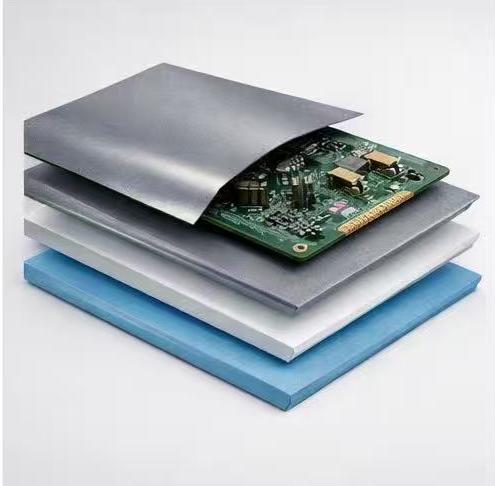
Static shielding bags typically use a multi-layer construction. The exact structure may vary, but a common design includes:
-
outer static dissipative layer
-
polyester layer for strength
-
metalized shielding layer
-
inner polyethylene layer
Together, these layers help:
-
control surface charge
-
reduce static generation
-
shield the contents from external electric fields
-
provide mechanical strength for packaging and transport
The shielding layer is what makes these bags different from ordinary anti static bags. It acts as a protective barrier so that sensitive devices inside are less likely to be exposed to damaging electrostatic events.
Which Bag Should Be Used for Electronics?
For sensitive electronic components, static shielding bags are usually the better choice.
Use static shielding bags for:
-
bare PCBs
-
populated circuit boards
-
IC chips
-
semiconductor components
-
computer boards
-
telecom modules
-
automotive electronics
-
industrial control boards
-
medical electronics
-
aerospace electronics
Use anti static bags for:
-
documents or accessories used in ESD-controlled areas
-
non-sensitive mechanical parts
-
plastic hardware
-
consumables
-
packaging where charge generation control is needed, but shielding is not critical
If the item has any real ESD sensitivity, shielding is the safer option.

Anti Static Bag vs Static Shielding Bag in Shipping
Shipping is one of the highest-risk stages for ESD-sensitive items. Products move through different environments, personnel, surfaces, cartons, and transport conditions. During this process, electrostatic charge can build up or be discharged unexpectedly.
An anti static bag may reduce charge generation from friction, but it does not create a strong protective barrier against outside discharge.
A static shielding bag is more suitable for shipping because it provides:
-
better protection against handling-related ESD
-
better protection against charged surfaces
-
a more professional packaging standard for electronics supply chains
-
improved customer confidence for industrial buyers
For export packaging, OEM supply chains, and industrial component distribution, static shielding bags are usually considered the more appropriate packaging standard.
Visual Difference Between the Two Bags
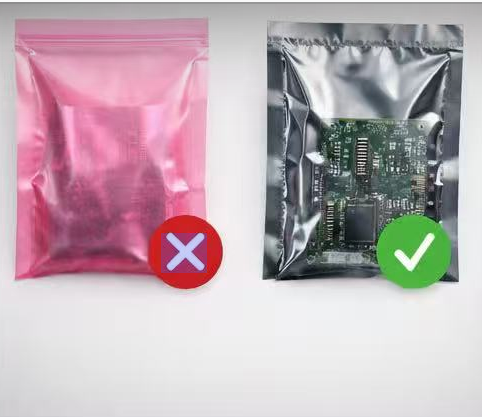
In many cases, the easiest visual clue is color and appearance:
Anti static bags
-
often pink
-
can be semi-transparent
-
usually simpler structure
-
lower cost
Static shielding bags
-
often silver, gray, or metallic transparent
-
usually multi-layer
-
more professional electronics packaging appearance
-
higher protection level
However, appearance alone is not enough. Buyers should check:
-
material specification
-
layer structure
-
surface resistance data
-
ESD packaging compliance information
-
thickness
-
sealing type
-
custom printing and traceability options
Cost Difference: Is the Cheaper Bag Worth It?
Anti static bags are usually cheaper than static shielding bags. For non-sensitive items, this cost advantage makes sense.
But for sensitive electronics, the decision should not be based only on bag price. The true cost includes:
-
product failure
-
warranty claims
-
latent defects
-
customer complaints
-
returned shipments
-
damaged brand reputation
A shielding bag may cost more per piece, but it can reduce far greater losses in the supply chain.
For serious electronics packaging, lower packaging cost should never come at the expense of inadequate ESD protection.
How Buyers Choose the Right ESD Bag
When selecting between anti static bags and static shielding bags, buyers should ask the following questions:
1. Is the product ESD-sensitive?
If yes, shielding is usually required.
2. Will the product be stored, handled, or shipped outside an EPA?
If yes, higher protection is needed.
3. Is this packaging for bare boards, chips, or assemblies?
If yes, shielding bags are recommended.
4. Is the bag only for secondary packaging or accessory separation?
If yes, anti static bags may be enough.
5. Does the customer require ESD-safe packaging compliance?
If yes, use packaging that matches the technical requirement.
Common Applications
Static shielding bags are commonly used for:
-
PCB packaging
-
semiconductor packaging
-
export packaging for electronics
-
OEM component supply
-
spare boards and repair parts
-
ESD-sensitive storage
Anti static bags are commonly used for:
-
non-sensitive parts in ESD-controlled factories
-
plastic accessories
-
cables and connectors with lower sensitivity
-
documents or kits used inside EPA environments
-
general packaging where low static generation is sufficient
Can You Use Both Together?
Yes. In some packaging systems, companies use both types together.
For example:
-
a sensitive PCB is placed in a static shielding bag
-
accessories or documents are packed separately in anti static bags
-
both are then placed in an outer carton with ESD warning labels
This layered packaging method helps improve organization while maintaining protection for the most sensitive items.
Final Verdict: Static Shielding vs Anti Static Bags
If you only remember one thing, remember this:
Anti static bags help prevent static generation. Static shielding bags help protect sensitive electronics from external ESD.
That is the real difference.
For ordinary items, anti static bags may be acceptable.
For sensitive electronic components, static shielding bags are the better and safer choice.
If your business handles PCBs, ICs, circuit boards, modules, or semiconductor devices, using the correct ESD packaging is not optional. It is part of basic quality control.
Choosing the right bag helps reduce risk, improve packaging reliability, and protect your products during storage, handling, and transportation.
At ESDBest, we provide ESD-safe packaging solutions for electronics manufacturing, industrial handling, and global export applications. Whether you need static shielding bags, anti static bags, or customized ESD packaging, choosing the right material for the right product is the first step toward safer packaging and better product protection.
FAQ Section
1. What is the difference between static shielding bags and anti static bags?
Static shielding bags protect sensitive electronic components from external electrostatic discharge, while anti static bags mainly reduce the generation of static on the bag itself. Static shielding bags offer a higher level of protection.
2. Are pink anti static bags the same as shielding bags?
No. Pink anti static bags are not the same as shielding bags. They help reduce static buildup but do not shield the contents from external ESD events.
3. Which bag is better for PCB packaging?
Static shielding bags are better for PCB packaging because they provide protection against external electrostatic discharge during storage, handling, and shipping.
4. Can anti static bags protect electronic components?
Anti static bags can help reduce static generation, but they do not provide the same external shielding protection as static shielding bags. For sensitive components, shielding bags are usually recommended.
5. Why are static shielding bags silver?
Static shielding bags are often silver because they contain a metalized layer that helps shield the contents from external static fields and discharge.
6. Are anti static bags enough for shipping electronics?
For highly sensitive electronics, anti static bags are usually not enough. Static shielding bags are a safer choice for shipping because they provide stronger ESD protection.
7. When should I use anti static bags?
Anti static bags are suitable for non-sensitive items, accessories, or situations where reducing static generation is enough but full shielding is not required.
8. Can I use both anti static bags and static shielding bags together?
Yes. Many companies use shielding bags for sensitive components and anti static bags for accessories, documents, or secondary packaging.
9. What industries use static shielding bags?
Static shielding bags are commonly used in electronics manufacturing, semiconductor production, PCB assembly, telecommunications, automotive electronics, medical devices, and industrial control.
10. How do I choose the right ESD packaging bag?
You should consider the sensitivity of the product, the handling environment, shipping conditions, and the required level of ESD protection. Sensitive electronics usually require static shielding bags.
Source Static Shielding Bags and Anti Static Bags from ESDBest
We supply ESD-safe packaging solutions for electronics manufacturing, PCB assembly, semiconductor handling, and industrial export packaging. Contact us for bag sizes, thickness options, custom printing, and bulk quotations.
-
Used in electronics manufacturing and ESD-safe packaging applications
-
Support for OEM / bulk industrial orders
-
Technical assistance for bag selection
-
📞 Contact Us Today
For bulk orders, quotes, or product guidance, get in touch with our expert team:
Email: sales2@esdbest.com
Phone: +86 137 1427 2599