Selection & Setup
Benchtop Ionizing Fan: The Best Choice for ESD Workstations
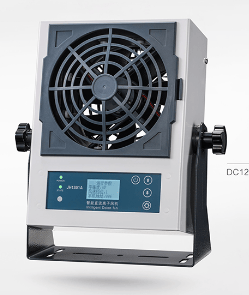
A benchtop ionizing fan is the most common ionization solution for ESD workstations because it delivers controlled airflow and stable neutralization right where sensitive components are handled.
This page helps you select the right benchtop unit using real criteria: distance, coverage, decay time, ion balance, and operator comfort.
What a Benchtop Ionizing Fan Is Best At
A bench unit is ideal when you need:
-
Controlled neutralization over a defined workstation zone
-
Directional airflow toward a PCB, tray, fixture, or inspection point
-
Easy access for cleaning or maintenance
-
Minimal disruption to operators
If you’re building a full ionization strategy (bench + overhead + line), start here:
Ionizing fan overview and selection → /https://esdbest.com/ionizing-fan/
How to Choose the Right Size and Coverage
The biggest mistake is choosing a fan without matching the real working distance.
Quick Coverage Guidance
| Work Distance | Recommended Approach |
|---|---|
| 300–500 mm | Typical benchtop ionizer fan |
| 500–800 mm | Larger bench unit or repositioning |
| 800 mm+ | Consider overhead/suspended ionization |
For large zones, see:
Overhead / suspended ionizing fan guide → /https://esdbest.com/overhead-ionizing-fan/
Specs That Matter Most for Benchtop Use
|
Name |
Benchtop Ionizing Fan |
|
Input voltage |
DC 15V |
|
Input Current |
<0.6A |
|
Power |
9W |
|
Operating Voltage |
±DC4000→DC7000V |
|
Ion emission |
DC |
|
Emitter electrode |
Tungsten alloy |
|
Discharge structure |
Uncoupled electrical contact (discharge cylinder) |
|
Discharge range |
750*300mm(L*W) |
|
Discharge speed |
≤1s (300mm from the front of the air outlet) |
|
Ion balance |
≤ | ± 10V | (300mm from the front of the air outlet) |
|
Alarm indication |
The power indicator is on and working normally |
|
Air volume |
≤89.1CFM |
|
Audio noise |
≤43db (1000mm away from the air outlet) |
|
Ozone concentration |
≤0.05ppm (150mm away from the air outlet) |
|
Working temperature |
0-50℃ |
|
Working humidity |
30-70%RH |
|
Dimensions |
180*60*201.5mm(L*W*H) |
|
Shell material |
Aluminum dusting |
|
Installation accessories |
1 pair of U-shaped aluminum powder spraying mounting brackets, 1 pair of bakelite screw handles (M6 × 12) |
|
Adapter power |
INPUT: AC110-240V 50/60Hz; OUTPUT: DC15V 2000mA |
|
Net weight |
1500g (including accessories: 1 external adapter power supply) |
|
Gross weight |
1980g |
|
Quality assurance |
1 Year |
|
Certification |
CE |
Focus on these:
-
Ion balance stability (important for consistent ESD control)
-
Decay performance at your real distance
-
Airflow adjustability (avoid blowing lightweight parts)
-
Noise level (operator comfort)
-
Maintenance method (manual vs self-cleaning)
For a full spec checklist with target values:
Ionizing fan specifications → /https://esdbest.com/ionizing-fan-specifications/
Placement & Setup Tips (Workstation Reality)
-
Aim airflow toward the actual charge sources (insulators near the bench)
-
Avoid blocking airflow with tall bins or monitors
-
Keep the fan stable and vibration-free
-
Don’t place the fan so close it creates turbulence over lightweight parts
If performance is critical, verify ion balance/decay on a schedule:
How to test an ionizer fan → /https://esdbest.com/how-to-test-ionizer-fan/
FAQ
Do benchtop ionizer fans replace wrist straps?
No. Ionization supplements grounding; it doesn’t replace personal grounding.
What is a good distance for a benchtop air ionizer fan?
Most benches perform best in the 300–600 mm working zone.
Why do I still see static after installing a benchtop unit?
Common causes: wrong placement, blocked airflow, dirty emitters, or unrealistic distance expectations.
Is “ionizer fan” the same as “fan ionizer”?
Yes—both terms commonly refer to a benchtop ionizing fan in workstation setups.
Internal Link Anchor Text Table
| Where to place the link | Anchor text | Target URL |
|---|---|---|
| Intro paragraph | Ionizing fan overview and selection | /https://esdbest.com/ionizing-fan/ |
| Coverage section | Overhead / suspended ionizing fan guide | /https://esdbest.com/overhead-ionizing-fan/ |
| Specs section | Ionizing fan specifications | /https://esdbest.com/ionizing-fan-specifications/ |
| Setup section | How to test an ionizer fan | /https://esdbest.com/how-to-test-ionizer-fan/ |
| Footer | browse all ionizers | /https://esdbest.com/ionizers/ |
📞 Contact Us Today
For bulk orders, quotes, or product guidance, get in touch with our expert team:
Email: sales2@esdbest.com
Phone: +86 137 1427 2599